How Much Greener The Grass Is With Those Rose Tinted Glasses…

therapy takes many forms…

The Wrong Direction by Passenger

When I was a kid, the things I did, were hidden under the grid
Young and naive, I never believed that love could be so well hid
With regret, I’m willing to bet, you say the older you get
It gets harder to forgive and harder to forget

It gets under your shirt like a dagger or work
The first cut is the deepest, but the rest will flippin’ hurt
You build your heart of plastic, get cynical and sarcastic
And end up in the corner on your own

‘Cause I love to feel love but can’t stand the rejection
I hide behind my jokes as a form of protection
I thought I was close, but under further inspection
It seems I’ve been running in the wrong direction

So what’s the point in getting your hopes up
When all you’re ever getting is choked up
When you’re coked up,
And can’t remember the reason why you broke up
You call her in the morning
When you’re coming down and falling
Like an old man on the side of the road

‘Cause when you’re apart you don’t want to mingle
When you’re together you want to be single
Ever the chase to taste the kiss of bliss
That made your heart tingle
How much greener the grass is
With those rose tinted glasses
But the butterflies, they flutter by
And leave us on our asses

‘Cause I love to feel love but I can’t stand the rejection
I hide behind my jokes as a form of protection
I thought I was close, but under further inspection
It seems I’ve been running in the wrong direction

There’s fish in the sea for me to make a selection
I’d jump in if it wasn’t for my ear infection
‘Cause all I want to do is try to make a connection
But it seems I’ve been running in the wrong direction

Oh, oh I love to feel love but I can’t stand the rejection
I hide behind my jokes as a form of protection
I thought I was close, but under further inspection
It seems I’ve been running in the wrong direction

I love to feel love but I can’t stand the rejection
I hide behind my jokes as a form of protection
And I thought I was close, but under further inspection
It seems I’ve been running in the wrong direction

Seems like I’m running in the wrong direction

Why Women Are Leaving

Divorce Cakes a_009

Philosopher William James (1842-1910), said, “The deepest craving of human nature is the need to be appreciated.”

Monique Honaman, Author, HuffPost Blogger

There is an overwhelming number of women who feel unappreciated by their husbands. I often hear the following refrain: “I just want to feel appreciated. For years I have been the cook, the cleaner, the chauffeur… I don’t feel like we are a partnership… I’ve asked, demanded and pleaded that we go to counseling… I can’t do this anymore. I don’t want to live the second half of my life feeling like this. I’m done.”

I’m sure this is nothing new. I am sure my mother felt unappreciated by my dad at times during their marriage. I think that’s probably natural in the cycle of marriage and relationships. Life gets busy. We forget to thank those closest to us.

But times are changing. I have spoken with more women than I can count over the past couple of years who aren’t just complaining about feeling unappreciated by their husbands. Instead, they are doing something about it.

These women, most of whom are in their mid-40’s, have decided they want out of their marriages. Sure, they are scared for what this means for them. Sure, they are nervous about the new unknowns divorce will bring. Sure, they recognize the impact this will have on their lives. For most of the women I spoke with, leaving their husbands means having to secure full-time employment for the first time in years. It mean moving out of the big brick colonial in the suburbs and moving into something more affordable. It means being alone. And you know what each and every woman I spoke with said? “I am absolutely OK with this.” I heard, “I’m OK being alone and starting over on my own… I feel as if I have been alone for years anyway. I don’t need my big house or my fancy car. I don’t mind having to work. I just know that I don’t want to spend the next half of my life living this way. Why should I?”

Wow! To give it all up and start over at 45? It’s surprising, particularly because to the outside world, these women appear to have it all. Their husbands aren’t “bad” people. We aren’t talking about men who are abusive or alcoholics. We aren’t talking about men who are dragging the family into bankruptcy. We aren’t talking about men who have lived a double life full of affairs.

What these women are expressing is a deep personal sadness at feeling disconnected and unappreciated by their husbands. They tell me they have fought for years to feel more connected and appreciated. This isn’t a whim, they assure me. They have thought long and hard about their decision to get divorced. They aren’t simply giving up. They have tried and fought a long battle. But the thing they each have in common is that they have reached their breaking point. They say, “I’m tired of not feeling appreciated, not feeling like I am part of a partnership. I feel like I am the roommate, the bill payer, the cook, the cleaner, the chauffeur… but not someone who is valued and appreciated. I’m tired of asking to be appreciated — begging to be valued — pleading to feel I as if I am important and not constantly playing second-fiddle to everything else going on in his life. I’m done.”

Divorce has become commonplace. Many women thrive after divorce. They live independent, happy lives. Any taboo or stigma that may have existed during my mother’s generation doesn’t exist any more. I think this gives many women the courage to say, “I can do this.” And, they are.

What do we do about this? Many husbands are left with their jaws hanging open in disbelief when their wives file for divorce. “Why didn’t we talk about this? Why didn’t we go to counseling? Why didn’t you tell me you were feeling this way?” The wives smile sadly and say, “We have, we did, I have… and it’s too late now… I’m done.”

I don’t like these conversations. I believe in the institution of marriage. I don’t like to see people quit. What can we do? I know the following advice is oversimplifying the issue — I really do — but it’s a start:

Men, please take the time to appreciate your wife regularly. Thank her for what she does for you and your family. Validate her. Cover her with words of affirmation. Wrap your appreciation of her deep within her heart. This is a marathon, not a sprint. The women I spoke with are not giving up because they weren’t thanked for emptying the dishwasher once. It’s the net result of decades of feeling taken for granted. When I suggest that perhaps having an open dialogue with their husbands alerting them to just how serious this really is and perhaps giving a final chance to make some changes, they tell me it would be too little, too late. “I’m done,” they say.

Clearly, women, this isn’t a one-way street. Appreciation goes both ways. Are you checking to see just how much appreciation you are showing to your husband as well? Do you thank him for all he does, or do you take him for granted? Really think about it. Perhaps you perceive that you are being more appreciative than you really are. What would he say?

I’m not saying that showing more appreciation will lower the divorce rate in our country, but I do believe that showing more appreciation will improve marital relationships. After all, it’s like basketball superstar Kareem Abdul-Jabbar once said, “If not shown appreciation, it gets to you.” And it seems that “it gets to you” is leading more and more towards, “I’m done.”

The Cost Of Criticism

tumblr_mei9y4IsYJ1r90iovMost of us are acutely aware of the effect of criticism. I ask people all the time, “If ten people tell you that you are beautiful and one person tells you that you are ugly, which do you remember?” We all know the answer.

Why is that? Is it because, on some level, we are more apt to believe a criticism than we are a compliment? Does that criticism subconsciously confirm something about ourselves that we already know? Does it simply reinforce our negative self-image?

There is also another side to that coin. I don’t know about you but I was raised by a culture that strongly asserted that self-promotion was vanity. Being ‘humble’ meant never complimenting ourselves. People who bragged were assumed to be arrogant. Then one day I stepped into a Christian church and heard the saying, “God gets all the glory”. I learned that anything good about myself was God, anything bad is me. Once again I learned that I suck, that in and of myself I had little to brag about… not that I was allowed to anyway.

I have written before about the legacy my grandmother gave me. She was a firm believer in the axiom, “children should be seen and not heard”. I cannot remember one compliment from her mouth given to anyone, especially me. Then I grew up and had a relationship with someone who used contempt and disappointment as a means of control and discipline. You probably know people like this.

It is no real surprise when people come to counseling and admit to me that they struggle with self-esteem issues. Poor self-image is such a common mental health issue that I don’t know if I know anyone who doesn’t struggle with it. We are a culture plagued by emotional pain, largely as a result of criticism, contempt, and condemnation.

Enough with the criticism already. Most of us struggle everyday with feeling like we are losers, that we don’t measure up and we never will. I really don’t need you to point out my faults, I am intimately familiar with them. We know we have failed. We are cognizant of our glaring ugliness.

Many people feel that they are trying to help when they are critical. After all, how will you ever learn if I don’t help you? Granted, there are times when I have appreciated the cutting honesty of a friend, but this is only effective when I trust that person and believe they have my best interests at heart. Tearing people a new one simply because you are righteously indignant usually only scars and forces that person into a defensive posture. Real friends love you in spite of how you are, not because of who you are. Real friends love you enough to shut up.

They say you can get more flies with honey than with vinegar. You can also get more flies with shit than with honey. It’s a great deal more helpful to love someone back to health than it is to shoot the wounded.

It’s time for a love revolution.

The Five Worst Things People Do When Trying To Help

from cracked.com, the source of most of my wisdom…

In general, humans kind of suck at helping each other. Most of the people reading this would find it about a hundred times easier to diagnose and fix a computer problem than to help a friend in crisis (if only you could just wipe people and reinstall their OS without the cops freaking out about it). I know, because every time I write an article like this, I’m buried in messages that begin with “I’m really worried about a friend …”

Well, here’s something I’m an expert in: screwing up in the face of difficult problems. So while I can’t give you expert advice on how to help your friend/sibling/boyfriend through the disaster that is their personal life, I can give you some great tips on what not to do, because I’ve been on the other end of this shit a lot. In fact, you can help me with my “I don’t have a gold-plated house” problem right now by buying my new book for a dollar. I think you’ll be better at this than 90 percent of the people on Earth if you can just avoid …

#5. Making It All About You (Instead of Just Listening)

The single worst response to a cry for help that I’ve ever seen (and I see it constantly) is the “one-up.” Everybody knows this jackoff. It’s the person who listens to your story before blowing it off because he’s been through worse, in many cases interrupting to do so. “You think that’s bad? Wait until you hear what happened to me today!” Fuck you with a thousand dicks. There is nothing more infuriating to a person who’s ass deep in a personal crisis than someone who just erases the whole thing with a single sentence. Doing that is the same as telling their friend, “Your problems don’t mean jack shit. I couldn’t care less about how you feel. You are only here as my personal dumping ground for my own problems. Here I go.”

That person has fallen into an extremely common trap: forgetting that everyone handles stress and problems differently. “Your dog has a broken leg, and you feel bad? My dog died four weeks ago. You don’t see me crying about it.” “Awww, you only got a B on your test, and it ruined your 4.0 GPA? Poor baby — I’ve been fighting for a high D all year. But do you hear me complaining?”

It’s for that exact reason that it is physically impossible for me to feel sympathy for the rich. It’s how we treat strangers. They aren’t people; they’re chunks of meat floating around, far outside the boundaries of our MonkeysphereWe cannot let ourselves do this with friends. Knowing how you react to your own problems does not have any bearing whatsoever on the way your friends feel about their own, and it is so goddamn vital that we keep that in mind when speaking to them about things that they consider important. Even if it seems as insignificant as a popcorn fart to you.

In these situations, listening is the most basic thing you can do to show your support. It’s perfectly fine to have exchanges — you don’t have to sit there in total silence while they spill their guts about how sad Justin Bieber’s new pants made them. That would be, quite frankly, unsettling. But for many of us, it’s just a natural reflex to jump in with our own related stories when a friend is telling theirs.

We think what we’re saying is “See, we’re all in the same boat!” but all they’re hearing is “Sorry, I can’t hear you over the sound of my own, much more enthralling life.”

#4. Giving Meaningless Advice Just to Be Saying Something

Most people who give it really are just trying to help (although some get off on the sense of power and moral superiority that comes with hearing themselves say something wise). Unfortunately, it’s extremely easy to interject some flowery piece of philosophy into a situation that in no way benefits from it, just because it seems like the sort of thing you should say. “I know you miss your boyfriend, but just remember, if you really love someone, let him go. If you were truly meant to be tog-” Oh, go fuck yourself.

So try this: Stop and ask yourself, “Do I actually have any idea what I’m fucking talking about? Or am I just quoting something I heard a wise character say in a movie?” That doesn’t mean that (for instance) someone who’s never drank can’t be an immense help to a struggling alcoholic, but there has to be some sort of connection or experience behind the advice for it to have any weight. Maybe your dad drank. Maybe you’ve had friends in the exact same position, showing the same patterns of behavior. Maybe you’ve been doing a blind research project on them for 10 years, attempting to turn them into alcoholics for science purposes.

Yes, I know my car has an engine problem, because it won’t start. But since I know exactly nothing about fixing a car, I can’t walk up to a stumped mechanic and say, “I saw this show once where a guy’s car wouldn’t start, and when they opened the hood, they found a severed head in there. Did you find a severed head in there?” I’ll sound like I’m talking out of my ass, because I am. Not only will you not be taken seriously at that point, but there’s a good chance that the person you’re trying to help will take offense at the fact that you just pretended to understand a problem that is obviously beyond you.

That’s the precise moment where you go from “concerned friend trying to help out” to “annoying douchebag who’s just getting in the way.” You become a hurdle. Now, don’t let that idea prevent you from stepping in if you have some honest words of wisdom to pass along. Even if you’re saying something they already know, sometimes we need reminders. For instance, it’s hard to remember in the throes of depression that your actions are affecting more people than just you. That the longer you go without treatment, the more your friends, family, and kids suffer right along with you. That reminder could be the simple nudge that triggers a recovery. You’ll know you’ve made the right choice of words by the rainbow that instantly shoots out of their asshole.

But when you really examine the advice that you’re about to whip out like a homeless guy’s dick, you’re going to find occasional times where you’re just talking for the sake of talking. Because repeating those old sayings feels like help, doesn’t it? But that’s the problem — you’re not worried about your friend; you’re worried about patting yourself on the back for being awesome.

#3. Forcing Your Help on Them (or Giving the Wrong Kind of Help)

Are you sure your friend even wants help? That seems like a weird question — someone is struggling, so obviously they want help, right? Unlike what most movies present, if someone doesn’t want your help, it’s not because they’re just too darned feisty and full of pride to accept it. I remember plenty of times growing up where the only things left in the fridge were half a pitcher of Kool-Aid, a jar of mustard, and stink. But I promise you that in those situations, asking for help wasn’t so much about pride as it was about depression and feeling like a total failure.

No, it doesn’t mean that pride is completely removed as a factor. We’re human, and humans are prideful animals. I’ve been meaning to get a penis reduction for years now, but my pride won’t allow me to accept the countless invitations from limping, bow-legged women to pay for the procedure. And yes, for my mother, there was a certain level of pride at work when she refused to ask for help with groceries. But lording over all of that was a black hole, sucking up every last ounce of hope and motivation to get up and get that shit fixed.

means to fix it with money) is to fill their fridge. Their problem was that they had no food. Now they have food. Problem solved. But as someone who’s been there can tell you, that can actually make the situation worse.

The depression worsens because they had to take “charity” from you in order to feed their kids or themselves. In turn, their stress levels shoot through the roof while they lie in bed under two tons of embarrassment and guilt. Instead of using that time to improve their financial situation by getting a better job (or in my family’s case, any job at all), they’re walking through life, turning down even the idea of prostitution because life has already dicked them into exhaustion.

But change the phrasing and the terms of the offer, and you’ll be shocked at how much difference it makes in their lives. “Hey, I’ve got some stuff I could really use some help with. Mostly lawn work and painting flames down the side of my private jet. Why don’t you let me hire you? I get the help I desperately need, and you get some extra cash — everybody wins.” Now they’re not taking charity, they’re helping you out in an employment sense. Even more importantly, they’re not taking a solution from someone else — they’re actively solving their own problems while helping you with your rich asshole problems in return.

I understand that the scenario I laid out was a specific circumstance, but the point is that if you walk into their lives like you’re a prince on a white stallion, throwing out magical cures for the helpless, you’re going to make them feel like they are helpless, and the ensuing emotional shitstorm is going to adversely affect the way they handle the actual core of their problem.

#2. Declaring Their Problem Solved, Then Walking Away

It’s in our nature to want quick fixes. The best charities are the ones where you can just easily hand over a few dollars and then go about the rest of your day, knowing it’s going to be used by honest, upstanding people. Don’t ever think that’s a bad thing. The fact that you’re helping out a good cause at all is super fucking admirable, and I respect the hell out of people who do it.

But it’s also easy to get tricked into that frame of mind when helping out a friend because we want their problems to be like a movie: Here’s the part where they’re struggling, then here’s the part where they get rescued and everything is fine again. Roll credits! But in virtually every case where a person needs help, the problem cannot be boiled down to a simple one-shot cause like “addiction” or “a bad relationship.” Most of those problems are caused by a deeper, darker undercurrent, something that bubbles up from time to time, manifesting itself in different ways. It’s frustrating to see the same mistakes and bad habits bite them in the ass again and again. You start to feel like they’re your patient instead of your friend.

But that’s how real life is different. In a movie, once a person goes through rehab, her drug problem is over. When a person starts laughing and joking, his depression is cured. In reality, people can and do suffer from this shit their entire lives. Even if we’re not talking about actual illnesses (in which case, your first advice should always be “see a fucking professional instead of my dumb ass”), the destructive habits all of us have are the result of decades of repetition and reinforcement. That shit doesn’t change overnight, no matter what background music you play over your homemade montage.

If you want to continue being their friend, then that means you still have to be there for them. That means checking in even when they’re in one of those stretches where they’re not fun to be around. It doesn’t even have to be a big deal — a call, an email, stopping by on your way home from work. Just knowing that someone out there gives a shit is more help than you’ll ever realize (if you’re lucky). I’ve lost count of how many messages I’ve gotten from readers saying that nobody cares about them or their problems. As a friend, 10 minutes of your time could easily change all of that. If you don’t believe me, try it.

#1. Not Knowing When to Back Off

This is the single hardest part of being a friend, and by far the hardest to know when to implement. Let me give you an example:

One of my family members was, like me, an addict. But also a career criminal to boot. He spent a massive amount of his life in prison for … um … “borrowing” other people’s things to support his … um … “huge drug problem.” Our family reached out to him many times, offering places to stay, jobs, money, food, and anything we could reasonably sacrifice on our end. But his cycle of uncountable crises continued for most of his life. He’d clean up and do great for a year or two, then fall back into a self-destructive pattern that would land him in prison once again. Here’s the crazy part: At no point (when he was clean) did he ever consciously look around at us and say to himself, “I think I’ll fuck over this person for personal gain.”

But each time that cycle started back up, all of our help was flushed down the shitter. His problems were out of his control … but more importantly for us, they were out of our control. There came a point where we had to finally grit our teeth and say, “We’ve helped as much as we can, and his disasters are now affecting our own families. Helping him at this point is just perpetuating a cycle that we cannot end.” Then we all stripped naked and ran through a field, screaming, “FREEDOM!”

Did it make us bad people? To some, it would seem that way. Our kids certainly didn’t think so when the danger of break-ins and the volatile atmosphere disappeared.

Regardless, I cannot stress enough how dangerous this point can be — because if you decide to pull out at the wrong time, you could be fucking your friend out of what could potentially be life-changing input. That … didn’t sound clean, did it? If you wait too long, you’re letting their problems spread to you and your family like a case of emotional crabs. I understand that the Internet seems to universally hate Dr. Phil, but one of the wisest pieces of relationship advice I’ve ever heard came from him:

“Ask yourself, ‘What is it costing me to be in this relationship?’ If the answer is your dreams, identity, or dignity, the cost is too high.”

In that quote, his ridiculous child-molester mustache was talking about bad romantic relationships, but it applies just as easily to friendships. You can only sacrifice so much of yourself on their behalf before you finally have to step back and say, “Enough. I’ve done all I can. It’s time for them to deal with this on their own, regardless of the consequences.” Good-hearted people will have such a hard time coming to that decision. They’ll feel guilt, shame, anger — basically all the stages of grief. But in extreme cases, you have to eventually put your own sanity and health at the top of the Good Deeds queue. Otherwise, your friend could be in a dramatically worse situation in which they never change their behavior for the better, and instead grow a dependency on you to dig them out of the quickshit pit. There is no help in that. It only sustains their problems, perpetually, until one of you gives up.

Or, worse, ends up on a massive ratings factory of a reality show. People seem to be making a pretty good living out of being a fuckup these days. Whatever, you see what I’m getting at: There’s a point where you’re not helping, but you still want to be the hero, and in the process of trying to be the hero, you’re hurting everyone else. So print this out and hang it on your wall somewhere: Sometimes being a nice person is all about knowing when to be an asshole.

Most Obvious News Item Ever…

Wow, like this isn’t an understatement…

Motherhood May Spur Obsessive-Compulsive Behaviour (from Web MD)

New mothers have a much higher rate of obsessive-compulsive symptoms than other people and these symptoms center on their baby’s well-being, a new study indicates.

For example, a new mother may constantly worry and check to see if her baby is still breathing; she may obsess about germs and whether she’s properly sterilized the baby’s bottles and then wash or rewash them; or she may be unduly concerned about injuring her baby, according to the study authors.

The researchers surveyed hundreds of new mothers and found that 11 percent of them had significant obsessive-compulsive symptoms at two weeks and at six months after giving birth. The rate in the general population is 2 percent to 3 percent.

These symptoms are usually temporary and could result from hormonal changes or may be an adaptive response to caring for a new baby, the researchers suggested. They found that about 50 percent of the women reported an improvement in their symptoms by six months. However, some women who did not have symptoms at two weeks developed them at six months.

“It may be that certain kinds of obsessions and compulsions are adaptive and appropriate for a new parent, for example those about cleanliness and hygiene,” study senior author Dr. Dana Gossett, chief and assistant professor of obstetrics and gynecology at Northwestern University Feinberg School of Medicine and a physician at Northwestern Memorial Hospital, said in a Northwestern Medicine news release.

But if these symptoms interfere with normal day-to-day functioning and appropriate care for the baby and parent, they may indicate a mental health problem, the investigators pointed out.

About 70 percent of the women who had obsessive-compulsive symptoms also haddepression symptoms. This suggests that obsessive-compulsive disorder in new mothers represents a distinct mental illness, said study lead author Dr. Emily Miller, a clinical fellow in maternal-fetal medicine at Feinberg.

“There is some debate as to whether postpartum depression is simply a major depressive episode that happens after birth or its own disease with its own features,” Miller said in the news release. “Our study supports the idea that it may be its own disease with more of the anxiety and obsessive-compulsive symptoms than would be typical for a major depressive episode.”

The study appears in the March/April issue of the Journal of Reproductive Medicine.

I Work Out, I Eat Right, I Do Yoga… So Why Am I Still Depressed?

Have you ever had an emotional or mental breakdown? I have. At the time I was doing martial arts several times a week, was involved in a spiritual community, was learning and growing, but none of that seemed to matter.

So what happened?

Clinicians often refer to a nervous breakdown as technically an “adjustment disorder“. Your external work gets kicked in the spleen so hard that no amount of yoga or protein shakes or Mona Vie bars can hope to compete. Your inside world is depressed, or anxious, or panicked, or all of the above. Often psychosis shows up with tequila shots for the party. Your world crumbles and you simply can no longer cope. Sound like anyone you know?

People who have never been in a severe depression or have had a breakdown cannot hope to understand why people often consider suicide. To the outsider, suicide is a coward’s way out, or a selfish act, or just plain crazy. True enough on one level – crazy does certainly show up. It is hard to understand from a distance, but when things get that bad one is not thinking in their rational mind. Obsession has become a way of life. They call it a “breakdown” for a reason.

imagesMost of us do not realize that we have several gauges of health. Until someone told me I believed that if I was working out, eating right, and learning and growing, I would be fine when things went sideways. I did not realize, and did not pay attention to, my emotional gauge.

Working out, eating broccoli, and going to a church does not necessarily mean that you are not emotionally bankrupt. Those things may help to keep you healthy, but put a group of emotional succubus’ in your life and things start to go wrong.

When you pause to think about it, there is usually three kinds of people in your life. There are those who, after you have spent time with, you feel better for having been together. Then there are those who do not affect you one way or the other.

Did I mention there were three groups? You know the last group. When they call a piece of you dies inside. Being with them sucks the life out of you. They are never happy, or always complaining, or your mother. People like this drain your emotional gauge. Add a relational breakdown, or a child who is unruly, a job that is stressful, and someone who is disappointed in you and you can begin to lose hope. Add to this the crazy schedule we all try to maintain with little or no time for reflection or self-care and you have a recipe for a meltdown.

Don’t even get me started on those of you who also have small children.

Taking care of your emotional stuff is the best thing you can do for yourself besides taking a week on a beach somewhere without a cell phone or your children. Paying attention to your emotional gauge will help you in ways you could never imagine. A healthy person with a healthy heart is the best defence against hurt, stress, and pain.

Pay attention to yourself. You’re worth it.

You Don’t Measure Up

English: A man handcuffed to the handle of a l...

Hyper-responsibility.

Carrying the weight of the world on your shoulders. Feeling the need to make sure everyone does what they should. The need to manage not just myself, but everyone around me.

If I don’t do it, it won’t get done.

If you want something done right, do it yourself.

It’s chronic…spoken or unspoken it’s there. I know because I have been a control freak and I am tired of living that way.

I am tired of the pressure to judge, fix, correct, straighten out, spank, corral, frighten, pressure, guilt, condemn, and look down on others. I know nobody says they do that but I have and I see it all the time.

I’m weary of feeling like I have to save the world and that for others to stay saved depends on me and my ability to be good enough. This constant feeling that everyone is teetering on the edge of total rejection and that one slip up from you and their eternal soul’s blood is on your hands is too much.

My God! That’s a massive weight to bear…who can handle such pressure?
Face it – you don’t measure up…. Get over it!
You don’t measure up.
Admit it…. And be free!


Dreams

The work goes on, the cause endures, the hope still lives and the Dreams shall never die.
~Edward Kennedy

As the Cooper brothers sang, “Dreams never die, just the dreamer”. Growing up, most of us had huge dreams and unrealistic expectations. We dreamed of being rock stars and rich tycoons. The world lay before us, our oyster as the cliché goes, and anything was possible.

Then reality kicked us between the legs and throat-punched some of our dreams.

If you’re anything like me, and I know I am, then you have realized that life has not always turned out the way you thought it would. I had no idea that I would be living and doing the things I am now. It’s not a bad life, it’s just a different one.

Time has a way of healing hurts, or so the cognitive distortion goes. It also has a way of killing dreams and shoving reality in your face. That storybook romance you signed up for has turned out, after a number of mind-numbing years, to be a series of boring and hurtful years with someone who does not understand you and never will. By now, if you are close to forty, you have a storehouse of trauma to deal with, or not deal with. The older you get the harder it is to be an optimist. We become realists about life, or pessimists, if we are honest enough to admit it. If you have ever found yourself almost yelling at a wedding, “Don’t do it!”, then I’m talking to you.

I have developed a theory which I call the “37 year itch”. This theory propounds that somewhere around the age of 37-45 women (and obviously some men) who are married or in a long-term relationship wake up one morning and look at the aging, snoring, drooling person beside them and realize that they do not want to spend the rest of their life waking up to this schmuck. The children are in school now, their career has been stunted, and the thought of forty more years with Mr. Entertainment is too much. You would be shocked at the number of marriages that end when the players are in their late thirties and early forties. A majority of these break-ups are initiated by the woman (in a heterosexual relationship… and obviously in a lesbian relationship…).

Dreams never die – if only it were so. Some of us become afraid to dream any more. Dreams can remind us of our failures, of opportunities lost, of hopes deferred.

It’s not too late to dream again. Your mature dreams may not involve superpowers or thirty-day orgasms, but they can still be amazing. Every time I hear of a fifty year old going back to university or a grandfather dating again I believe in dreams. Every time a woman has the guts to try again, or a person believes they can be whole again, I believe in dreams. Here’s to everyone who didn’t have the brains to stop while you were behind, who started something wonderful, who faced down their fears and rebuilt their world. Here’s to those of you who are too stupid to quit. It is a powerful thing when someone dares to hope.

Here’s to hope.

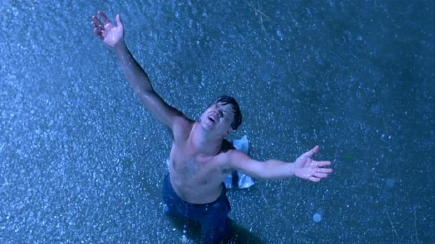
the-shawshank-redemption-1994-bluray-720p-x264-wiki19875022-11-05I love this quote from Shawshank Redemption. Red, the narrator, is finally released from prison after a lifetime of incarceration and decides to get on with living, ” I find I’m so excited, I can barely sit still or hold a thought in my head. I think it’s the excitement only a free man can feel, a free man at the start of a long journey whose conclusion is uncertain. I hope I can make it across the border. I hope to see my friend, and shake his hand. I hope the Pacific is as blue as it has been in my dreams. I hope.”

May you be free.

I’m Disappointed In You

Have you ever had someone in your life who seemed constantly disappointed in you? It didn’t seem to matter how hard you tried, it was never enough. Sometimes they didn’t have to even say much, you just knew – you are a loser, you will never be worthy.

I know what it is like to live with disappointment. It was a glib smile and a few words, a gentle sigh. I failed again. In my particular case it made me needy, so very needy. Dedicating every waking minute to impress, to please, to do, didn’t seem to matter. Disappointed again.

Maybe it was your dad, or your mom, a relative or a friend. For many of us it was our spouse – a wife or a boyfriend whose expectations and selfishness bruised and ultimately scarred your heart.

Poor self-esteem. Bad self-image. Feelings of inadequacy. Second-guessing yourself. Minimizing your accomplishments. Squinting in the mirror. Fear. Doubt. Self-loathing. Pain. Never good enough. Loser. Pathetic. Bitch.

On some level we all know that it is our own responsibility to feel good about ourselves. In theory. In practice, when someone whose opinion is supposed to matter denigrates and often subtly destroys our wholeness, it is very difficult to feel worthwhile. We know we are not supposed to base our self-esteem on others but how do you do that?

Quick quiz – If ten people tell you that you are beautiful and one person tells you that you are ugly, which one will you remember?

I wonder if the reason we believe the insult is because somewhere, down deep perhaps, we believe them. Many of us have been told we are ugly or fat or stupid or bald or pathetic or worthless all our lives. How can we possibly have good self-esteem now?

The truth: The opposite of bad self-esteem is not good self-esteem. The opposite of bad self-esteem is self-acceptance.

The truth is, you may always be fat. You may always be bald. Joan Rivers is scary proof that plastic surgery can only take you so far. You may be considered ugly by the beautiful. You may never go to college. You probably will never be famous. Or rich. Or even successful. And you get cry all you want and rail against the system, get angry and frustrated and die in a flaming manure-ball of bitterness. I see people every day who absolutely refuse to accept their illness, or their spouse, or their saggy boobs. I know how they feel. There are seemingly countless things I don’t like about myself. Nobody needs to point our my flaws, I see them in glaring technicolor. You don’t need to be disappointed in me, I can do quite fine on my own, thanks.

One day I woke up and realized in retrospect that I was living my life to impress someone who was incapable of accepting me or loving me for who I really was. I understood that I had been running myself sick trying to earn her love, only to hear her sigh with disapproval. I still care about this person, actually very much, but no longer feel compelled to sacrifice my soul for a smile and a nod.

Emotional wholeness rarely comes by accident.

Making You Happy

“When I was 5 years old, my mother always told me that happiness was the key to life. When I went to school, they asked me what I wanted to be when I grew up. I wrote down ‘happy’. They told me I didn’t understand the assignment, and I told them they didn’t understand life.”
― John Lennon

Happiness is fleeting. I hate to disagree with a philosopher of Lennon’s stature but pursuing happiness can be a difficult journey. Spending my life looking for the next happiness can be a frustrating and hope-crushing proposition. And who can even say what happiness is, anyway? Perhaps happiness is nothing more than a pervading sense of contentment. Maybe happiness is found in the realization of what your life means, or who you are, or what you are about. For a few years of my life I know I was very very happy when I was high.

And ultimately that is the point. Happiness is, by its very lack of pragmatic definition, difficult to pin down. Often we only realize we are happy when we look back and realize that those days, the ones in which we were struggling and living day-to-day, were in fact our happiest times. Who knows, someday you may just look back and think these days, these stressed out busy days, were our best days.

For me, happiness is knowing I am doing something worthwhile with my life, with people I love. Happiness is making a difference. Happiness is holding my new grandson Angus. Happiness is hope, and laughing, and my kids and kissing Annette. Happiness is family. Happiness is… God forbid… am I content?

Happiness is less exciting than it once was, perhaps. Less exciting… but real.

George Bernard Shaw – This is the true joy in life, the being used for a purpose recognized by yourself as a mighty one: the being thoroughly worn out before you are thrown out on the scrap heap and being a force of nature instead of a feverish selfish little clod of ailments and grievances, complaining that the world will not devote itself to making you happy.”

Obsession

Split face photoMy wife is planning a trip to somewhere warm and she is doing it wrong. As a guy I would go online, find the very first place that was on the ocean and book it. It wouldn’t matter if it had air-conditioning or bedrooms or anything so trivial. As long as it had wi-fi (which I wouldn’t use) and I could hear the waves I wouldn’t obsess about the options and would worry about the other details when I got there. Last time I was in Hawaii I got in a taxi on the Big Island and told the driver, “find me a rental car that a local would get”. He took me to a Rent-A-Wreck where I paid nineteen dollars a day. Hertz wanted fifty-five. The next day we asked around until we found out there was a Wal-Mart in town. Supply problems solved. I’m a fairly “live and let live” kind of dude and investigating options isn’t part of my DNA. I am all about decision-making, don’t confuse me with details or facts. I like to fire the weapon, not waste all day aiming. I suck at board meetings. After about forty-five minutes I am ready to kill something. I do not ordinarily obsess about details.

For people struggling with mental health issues, however, obsession is a very real temptation. In counseling we talk a lot about cognitive distortions, about how easy it is to catastrophize when anxious or upset. It is also tempting to employ something called emotional reasoning – using our heart, not our head, to make decisions and formulate opinions regardless of the objective facts. Then there is black and white thinking, and “should” statements, and making mountains out of mole hills and seeing the negative in every situation. You can see where I am going with this. There is something in all of us that, when we are stressed or hurting or in trauma or struggling with anxiety or depression, likes to obsess about possibilities and worst-case scenarios.

Obsession.

Obsession is an emotionally bankrupting practice. Letting your mind “go there” is rarely healthy or productive. For some reason we have this impression that we shouldn’t deny our feelings and we should let ourselves experience all that frustration and fear and negative thinking. Sadly, many people believe that if they don’t catastophize the hell out of their problems they are somehow being untrue to their emotions and inauthentic. Nothing could be further from the truth. Practicing healthy mindfulness and being true to oneself has little or nothing to do with obsessing yourself sick. Emotional regulation is an extremely important, though often overlooked, part of maturity and growth. It is my contention that my journey to maturity and wisdom is nothing less than learning to control my thought-life. As James Allen says in his classic As A Man Thinketh, “Self-control is strength. Right thought is mastery. Calmness is power.” The Bible, another good source of wisdom, says it this way, “Be transformed by the renewing of your mind”. That is good counseling advice, whether you are religious or not. Obsession is sickness.

Learning to reign in our thoughts, as hard as that seems, is a learnable skill and not impossible. A good counselor will help you take control of your cognitive distortions and learn to process your thoughts in a healthy and hopeful manner.

It isn’t easy, but it is incredibly worth it.

The Criticism of Celebrity Rehab

Celebrity Rehab with Dr. DrewAre we still so naive that we assume television is actually like real life? Do people still believe shows like Celebrity RehabIntervention and Extreme Makeover, Home Edition have anything to do with reality? Is there really a Rembrandt hidden in that abandoned storage locker? Unfortunately the recent suicide of Celebrity Rehab star Mindy McCready has served to illustrate the problem with glib culture and our fascination with star-studded solutions to important issues.

The sad part of the story, that few seem to be talking about, is the unbelievable fact that some of the pseudo washed up stars undoubtedly believed that by going to a reality show to deal with chronic addiction issues they would receive quality help with their problems. Apparently they have been living in Glitterland for so long they think that it is possible to be authentic with cameras rolling and an audience. Imagine the shock on the faces of the winners of Extreme Makeover when they find out their taxes have gone up ten-fold and they can’t afford to pay the utilities on their new million dollar mansion. Reality’s a bitch. Cracked.com has an excellent expose on the reality behind the reality shows here.

Going to rehab, or treatment, or whatever you wish to label it, is a daunting enough thought without a television audience critiquing and criticizing. The work necessary to deal with and overcome a serious addiction takes years, not twelve episodes. Believing that a televised intervention or an hour with Dr. Drew will make any substantive difference is ridiculous. In the real world there is not a limo to take you to a treatment center after the family reduces you to tears and shows you the golden path to success. I have been involved with dozens, even hundreds, of family meetings with addicts and things simply do not go the way they do on television. There is much more yelling and far less contrition. Even if you could get a commitment for treatment there is often a six-week to two-month waiting list to get in. Even Detox can take a few weeks. Welcome to the real world. Adding in the cameras and the lights and the looming audience is a sure-fire recipe for disaster. How can anyone hope to heal with the cameras running? This does not even take into account the skewed life experiences of media celebrities who have little or no experience with real life and are ill-equipped to handle even the most mundane hardships.

Mindy McCready (album)

So why are we surprised then that five people, at last count, have died following a stint on Celebrity Rehab? Mindy McCready serves as a sad reminder that many of us are tempted to take short cuts and are not realistic about the true cost of dealing with our mental health. Real therapy is gut-wrenching and should not be on display for the general audience. I feel bad for Mindy and others who have been sold a lie, dressed up as a photo-op. Wholeness comes from confronting our demons, usually one at a time, and wrestling them into submission. There are no shortcuts to wholeness.

Maybe it was Dr. Drew himself who gave us the last, best word on the subject – “Mental health issues can be life threatening and need to be treated with the same intensity and resources as any other dangerous potentially life threatening medical condition. Treatment is effective. If someone you know is suffering please be sure he or she gets help and maintains treatment.”

Poser

“I hate how I don’t feel real enough unless people are watching.”   Chuck Palahniuk

I am a poser. A Scottish poser. It was with some distress, then, that I realized some time ago that my humble little red-headed wife was related to the lesser kings of Scotland, the clan Douglas, the Black Douglas, the flower of chivalry, the Earl of Montrose, several prominent Jacobites, the earls of the Isles and Moray, and Archibald the Grim. My relatives were probably crouching with their mangy faces in the mud as her snooty relatives rode by on the way to the Battle of Bannockburn. One of her forbearers invented logarithms. My relatives probably didn’t go to school. William Douglas (Jamie’s lesser known brother) was the only earl to harass the English and the first to recognize William Wallace‘s worth. He was the driving force behind the early days of the Scottish Revolution and the Douglas boys were considered two of the greatest knights in Christendom, recognized thus by the papacy itself.. My relatives ate alot of beets.

It’s interesting how we so desire to ‘be someone’. Annette seems to take it all in stride. I would be ordering kilts, writing articles and booking vacations. Many of us are often tempted to name drop, to associate with people of influence, to trace our lineages back to find out if we are illegitimate heirs to the throne. One of the things I find amusing when I talk to my friends who believe in reincarnation is that nearly every one of them was once an indian princess or cupbearer to Genghis Khan. Nobody ever admits that in a past life they were accountants or a parsnip. There is something romantic, something proud and wonderful, in believing that we are significant in a culture that has come to nearly worship fame, regardless if it is for any good reason. If you don’t believe me watch Here Comes Honey Boo Boo, or any show with gypsies on TLC. Or anything on TLC. But seriously, don’t watch TLC.

We line up to catch a glimpse of Paris Hilton or Princess Whatever Her Name Is; we pose with our friends about who and what we know. We posture in order to gain face or credibility. It’s a vicious cycle. Annette hasn’t done that at all. It’s sorely tempting to want to be somebody, even by association. It’s too bad that we have this drive to impress, this childish need to be recognized and adored. I know I do.

Once a long time ago I enjoyed a certain level of notoriety. I miss that. Perhaps this is because we have difficulty being complete in ourselves. Perhaps we feel that if others notice us than that makes us special. We have been led to believe that we need something outside of ourself to validate us. We know we are important if other people tell us we are.

Got blood?It’s a trap, a hamster cage that never stops, can never be complete. Living your life to impress other people is a sure-fire way to end up insecure and ultimately neurotic. Even living your life to please others is a lose/lose proposition. Some of you know who you are. You call yourself a “people-pleaser”. As I ask my patients, “How is that working out for you so far?” Unfortunately there are people in our lives who are emotional and relational vampires. You can never do enough, or give enough, or love enough to fill that hole in their heart. Finding your self-esteem by pleasing and impressing others, no matter who they are, is dysfunctional. It certainly feels right – you are giving, kind, gracious, self-sacrificing. The problem is, you are also unrealistic and undoubtedly very unhealthy.

There is nothing wrong with seeking to help and care and love and give. There is something very wrong with deriving my sense of identity that way.

“It is easier to live through someone else than to complete yourself.  The freedom to lead and plan your own life is frightening if you have never faced it before.  It is frightening when a woman finally realizes that there is no answer to the question ‘who am I’ except the voice inside herself.” 
―    Betty Friedan

What Are You Chasing?

Dog sunny Day AfternoonFred Craddock tells the story…

A man walks into the living room of a friend’s house and sees a large greyhound dog wrestling on the floor with his friend’s children. His friend had a habit of rescuing the greyhounds from the race tracks because they make great pets.

The dog and children were having a great time rolling around and playing on the floor with each other. The man looked down at that greyhound dog and said, “Dog, how come you’re not racing anymore?” And the dog said, “I’m certainly young enough to race.” The man responded, “So you’re young enough to race. Is it because you weren’t winning anymore?” The dog said, “Oh no. I was winning every race. I won every race up until the day I stopped racing.”

“Well then why aren’t you racing anymore dog?”

The dog replied, “Because one day I realized, that rabbit I was chasing wasn’t real.”

I’m sitting in my front room, taking some personal time, checking out the recommendation of a friend – watching “The Big C“. I try to find shows I can share with my wife, our tastes are very different. It’s the story of a woman who finds out she has cancer, terminal cancer, but can’t seem to tell anyone except her crotchety old neighbour. She realizes that she has spent her life playing it safe, chasing after middle-class furniture and watered-down dreams. It is a reminder of how easy it is to forget what is important, to settle for what is predictable.

Tony Campolo likes to talk a about a study in which fifty people who were in their late nineties were asked the question: “If you could live your life over again, what would you do differently?” Looking back on their life they concluded that, if they had a chance to live their lives over again, they would have spent more time reflecting, taken more risks, and done more things that would live on after they died.

No one mentioned they would have attended more meetings, spent more time doing taxes or had more arguments about paint samples. Few of us, if pressed, would admit that we grew up hoping that some day we could waste our lives on things that didn’t matter.

Great Expectations – Valentines Edition

slide_279672_2080270_freeMany readers may not realize it but I was a single parent, raising two boys with no help or financial support, for six years. Not a single date. It was the worst of times. It was the best of times. My sons are my best friends, we are incredibly close. Grief will do that to you.

I remember vividly the first Christmas I was alone. I had never realized how many happy couples and two-parent families were on Christmas television and movies. I experienced loneliness on a level I cannot even describe. The whole world seemed to be happily cohabitating except for me. Loneliness will do that to you.

It’s Valentines Day, a happy day for young couples and established relationships. For some of us, however, there will be no flowers, no chocolates, no wet kisses. For many people Valentines Day is a screaming reminder that no one loves them, that they are alone. No Hallmark Cards or chocolate-covered strawberries or rose pedals on your bed.

It is important to remember that today does not define who you are. It is, and I know this sounds cliché, just another day. It may be a painful reminder but like most reminders, it will pass. You are fine just the way you are.

You don’t need someone else to complete you. It’s a lie. I found out the hard way that, as John Candy says in the movie Cool Runnings, “if you’re not enough without one, you’ll never be enough with one.” No one else can fill that hole in your heart, we’ll all let you down eventually. Wisdom is understanding that wholeness can only be found within. No human, no beautiful woman or man, can fix you. Date enough and you will find out the hard way.

As I tell my patients all the time, “Never date till you don’t have to”.