Women Aren’t Equal?

It has been hard for me admit to myself, in a vocation swarming with quality woman, that a female could still feel unequal in 2014. There is a joke we tell of how it’s ok to be anything except a middle-class white guy. All my bosses are women. My wife’s a woman and she is perfectly capable of handling me if she chooses. I usually hang around with women. Women aren’t equal?

There are a ton of things to write about here but I like looking at the weird stuff. It may not surprise you to learn that men, by the mean, have difficulty understanding, on an emotional level, what it feels like to be just shy of five-feet tall. I’m 6 feet plus 2, I have a black belt so that I can be blissfully misinformed. I grew up with lots going on and excelled with a ball in my hands (shut up Cory). I have no idea what it would be like to have a partner who can beat the crap out of me on a whim. My wife could take me, I’m not allowed to hit girls. My mother will hurt me. My father would be disappointed, a man in his 70’s whom every woman loves. I dare you to take the challenge.

I have never known physical violence that I didn’t initiate or deserve.

So when I tell you that I am only now beginning to understand, I ask you to excuse my large frame of mind. The sheer volume of fear I have listened to has begun to ring true. I learn slow. Of course I know this stuff intellectually, I can read. But I am still partly a man, and most of us have difficulty with emotional intelligence when it comes to this kind of stuff.

So many women who live with fear every day of their lives. I could never really understand, as a younger man, why women were afraid to walk alone. I love walking alone. It’s zen, baby. So when you told me the first few hundred times, it sounded a bit ridiculous. I’m not excusing what was. I’m the tallest one in my family. I hang around with ninjas. I’m a white male who plays with weapons.

To all my patient female friends who have not given up on me, you win. It was a good fight, figuratively speaking, but I might be getting a taste. I am constantly amazed at the burden others can carry, and fear has to be one of the worst emotions with which to run a tab. The anxiety, the depression, the trauma, it may not be biological. Imagine you have emotional Fibromyalgia. Everything hurts and it doesn’t make sense and everyone is a potential problem. People with Fibromyalgia live in a body that is constantly in varying states of shock.

Some people live in that state, on an emotional level as well. I have heard the stories. She ran into the McDonalds only to find the two sketchy males in hoodies were only 11 or 12. The right makeup to wear if you have a bruise. What mood is walking through the front door tonight? I always believed that my home was my safe place. What if it isn’t? Any counsellor can tell you that living in that heightened state of tension releases chemicals all over your body. Things change in your core. Things are released in your brain… and in your mind. You learn words like cortisol and neurochemistry. The diet can take a hit. You no longer sleep through the night. The motor is already running and you haven’t even had coffee yet.

Here’s Wikipedia: Cognitive conditions, including memory and attention dysfunctions, as well as depression, are commonly associated with elevated cortisol,[9] and may be early indicators of exogenous or endogenous Cushing’s. Patients frequently suffer various psychological disturbances, ranging from euphoria to psychosisDepression and anxiety are also common.

Cortisol is a good thing that can become a very bad thing. Other things happen neurologically that are not in your best interests. The words self, medicating, and behaviours, are used one after another in the same sentence. Fear can do that to a person, to an emotionally vulnerable person. Let’s be honest, most of us are emotionally vulnerable. You know how this sentence ends. Weight gain or loss, body image, self-esteem, problems with relationships, fear, anxiety, the whole toolbox from hell.

This is the kind of stuff people like me hear all day, every day. It’s not an isolated incident and if you can relate to any of this I will remind you that there are hundreds out there. Thousands. Millions. You have been saying it for years and you are absolutely right. Everyone does have mental health issues. We didn’t know this because there was a time, not so very long ago, when talking about this thing of ours was not really popular. People who went to see a counsellor were somehow “less”. Well baby, it’s now 2014 and daddy’s got a new pair of pants. It’s all good, all of a sudden.

I have become firmly convinced that each and every one of us needs some help, sometimes. It is the human experience. I do not think I could do this without a great deal of help from a couple of people who walk life right beside me. I have at least two other worlds of friends from different hats I have chosen to wear. I need those people very, very much. But I digress.

What does it feel like to be small? I walk around blissfully ignorant of the war that women feel everyday in every part of the world. Or am I wrong? Here’s the thing – this is a blog. It’s not in my book yet so it doesn’t have to be a finished product. Could this be true?

Like I said, I’m recent to this. Time for class. Talk to me.

Weekend Casual – Stories

I am in love with stories. This is marginally interesting because growing up, I never read a book. Not one. Not once, at least not after maybe 12 years of age.

A couple of years ago I had an idea for a literacy program called “One Good Book”. It was based on the lives of my son Ben and I. Both of us refused to read until we were around twenty years of age. All it took was one good book. I thought it was a great idea and my wife happily pretended I wasn’t mentally-challenged, and they weren’t interested in the idea, of course. I imagined videotaping (do we still call it “taping” and if so, why?) the two of us telling our story. My book was the mindless man-soap-opera The Bourne Identity. I can’t remember what book it was for Ben. I absorbed that book, and it’s cheesy cousins within a week or two, and I was hooked. Reading, mostly listening to audiobooks, is my thing now; and the richness it has brought to my life is beyond measure. Nothing is better than a good story.

I am fairly confident, and a few of my friends can easily verify this, that I have spoken in public somewhere in the neighbourhood of 2000 times. Two thousand times. By any measure, that is more than a few. I have learned a few things along the way. Number 1 is leave them wanting more, not less. If you are a pastor or a presenter you better be a lot better than me or I want you off the stage in around twenty minutes. If you are a minister and you speak for fifty minutes your parishioners are probably lying to you. Just saying. If you want me to listen harder, tell me a story.

I am still amazed by how few storytellers are out there. I will forget your facts but I will remember the story of Yurtle the Turtle for the rest of my life. I am pounded by information all day, every day, so why should I pay special attention to yours? Just saying.

Stories intoxicate me. Do you remember the story of the dime? the train ride in the French countryside? Can you remember the cadence from that story about MLK? I can hear Churchill’s slow, desperately measured voice crying, “we will fight them on the beaches”. King decrying, “I can see the mountain”. the Black Douglas, The story of Le Chambon. Or The Dardenelles, or Masada. It’s David hucking rocks at a giant or Medusa’s hair. Here’s to everyone who has ever drawn a line in the sand and said, “We have the Jews, and you’re not getting them”. For millennia humanity has poured it’s heart into stories because stories matter. Don’t give me information, tell me a story.

Want to hear a story?

Sometime

“Courage is not something you have, it’s something you earn.”

the_blitzMalcolm Gladwell tells the story of the bombing of London in World War Two. The Germans called it the “blitzkrieg” or just the Blitz“In the years leading up to the Second World War, the British government was worried. If, in the event of war, the German Air Force launched a major air offensive against London, the British military command believed that there was nothing they could do to stop it. Basil Liddell Hart, one of the foremost military theorists of the day, estimated that in the first week of any German attack, London could see a quarter of a million civilian deaths and injuries. Winston Churchill described London as “the greatest target in the world, a kind of tremendous, fat, valuable cow, tied up to attract the beast of prey.” He predicted that the city would be so helpless in the face of attack that between three and four million Londoners would flee to the countryside.

In 1937, on the eve of the war, the British military command issued a report with the direst prediction of all: a sustained German bombing attack would leave six hundred thousand dead and 1.2 million wounded and create mass panic in the streets. People would refuse to go to work. Industrial production would grind to a halt. The army would be useless against the Germans because it would be preoccupied with keeping order among the millions of panicked civilians. The country’s planners briefly considered building a massive network of underground bomb shelters across London, but they abandoned the plan out of a fear that if they did, the people who took refuge there would never come out. They set up several psychiatric hospitals just outside the city limits to handle what they expected would be a flood of psychological casualties. “There is every chance,” the report stated, “that this could cost us the war.”
David and Goliath, Malcolm Gladwell

The government was sure that the residents of London would be shell-shocked. Everyone knew that it would be only a matter of time before Britain was boarded. Everyone was wrong. For a lot of reasons that Gladwell illustrates, people in London in World War Two gave ‘the finger’ to the Nazis and shrugged it off.

The experts are often wrong. That psychiatrist who diagnosed you might not have had a clue what was really going on. Those meds may work for some people but that does not mean they work for you. Research is changing so fast that none of us can keep up, and I do this all day. Sometimes the people we trust to know the answer are googling it while you are waiting in their office (This is, in point of fact… a fact).

The experts believed that the people would be afraid. It turned out that when people survive a bombing they begin to feel invincible, and in the end the Germans only managed to make a strong country into a very pissed-off enemy. That was one of the lessons of the story, I suppose. They were not afraid, they were afraid of being afraid. In counselling we call that catastrophizing. What was the worst that could happen if the Germans came? What if we lose? Making a mountain out of a mole hill. Come on, you know what I mean. The people who should know were convinced that the Blitz would be the beginning of the end. It turned out to be the end of the beginning. Everyone underestimated the RAF, and never have so few given so much for so many, or so the story goes. Churchill stood alone against the world, a ragged bulldog who just wouldn’t lie down. The worst didn’t happen. Not even close. And that is why history is cool.

Sometimes, often, I care way too much about crap that shouldn’t matter. I get sucked in to the drama and forget to reach for my Wisdom Rock. It’s hard to be Zen when the kids are screaming. But hear me here: It’s not about last time, it’s about sometime. Sometime you will get better than this. Sometime things will be different. ‘Sometime’ is not a cognitive distortion. Sometimes this stuff works. Sometimes. We call that hope, and without it you’re pretty much screwed.

There are moments when catastrophizing does WAY more harm than good. It can take me places where I have a hard time coping. I know there is that statistic somewhere that can prove me right, the one about how most of what we are afraid of never really happens. You know the one. But let’s be honest, it’s not about who is right and who is hurt. It has to be about me.

Try that on for size. It’s even hard to write. It has to be about me. I am no good to anyone if I am not strong. People count on me. I do this for a living and it gets inside me, infects me, for better and worse. What good am I to my wife, my kids, my partners, if I am emotionally wrecked? This is a hard lesson for a Canadian to learn. It feels selfish to my prairie ear.

Many of us are afraid of the unknown. The “what-if’s” have happened more than once. What the Germans didn’t understand, and what we all tend to forget, is that you cannot break a spirit that gets stronger every time you bomb. The Brits were prepared to gas the Germans on their own beaches, if pushed. You do not piss off the British Empire. They are stronger than they let on.

Sometimes you just have to endure and learn.  It’s not about last time, it’s about sometime. You cannot be beaten if you learn every time you are hit. You will win in the end. I have to believe that because I’ve seen it happen literally hundreds of time. I’ve felt what it feels like to be “ok” and I want more of that. A bunch more.

You can do it. You are, like the fairytale, stronger than you know. Courage is not something you have. Courage is something you learn. Malcolm is, in the end, right as rain. You’ll have it when you need it if you practice what you have learned. That isn’t rocket science but this stuff is hard and it is important. It needs to stop being “hurt enough I have to” and start becoming about “learning enough I want to”. Getting better is about learning – I will die on that hill, if necessary. You can’t get better if you aren’t getting smarter about your own particular piece of crazy. We’ve argued about this before. I get paid to research and I listen to audiobooks like a drug addict, what can you do?

I know, it’s a sweet gig.

Cue the cheesy ending – “You’re bigger than you know”.

My Teacher

I had an interesting conversation with a colleague some time ago. We talked about the cost of trying to make a difference. It was a very cool hour. We weren’t rock stars, we were just talking about philosophy.

Both of us had been hurt, trying to try. Giving a damn seems to cost more than the advertising brochures promised. Caring forces you to give up some of your dreams of glory. You know exactly what I mean, don’t you? I’m not a hero, that is abundantly clear if you read anything I write. That ego stuff has nothing to do with what I’m writing at this moment with my counsellor hat on. I’m at work right now and “at home” Scott is hours away. And I’m a guy.

In the hard light of reality I know that I am allowed to admit that most of us really do want to make a difference. When my life is erupting and my family is cray cray I can forget that I am, at heart, an idealist. That’s easy to forget when you have scars. It’s hard to accept that caring for other people usually hurts us. I am still a kid at heart.

Any measure of wellness that I feel now I learned the hard way. I’m not as good at this as I like to portray in public. Most of us aren’t. And one of the worst lessons I have had to learn is that most of the real wins, the authentic difference, came after you have been hurt really bad. I am not confident that I learned much when everything was going my way. Pain teaches me.

That really sucks.

Injustice And The Third Way

It isn’t fair and I don’t like that. On some level, most of us have had to face the harsh reality that doesn’t feel fair. But is it?

No. There is no Pixar ending.

Sitting in the old counselling office one rainy day this truth began to open up wider for me. I began to see threads, real or imagined, in many of the stories of pain and trauma that funnelled their way through my door and sometimes my life. It may be that this cognitive distortion, this need for life to “make sense”, has been responsible for a larger slice of misery than at least I ever imagined.

The stories are similar. Depression or anxiety brought on by trauma or heartbreak with a sense of cruel incongruity. We have been wronged and something needs to be put right. We simply cannot accept that there is no payback. It’s so… unfair.

As the good book says, and I proceed to steal and compare myself, albeit tongue-in-cheek, to the great Apostle Paul, “I do not come to you as one who has attained. Nonetheless I press on.” Like you I wonder why good people seem to suffer and total jerks continue to prosper. She left and it hurt and she never came back. I know that feeling. It’s bad. He died without ever getting his “just desserts”. Some of those Nazis escaped to Argentina and lived off the rewards of their raping and pillaging and genocide. As I consumed Martin Davidson’s book, The Perfect Nazi: Uncovering My Grandfather’s Secret Past, it was apparent that the author never was able to see his grandfather pay for his heinous crimes. There is no glass slipper ending. Gru doesn’t really adopt the cute little girls – they get thrown into the social welfare system and spend their childhood in Foster Care. They became sexually active early. Chances are they have issues with addiction and end up marrying poorly. That’s the real world and it is many things, but it is not fair.

But here’s the problem. I am DNA’d to believe in fairness. I cannot seem to get it through my dense skull that reality cares very little about my sense of injustice. It is up to me alone to move forward, and it’s very, very, hard. Years.

There are three ways, I think. There is the way I want, the way I don’t want… and the way I don’t know yet.

I have a friend, a real friend who I see in the real world, who has been working on her stuff for years. Not too long ago she came to me and uttered, “Five years. It’s been five years and I’m still not fixed.” It was heartbreaking, because she is a rock star.

As I wrote in my last post, some people go through things that are beyond coping. There isn’t a toolbox in the world that prepares you for the loss of a child. As I’ve said even recently, you get a free pass for that. I would go crazy. I cannot imagine a scenario in which I would be ok if I lost one of my kids. It’s simply not reasonable to imagine, yet in ways that are beyond my meagre understanding, some people keep going.

I just finished rereading Gladwell’s David and Goliath: Underdogs, Misfits, And The Art Of Battling Giants. He’s a storyteller. I like stories. In that book he points again and again to average people who, when faced with insurmountable odds, found a third way. He doesn’t call it that, but he seems to understand. Mennonites who have learned that vengeance sometimes creates more pain than it heals, even when your baby is defiled. Huguenots who stood up to the scariest dictatorship we have known and said, “We have Jews, come and get them”. Poor people and zealots and losers who came to understand that they have only one life; and the need for justice was ruining what little they had left.

There is the way I want, the way I don’t want… and the way I don’t know yet.

Five years of reading, learning, letting go, and moving forward against impossible odds. No one comes to a counsellor to sign up for that program. Most of us who are in process would happily abandon it at any time for a magic pill or a glass of good tequila.

Like most of us, it started with a broken toolbox of coping mechanisms. Imprints from childhood and generations of dysfunction, broken promises and unfulfilled expectations. Death had robbed her of a piece of her life. Choices. No role models who were not also broken. That ugliness inside. So much pain and hurt it was overwhelming. Some of you have been there… are there.

It’s hard to believe that you might be a success story. There is no pink cloud, no happy ending, no days of bliss without Xanax. But on some deep levels, people can fundamentally change. She still reads everyday because, if nothing else, she has learned that there are no shortcuts to wisdom. She needed to get started. There were days and months and years when it didn’t seem that there would ever be a good day again, but she was wrong. She knows that now. I don’t talk to her like a counsellor anymore, we just exchange information, sometimes everyday. There has to be a good reason to work this hard or I couldn’t live with myself and do what I do for a living. I’ve seen too many people find a third way to believe that my life is hopeless anymore. There must be a way from where you are to where you need to be or I quit.

Here’s the last thing I’ll say about this here. I didn’t have a clue what the third way was for years. I thought, many times, that I had this covered, but I was very wrong. I knew what I knew and I was willing to die for the cause, but the cause was flawed. No one could tell me that because I was right.

But one day I realized I wasn’t. Letting go of what I knew to be fact was exceedingly difficult.

Realizing that I had to work on this stuff every day for the rest of my life was at first disheartening, then exciting. It sure didn’t start out “exciting”. It was horrible. How do you stop believing what you have known to be true all your life? How do you “fake it until you make it” when you feel like you are lying to yourself? How do you hope again when you have been proven wrong in hundreds of ways?

Those are very good questions and this isn’t Sunday School and we have to figure this out for ourselves (with a little help). I can’t give you a slick closing sentence to make you or I feel any better. As I have often been counselled, I need to be relentless in my desire for change. There is only one game in town.

ADHD And The Power Of Being An Outsider

Weird fact. Many many people I know who are ADHD and ADD get “hyper” after they take Melatonin. Some can drink coffee and then nap. I have noticed a trend lately, in the stories I hear; and I find this mildly interesting. I guess I could look deeper into this but… squirrel!

In my ‘D&A’ world (drug and alcohol) I have known several hyper people who like ‘down’ as opposed to ‘up’. Heroin is a down. Chill. Cocaine is not a down. You can solve all the world’s problems in twenty minutes when you are high on coke but the next morning your careful notes may not make sense (true story). Some of us like both. Some of us are just stoners. There is a feeling that comes with that revving down of the motor. Some people self-medicate so that they can be like the rest of us are all the time.

I have no research to support this but, when I think about my love for storytelling, it makes for an interesting tale. Some of us have self-diagnosed ourselves with ADHD long before anyone suggested tests. Some of us were wrong.

But here’s the interesting thing. Some of us were right. In a world of slowed cameras and boring lineups we knew we didn’t fit in. And a few of those who knew they were different lacked something call practical intelligence.

Practical intelligence is not the same as intellectual intelligence. Many of us are intellectually bright but still have difficulty fitting in. Practical intelligence is not the same as emotional intelligence, either. Ask any twenty year old female who chooses to date a twenty year old male and they can tell you about emotional intelligence, even if they don’t know the technical verbiage. Emotional maturity is the capacity for wisdom, the understanding of the emotional context in life. People who are emotionally intelligent are often described as “discerning” or “intuitive”. You know who you are. As I have written elsewhere, often girls develop emotional maturity faster than boys, especially heterosexual boys, for a variety of reasons. Chief among them are the way that boys and girls learn to communicate, and the importance of feelings. Younger generations of men understand this better than the yuppies, but we are still a fair ways behind.

Practical intelligence is something much different. It is the capacity to understand how the culture operates and then operate effectively within that culture. We call it “playing well with others”. Several people I know who feel they are ADHD admit to struggling with the confines and rules of the passive majority. They don’t always understand why the passive-aggressive people with “middle of the bubble” personalities who know how to sound boring seem to go further than we think they should. Some of my clients complain that they shouldn’t have to try to fit in, that society is “dumb” or “complacent” or just plain bullshit. It’s not that they can’t fit in, it’s that they won’t. It’s not that they won’t fit in, it’s that they can’t.

Some of you know of what I am speaking. You may have difficulty playing well with others. Popularity may have escaped you, in spite of relatively good looks or even a stunning charm. Some are prone to say whatever they feel, ofttimes disregarding the feelings of others. Maybe they have greater difficulty with impulse control, or addictions, or just “being nice”. They don’t suffer fools. I don’t know if this is really a “thing” but I have heard the stories. Many, many, stories. The sheer volume of the story has impressed itself upon my subconscious. I seem to hear this tale over and over again, year in and year out. It may not be a “thing” but it’s a “thing” around here.

I say this with a level of confidence because I too have struggled with practical intelligence. I was listening to a book some time ago and the author mentioned this issue in a new way. I have known of this concept for decades but did not apply it to my own story. I have a certain lack of practical intelligence. That is difficult to write because, by the main, I like to consider myself fairly intelligent and intuitive. I have know for years that I have difficulty being “normal” or whatever vanilla word works. I know several of you are probably lining up to question my definition of normal, but you know what I mean.

A few among us have never been able to fully integrate into the dominant culture and they occasionally come from tragedy or poverty or a little from Column A and a little from Column B.

My own story is familiar. My father was an orphan. My grandparents were alcoholics. My family was exposed to addiction. We did not come from wealth or security or education. I was the first person in my family to graduate from high school and I am a middle child of two parents. I am not endeavouring to become even more self-absorbed, none of this is my story – it’s only my history.

I grew up in a safe place, everything else was gravy.

My ancestors were not privileged, and had to fight to steal a piece of the Canadian Dream. My father was opening, and often running, a local gas station by the time he was 14. After joining the military he would often borrow a military “flip” back to Toronto from the prairies (think almost half of the second largest country on the planet) in order to open the garage and work the weekend. Who would fly thousands of miles to work for minimum wage? My ancestors were tough, and they were poor. They were not promised the untold wealth of even the middle-class. They were not like me, they had to earn it. They knew how to drink and they knew how to fight but they could never figure out how to work the system. Practical intelligence.

I grew up with cable television. We were the first people on our block to watch Love Boat. I have never known poverty because my father made sure that I grew up in a world where he held three jobs so that I could have one, and an educated one. No one told me about college because it had never been a part of the equation. I stumbled-in by accident. My parents sacrificed so that I would qualify for student loans and never understand what it was like to go hungry. Some of those lessons leaked into my life.

There are times when we are shaped by our world more than by our biology. Ancestors who could not flourish have traumatized value systems and coping mechanisms. Certain social graces were not learned. They have not “flourished” yet. They never grew up understanding wealth or education or leisure. Generations of oppression teaches lessons that can become of a part of your fabric. Poverty and injustice leave scars. I’m not suggesting my ancestors experienced anything akin to what our African-American brothers and sisters have endured. I’m simply saying that many of us were not the Real Housewives Of Vancouver. But this is not my story, only my history. The moral of the story is that many of us were peasants. We came from hard stock that was not in touch with their feelings. Our ancestors served in wars as cannon fodder, never calling the shots but usually storming hills. Cutlas fodder. Roman fodder. You may believe that you were a concubine to Caesar in a past life, but chances are you were probably digging ditches.

Just ask the African-American in Mississippi or the openly gay man in Steinback, Manitoba. Ask the sons and grandsons of those who fled the potato famine in Britain or came to this country on a boat from the Far East. For some, the new worlds only promised empty stomachs and unrealized dreams. For them, the colonies did not turn out to be the land of milk and honey, just more minimum wage jobs.

Some of us figured it out better than others. Someone has to stop the cycle. My dad and mom decided it would be them.

Certain heritages are closer to the earth are still working out the kinks. Among this demographic you often find the one who will not share his toys. Or maybe, just maybe, he knows how to run a service station.

Perhaps he has ADHD.

Re-thinking food…

Poignant reminder for this season…

Judy's avatarThe Project: Me by Judy

Scott Williams shared an interesting post about the power of thought:

https://scott-williams.ca/2014/11/28/happy-wednesday/

I’ve stated that I never did drugs, alcohol, or nicotine. My drug of choice has always been food. Better yet, or worse as the case may be, you can’t go cold turkey off of food. This gives one the built in excuse that you can’t give it up.

Scott’s information gives me the opportunity to rethinking how I deal with food. It starts in my head first. I knew this, but Scott’s blog helped me clarify the chain of events from thinking to eating.

I still want to stop using food as a punishment and celebrate food instead. This is probably a good time to go over what happened over the holiday. Yes, I overate. No, it wasn’t as bad as it has been in the past. I ate too much, but I didn’t eat as much as I wanted…

View original post 76 more words

More On Invasive Thoughts

Great article from Psychology Today on invasive thoughts. Here’s a taste:

  • Your job review is scheduled in two days and, in passing, your boss says, “Well, we’ll certainly have a lot to talk about.” You try to put what he said out of your mind—what did he mean by that?—but it keeps coming back, and now you’re a nervous wreck.
  • You’re sitting in the airport, ready to board, and thoughts of every plane crash you’ve ever read about keep barging into your head. You try to shake them off, reminding yourself that plane travel is safer than driving a car, but it doesn’t work.
  • You’re going to the doctor next week to have that mark on your thigh looked at and you think it’s probably nothing, but worst-case scenarios float into your head 24/7 and distracting yourself doesn’t work. Why is that?

The answer is what Daniel Wegner calls “the ironic monitoring process”—your brain actually searches for whatever thought or emotion the individual is trying to suppress. Yes, your brain is actually nagging you…

This Is My Toolbox

This is for you. You know who you are.

I talk a great deal in counseling about “the toolbox”. It is a psychological construct that many of us are familiar with. Talking about a toolbox is trendy now, and for good reason. Knowing what it is and how to effectively use the toolbox can be a powerful metaphor. One woman I work with told me that the toolbox doesn’t work for her. She has a sewing kit. The actual metaphor isn’t important, working it very much is.

And so, in deference to the few who have asked, I’ll tell you about my personal toolbox. Sharing this, for some reason, feels like a very intimate confession. This is not your toolbox, but it is mine. Welcome to my particular version of psychological weirdness.
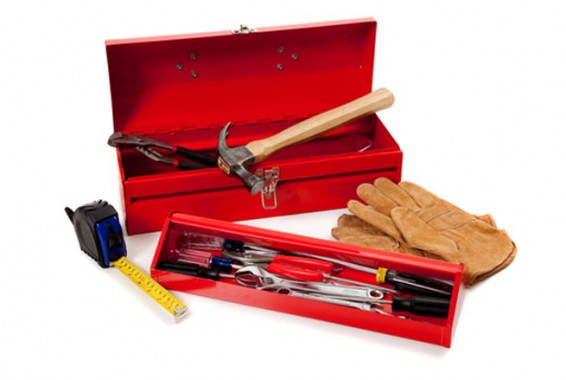
My toolbox is, in point of fact, an actual toolbox. Years ago, I once owned a rusty, red toolbox, with a single removable tray. I could never pull the thing apart without one corner getting stuck, and in my mind’s eye it is still that same old cranky, rusty, piece of crap. I use a version of the Loci System to stock this thing, this imaginary tool chest in my head. I complement this technique with various memory systems because I have a brain injury. There, I said it.

There are only four tools in the tray, a wrench, a yellow screwdriver, my wisdom rock, and a respirator. The second layer, the bottom of the toolbox, holds a toy black chair and a clown mask. Eventually I will replace the wrench and the screwdriver with more literal interpretations, but this works for now.

On that day when we met, I wasn’t thinking about toolboxes or wrenches. We were just having coffee when she casually hurt me with her words. They were spoken innocently enough, but they were anything but innocuous. She meant to hurt me, to teach me. Condescension is one of my buttons, stemming from my childhood. “Tuning me in” strikes me somewhere deep and dark. I am working on it.

I often forget to employ the toolbox. In the wave of emotions (anger or pain or embarrassment or a little of each) I can be caught up in the surge and forget that I am “Counselor Scott”. I forget to ask myself WWSD. I am overcome… sometimes.

I have been using the toolbox for a while now and it still only works when I remember. The methodology is still inherently flawed, and I am also researching and endeavouring to shore up that whole “forgetting” thing when I’m upset and the emotion rolls in like rain. I’ll let you know when I figure that piece out.

Back to the toolbox. I have worked very hard to recognize the rush of ugly, and approximately 50% of the time I now remember to reach for the box. I open the toolbox in my mind. I can see the clasp, one of those silver ones with a metal loop on the top; and I open it.

There is the wrench. The wrench reminds me to recognize the cognitive distortions that are raping and pillaging my brain right that moment. I don’t know why it’s a wrench – this is probably because when I started doing this thing I was much too literal about a ‘toolbox’. I am thinking of changing it to a bunny, but that’s another article. As I reach out in my mind’s eye to grab the wrench I am reminded that I am probably not completely objective right now. Maybe I am catastrophizing or taking this conversation far too personally. Perhaps I am employing “all or nothing” thinking or emotional reasoning. I often use emotional reasoning because I am hurt. Holding the wrench forces me to think rationally. If that doesn’t work I can always hit you with the wrench, so it’s all good.

There is a yellow screwdriver, don’t ask me why. The screwdriver reminds me to employ STOPP Therapy. I should probably just substitute a STOPP Therapy cue card that I give to clients… duh. STOPP therapy has saved my life. I am proficient at STOPP therapy and if I can remember, this is usually as far as I need to go in the box. If I am still not able to deescalate myself , the respirator reminds me to breathe. Two weeks ago at the movie theatre I had to breathe 7 times before I could calm myself down. Apparently I still have some growing up to do. I carry the wisdom rock as a grounding tool. Sometimes it helps.

If I have to pull out the tray I know I’m in trouble.

The bottom layer of the toolbox contains a toy black chair and a clown mask. We are getting serious now. The toy chair is an exact replica of the chair I am sitting in as I write this – my counseling chair, rips and all. It is a not-so-subtle reminder that I need to put on my “Counselor Scott” hat. Yes I built in the redundancy because I am not that smart and need more than one cue. The clown mask… well the clown mask is more controversial and I hesitate to put it in writing. Let’s just say this memory cue reminds me that people have issues and I need to remember that ofttimes the anger or resentment I am getting from someone may not be a reflection of me. We all have mental health issues. Let’s leave that at that.

I am profoundly aware of how cheesy such tools can appear to the uninitiated or critical. But here’s the rub – when I am in crisis I usually do not have time to be profound. I need something quick and simple. Just like me.

Passing On What We Didn’t Learn

My father was an orphan. He grew up with a brother, little supervision, and almost no “life lessons” from a parental figure. His relatives were racist, religious bigots.

My mother is one of three girls. She came from a long line of alcohol and cigarettes, empties and ignorance.

Neither one of my parents really inherited much of worth from their forebearers . My grandmother, by her own admission, hated me. Eventually, as the years progressed, she learned to hate others as well. By most accounts she was a nasty piece of work. My grandfather drank beer for breakfast and filled his work thermos with scotch, in order to cope. He was, according to legend, a very bright man. Very sad. He taught me how many cases of Canadian beer fit in the back of a Buick. Marketable skills…

Parenting is a ridiculous proposition, when it comes down to it. Take a person or two, give them limited skills, make them young and inexperienced. Toss in a boot-full of low-income and sleepless nights and worry. As the kids grow older offer them few real tools and then take their kids and throw them into the meat grinder called “school”. Enter drugs. Enter peer pressure and poor self-esteem and pimples and loss. Welcome to the real world.

Recently, a good friend from a difficult background told me that he felt it was his job to “pass on what he wasn’t given”. He was attempting to raise children with values and ethics to which he had never been exposed. Like my own parents, he was trying to pass on lessons he had never learned. It was time to break the cycle of abuse and dysfunction.

Many of us can relate to the story of my parents. We were also not given the right tools and mentors. We watched while parents punched and swore, or had relatives who were abusive or neglectful, ignorant or narrow-minded. No one taught us how to grow up, much less help a child do the same. We never learned how to think in high school. School also never prepared us for real world finances, or communicating with our partner, or how to deal with stress, depression, or the grinding monotony of life. There was nothing on addiction, or the meaning of life, or how to develop impulse control. But hey, thanks for the calculus skills that I use practically every day in the real world…

Most of the stuff we talk about in counselling I never learned in a school setting. There have not been many lights for parents whose children are defiant, or mixed up, or broken. Sure there have been many books written, but somehow reading yet another book by a successful author doesn’t help as much as the book jacket promised. No one else is there when your child tells you to “go to hell” or comes home with a broken heart. If we are honest, most of us will admit that we don’t even have it yet worked out. How can we teach what we never learned?

There was a time in my life when I thought counselling was stupid. Weak people went to see a shrink, people who couldn’t handle the real world. I was an idiot. Parenting… living… in the 21st Century is insanely complex and confusing. The world is going through a historical “swerve” and even in our lifetimes things have changed so much some of us still think a moustache is cool. Methodologies that have worked for centuries are no longer relevant. Many of our hand-holds are being stripped away.

Take, by way of example, the challenges that the modern man goes through. Even while writing that sentence my hands started to automatically backpaddle and include the ladies. I have been conditioned by society to demean the average male for a myriad of reasons. When I was young we were supposed to be The Terminator. We would have kicked the crap out of Legolas, or those vampires that sparkle. Real men didn’t eat quiche. Manicures… well don’t even get me started. Men who were not “macho” enough were ridiculed. My friends who are gay report that they never even considered “coming out” for fear of actual physical violence. Verbal and emotional abuse was assumed. Just when we figured out the strong, silent type we were told we had to be sensitive. Sensitive? Some people do not understand what a profound mental shift that was for many men. Now give that guy a boy of his own to raise and sit back and watch the fun.

I no longer think counselling is stupid. Few of us are adequately prepared to face the complex situational and emotional dynamics of our present realities. And sometimes… it’s just helpful to have someone look at you across the room and confirm that you aren’t crazy. Every day I try to help patients look at life a little more realistically. They, in turn, teach me profound lessons about myself. Life is hard enough with help. Going it alone cannot be good. I am simply too ignorant of too much to assume I can adequately cope with this complicated thing called “reality”.

Keep going. Keep learning. Someone once said that change comes when we “hurt enough we have to, or learn enough we want to”. Personally, I prefer the second option. I’ve learned enough in pain. I’m tired of figuring everything out the hard way. The next lessons can come from wise sages and wounded prophets, life champions and scarred doyens. It is for this reason, as well as the sheer pleasure of it, that I strap on the headphones and listen to audiobooks day after day after day. Some of my friends actually read real books. Ten of my clients and friends have decided to go back to college, some in their forties and fifties. As I write these words I am laying in bed with my Macbook, one foot on my Nook and several good books in the night table. I am building my new library across the hall. I am not saying this to brag. As I have often pointed out in this website, there is just so much I have yet to learn.

I have to be honest with you, it’s much easier to grow if you read. Or fake read, like I often do. The more I learn the faster I grow. Some of us need to be creative because reading does not come naturally to us. You can start by changing the kinds of television programs you watch. Google your own mental health issues and include phrases like “cbt for anxiety” or depression, or a passive-aggressive spouse, or impulse control, or whatever. It’s like the old Canadian Participaction commercial, “Don’t just think about it, do it, do it, do it”. “Like” Psychology Today’s Facebook page and get their daily article feed. Go to other feeds as well. I personally use Facebook more as of a daily reader than a tool to find out whether or not my fake friends are at Walmart. Learners get better faster – that’s just the way it works. I am coming to believe that there are few shortcuts, only lessons I can choose to learn.

Pass on what you weren’t taught… because you taught yourself. No one is going to do this for me.

Grief

It’s very hard to describe to someone how grief feels. I remember when I was going through my own persistent hell I was taken to a doctor who flippantly told me, “you’ll be fine soon”. He was, not to put too fine a point on it, a condescending idiot. Doctors are not trained in counselling and frankly he was talking outside his pay grade. Comments like, “time will heal” and “just move on” are seemingly wonderful platitudes that are, frankly, usually useless or even harmful. No one who is not experiencing your grief has the slightest clue what you are going through. If you have ever been crushed by a failed relationship, dealing with saying goodbye, or working through your private hell, you know what I am talking about.

The longer I do this the more I have come to understand that grief is an oft misunderstood and pervading emotion, that is not confined to the death of a loved one. People grieve for a myriad of reasons, from the death of a dream to the break-up of what “should/could have been”. People can grieve the loss of innocence or a dream, the hurt inflicted by a parent or child, even the loss of a job or a hope for the future.

There are, of course, levels of grief. No one who has lost a child would appreciate this being compared to the loss of a job, by way of example. Some grief is overt, palpable, intense, overwhelming. As far as I’m concerned a parent who loses a child is given a “free pass” in my world for the rest of their life. Some hells are beyond comprehension.

Grief is not just an emotional state or feeling. Sometimes, when the waves come (and many of us describe grief as a “wave”), your body hurts. Exhausted. Finished. Grief can come in crests that are all-consuming. Your world is so consuming that you cannot understand why everyone seems to be able to go about their lives as if nothing has happened. You can’t stop crying, or you can’t start. Your heart races and you wonder if you are going to die. It never seems to end. Bad counsellors have told you that it will get better someday but you know it will never end. It consumes you. It defines you. You begin to wonder if you are insane. You can’t stop hurting, wave after wave after wave. You don’t care if you live. You often wonder about death, your death. Nightmares turn into daymares as each day, each hour and minute, seems to last forever. You are destroyed. Broken. Life has no meaning.

I’m not making this up. There are readers here who tell you that I’m not even remotely exaggerating. Quite the reverse, actually. People die from grief, and some people who survive never really recover. There is nothing that anyone can say that will make a difference today, but that’s ok. Helping someone who is grieving is about “presence”, not snappy advice. In that time that cannot be named there was nothing you could have said to me that would have “snapped me out of it”. Recovery was a series of infinitesimal movements that I probably had no idea were happening. Time and tears and waves and waves. Emptiness. Then one time, for reasons that escape you, you don’t have a horrible day. Maybe you didn’t cry today. Sometimes that is a huge win. Let’s not pretend, however, that you were happy. Happy? Not bloody likely. Little by little life was less horrible, though it seemed to take forever.

There is no magic pill at the end of this tale, no Prince Charming to swoop in and rescue us. There is only coping and learning and surviving in spite of it all. As we always say around here, there are some lessons that are only learned in pain. They still aren’t worth it, usually. Pain may have given me a measure of wisdom, but I still would have preferred to stay stupid and idealistic and unscarred.

Once again, there is more philosophy in psychology than many realize. These conversations bring up questions of mortality, and faith, and fairness. Learning to cope with a life you never wanted, in a world you never imagined, is a harder thing than most of us would have supposed; If we could have imagined it at all. I grew up in a world where right always triumphed in the end and cool guys never looked at explosions, they just walked away looking like Fonzie or Bruce Willis, Arnold and Clint. Real men ate red meat and drank martinis that were shaken and not stirred, for a reason I have yet to appreciate. Learning that life doesn’t end like in the movies is a painful lesson that we learn and relearn.

Maybe wisdom is learning how to live in a world that is unfair, and where everything doesn’t necessarily happen for a reason. Lowering my expectations, one more time. It has helped me a great deal when I realized that life offered me no guarantees, only days. Learning to find contentment in the moment has been an arduous journey. Learning to let go of things that hold me back has been harder still. I am still hoping for success someday.

I am often reminded of the second half of the Serenity Prayer, the line where it says “that I may be reasonably happy in this life”. Reasonably happy.

I might have a shot at that.

Happy Wednesday

I know it’s not Wednesday, unless you are actually reading this on a Wednesday. In which case, happy Wednesday!

I have a different story about Wednesdays.

I talk to a fair amount of people who are addicted to drugs or alcohol, or World of Warcraft, or porn, or masturbation, or shoes (and you know who you are), or Real Housewives of Vancouver. For most people in my line of work the actual addiction itself is almost secondary for much of our discussion. What the recent literature is saying is that what is really important is that weird stuff happening on a neurological and emotional level way way deep.

It is a fairly good bet that the reason you said yes to that rail or joint or seventh glass of wine on Saturday night had much less to do with your lack of willpower than you might think. Perhaps the cards were far more stacked against you than you ever imagined. So let’s talk about Wednesday.

You have been trying to skip a weekend for months. We talked about the problem and it’s becoming more and more about bingeing. Time to “take a weekend off” to prove to yourself that you are not a drug addict or alcoholic or whatever personally destructive name tag you want to wear.

There is a huge elephant in the room that no one wants to really talk about. The binge probably actually started on about Wednesday. Maybe it was on Wednesday that the thought first entered your mind. You know how it went. All you said to yourself was, “O crap, the weekend is coming!”. That was all. Harmless, right? Wrong.

I have heard several clinicians and university nerds talk about this. Apparently there is much more going on just under the surface than most of us realize. What if thinking about using actually gave me a little hit of happy goodness? Turns out it probably does.

Most of us have heard of adrenaline or dopamine or serotonin. Here’s a story. Yes that seems very random. Have you ever seen that cheesy commercial “This Is Your Brain On Drugs”? You know, the one that makes you want to eat eggs. Cocaine addicts, lots of cocaine addicts, have reported to me that commercials like that actually make their mouths water, and not for eggs.

Why do you think that is? If you’ve ever had an extended encounter with cocaine you will know there is a very specific and pronounced taste to that white powder. Users will often rub it on their gums to numb the surface of their skin, just for kicks. You taste every line, every puff. It is a very sensory experience. Ten years later a person who was once addicted to cocaine finds her mouth-watering during a story about a weekend binge. A wedding celebration has brought back some bad thinking about drinking. Apparently when Johnny started fixating on the weekend some of the good stuff was released in his brain and an association is made. More thoughts can equal more goodies and by the time John gets in his car on Friday night to drive to his dealer’s house he’s pretty much toast. Many addicts report that during the ride over they often berate themselves for being weak, yet again. Many promise themselves they will never do this again, or at least get help. At this point it’s just a game you play every time you disappoint yourself. This is familiar territory. You keep your foot on the gas pedal because you are, in a very real sense, already high.

The science on addiction is changing. Clinicians and front-line workers are incredibly open to new information and are much more willing to speak about dangerous subjects than we once were. Addiction humbles people. The carnage of broken lives that my colleagues in the addictions field and I have witnessed changes a person. I respect the drug more than I used to.

Today my colleague  Dawn and I spoke with some amazing parents who were absolutely frightened by the prospect of their teenager’s exposure to drugs in their local high school. They should be. At the end of the day there was a real sense that those parents needed to become better informed. Information really can be powerful. Knowing that I am vulnerable earlier cannot but help me when I find myself hungry, angry, lonely or tired (HALT). Knowing I am vulnerable can literally be half or more of the battle.

Here’s To You

It happened last night. It doesn’t happen very often but when it does, it takes my breath away. Those invasive thoughts.

Lying in bed they rolled over me like a wave. One thought led to another and then I was consumed. I couldn’t stop myself from “going there”, couldn’t keep the steaming pile of shit from pouring in and taking down. It went on forever.

At the end of it, and literally the end, I got out of bed and went into the kitchen. Then it was over. Moving, changing, going into the light was enough to break that pattern of thoughts, thank God. It doesn’t always work but last night it did, and I’m thankful.

It only happens to me a few times a year. I have clients and friends who deal with this rush of hell every day. I cannot imagine the strength it would take to get up each day and do it all over again. I’m not that strong. Some of these people are. They have learned to cope. You know who you are and my hat is off to you. I’m humbled by your courage.

The tools work. They’ve been tested by fire and I can tell you first hand that there are people who are more familiar with some of the toolbox and are having a measure of success. I have seen some of my clients and friends come through things that I could have never survived. In this office I have learned that I simply cannot stay in that emotional hell or it is going to take me out. Wise sages have written words that have helped me, and probably you as well. I’ve listened to victims and I’ve listened to survivors, and I learn from the survivors. Just the way it is.

So on that ‘night of nights’, and in times when I deal with other, less intense, dysfunctions; I continue to work the program. The Wisdom Rock, the brain massage, recognizing cognitive distortions, practicing STOPP Therapy, WWSD, faith, mindfulness, taking my argument breaks to breathe and breathe and breathe until I calm down. My mantras, the crap detector, the stuff I learned from Family Systems Therapy and motivational interviewing, the self-talk, the distraction techniques, dozens and dozens of cheesy tricks that keep me from losing my mind. Like most of us I forget more than I remember, often not recognizing the danger signs until finally the wisdom of retrospect magically kicks in.

I don’t really have a “Plan B” that doesn’t involve self-medication.

The Wisdom Rock

I have a wisdom stone that I carry in my front pocket. Just a cheap knockoff with the word “wisdom” engraved on the surface. It once was rough, now it is smooth. That is the point – it once was rough.

The pursuit of wisdom for others, and myself, has emerged as something that I apparently care very much about. Lately it feels like my cup cannot be filled, and I get paid to study. As I have spoken and written about elsewhere, this past five years, time spent counselling full-time, has become one of the most important “swerves” in my life. I sometimes regret that this did not happen earlier, though I understand cognitively that timing is everything. Apparently this is my time to grow up. It has taken much longer than I imagined, and along the way I truly believed that I was wise beyond my years. Turns out I was wrong. Self-awareness is a merciless thing and seems to come, at least in my direction, at a terrible price. Growing, but not yet grown up.

I rub the rock. It reminds me of what is important to me when I am so easily distracted. It is a simple therapeutic trick, an exercise I teach clients. The rock is a visual, physical, and psychological tool to recalibrate my focus. It has also become a spiritual tool; I have infused meaning into possessing it. I need all the help I can get.

I have also been reading sports psychology lately. I work with an amazing martial art called Excel Martial Arts, serving as a sort of philosophical and psychological advisor, as weird as that sounds. People call me “Sir” there. It makes my wife laugh. Yes, she keeps me grounded. One of the things they do at Sun Hang Do is an oft mimicked sort of salute with the right hand in a fist, enclosed by the left hand, symbolizing power and control. It is a natural focus point for starting a “pattern” or a maneuver in formal martial arts training. I teach students to put a little ink dot right at the middle of that hand gesture, clearly visible when you start and then throughout their practice. Whenever that hand flashes in front of the face they have a clear and visible reminder. The dot acts like a wisdom stone. Every time I see that little black dot it reminds me to do something – in my case to take a deep breath. Deep breathing forces the heart to slow down and gives me the time I need to slow down and think, or not think, or whatever.

There are many ways to practice mindfulness. As I write this I am listening to a “brain massage” that you can find on YouTube. I don’t know if it really works but it sounds nice and relaxes me… so in point of fact it does. On the way home I will listen to Blink for the third or fourth time because I love Malcolm Gladwell and his crazy hair. Audiobooks saved my life once and I am paying a debt to myself every time I strap on the phones. Gladwell isn’t heavy and he is a great storyteller. I may have a bath later because I can lock the door. I will read for three or four minutes before I fall asleep tonight. Tomorrow morning its back to Blink, but only after I read a few minutes of my toilet book. You probably shouldn’t handle that book much.

Self-care rarely happens by accident. It may not sound like it from this article but I am actually very busy, just like you. We have a bucket of responsibilities and no time for anything. Too bad. Make it work. I drive and listen. Some of us colour, others watch documentaries or Breaking Bad or paint walls. It doesn’t matter if it’s quality time or pooping time, self-care cannot be optional and I ignore it at my peril. There is no one that will take care of me if I refuse to take care of myself.

After all, what good is it if I help the world but lose my heart?

Timing

There is a great deal of philosophy in psychology. I don’t profess to be an expert at either but it feels like I am finally starting to wake up. I have come to believe that some changes are about timing, about distance, about learning. I watch clients go through this process all the time; and hopefully some of this yummy goodness has rubbed off on me along the way. I don’t do this job for the money, just ask my wife.

I get paid to be a full-time student of life. I can research to my heart’s content, as long as some of my paperwork is done. I watch the drama, the comedies and the tragedies, unfold before my eyes. Some of you know what I am talking about. I absolutely love my job. Back to our story. I have been learning recently about the events in our lives that change us. Books have been written about what I call “the event”. I have an article 80% done by that very name; I just can’t seem to end the story. Now it will probably end up being called “The Event (Redux)”. Briefly put, there are some events which are so catastrophic in their ramifications that they rip the fabric of our lives forever. These “events” have a permanent effect on our lives, our hearts, and our attitudes. They are game-changers. More later.

Our part of the story has to do with timing. As someone says somewhere, “timing is everything”. I was speaking with a friend lately about this very thing. We talked about our “events” and the ways in which life has turned out differently then we imagined. Not everyone has one, I’m sure. This isn’t something you would need to feel regret over. It’s not like a tattoo of your 14-year-old girlfriend. Some people’s lives probably go by quite swimmingly, I simply do not know too many of these. I think I know a few. This is a good thing. “Events” are rarely, in my experience, good things. I know a few people who know a few people who won the lottery, but I never will. I guess that could be a game-changer I would like to embrace. Won’t happen in the real world though.

I’ve written about this briefly in the past. I don’t want to talk about ‘the event’ right now. I want to talk about another ‘mini-event’. One day things started to change. It took years and rivers of tears and pain and pain and pain. We aren’t fooling around here. People who know what it feels like to be clinically insane. People who actually believed suicide was the best option. Lives that have been broken. You know, the big stuff. Let’s move on. Things began to change. Since that time I have come to understand that the journey back into some light was more about accumulation than about one-time events. The road back was way, way longer for most of us than we believed we could bear. It seems impossible not to be profoundly affected by the knockout punches. I often hear people say, “There are lessons I’ve learned in this process that I would never have learned otherwise. Still, it wasn’t worth it.” That seems like a reasonable assessment to me.

I have known many people who have chosen to define their lives in terms of ‘the event’. This is not the time for speaking about the potential for dysfunction here, let’s look at this from a different lens. There are those people who see these events as such deal-breakers that a very real part of them died or was altered on that day. Life is before the incident (BI) and after the incident (AI). There would be a me that thought his life was one thing (BI), only to find out it became something altogether different (AI). If you don’t think people can change… you’ll see (AI). Don’t get me wrong, not all people change for the better. These things scar you, is all (AI).

As Santayana reminds us, don’t forget the things you learned there. It may not have been worth it, but that doesn’t mean it cannot transform your life. Busy people forget to read psychology, or counseling stuff, or philosophy. We get so profoundly caught up in our crazy lives that we tend to repeat cycles without learning anything of profundity while we were in the Freak Show. Some of us remember promises that we made ourselves when we were broken; promises we made to God or our spouse or our future. I get paid to remind you of that crap. I personally recommend to my clients that they take a few months every year, for the rest of their lives, and come back for a visit for a month or three. I may get paid to research, but most of us don’t. I mean that in the most empathetic terms I can conjure. Life is nuts here too. I talk about this stuff every day and I forget. A few months a year to keep things on track cannot be a bad idea. Just think about it.

I want to dedicate this article to a bunch of you I work with who inspire me not to give up. Your capacity to triumph in suffering humbles me. I have no idea if I could endure what you are going through, I only know my story. Timing is everything. One day you’ll walk in the room and I, or someone like me, will look at you and ask if anything has changed. You look marginally better. There will probably not be any “ah ha!” moment wherein you suddenly realize your problem and phone Joel Osteen. I truly hope there is, but I never had one. Somehow, in spite of the agony, you were able to build just enough momentum, get the right meds, start eating differently and get off the couch. And it really sucks, but I couldn’t fake myself healthy.

I told someone this week, “This may not be bullet-proof but it seems like, for many people, you just have to ride that ‘wave from hell’ for a while before it starts to cool down”. I could be wrong, I often am, but shooting from the hip I would say that I have not been able to do much for many of my clients for a seriously long time… at first. Either I’m really bad at this or something is trending. Maybe a little of both. In my little office I could feel heart-broken if I thought too often about how long it really takes for qualitative and quantitative change to happen in a life. We don’t talk to clients about this very much but sometimes my job is more about the process than the results on a weekly basis. A few of you have spent years in counseling and groups before there was significant change, and then it wasn’t all good change either. Sometimes I feel like an emotional air freshener until some of the intensity wears down. There goes my buzz…

I have some friends I’d like to introduce some day, even though they are all so very shy. They are mostly women, with a few males scattered in the mix, who could tell you their story. A few have done so already on this site. They make my job super cool. I first met some of them many years ago and they are warriors, every one of these crazy, courageous people. Some have significant mental health issues, huge personal stuff, and usually a lot of grief somewhere. There were so many issues we basically threw darts and waded in. You think I helped you, but you did 99% of the work and I had a great time hanging out with you and getting paid. These friends are the reason I can write so confidently – I watch people who overcame insurmountable odds and refused to quit and somehow, after a very long time, there was a bit of hope. And let me tell you, in the beginning – they would be the last people in the world to tell you they could do have survived and moved on… I might have just had an “ah ha” moment.

You rock.
I have a very cool job.

check out this related article – The Speedo

WWSD

This is what works for me.

The longer I do this the more I am coming to understand how utterly subjective, downright lacking in perspective, I become when I am offended, hurt, or angry. It is finally dawning on my psyche that I can be quite immature or wounded or driven by impulse… sometimes. If I am having a dispute with my good wife and I hear something the wrong (or occasionally right) way, I can become very hurt. In these occasions, by way of example, it is almost impossible for me to think clearly and objectively, free from unhealthy emotion. Or at least it was.

This doesn’t always work and may not work for you. I try to start with a disclaimer so you’ll be nicer to me if the idea is stupid.

I have come to realize that I actually two people. By day I am mild-mannered counselor guy, able to remain unfettered and relatively objective and serene. People tell me the wildest stuff and Counselor Scott is fine with all of it. It’s my job.

Something interesting happens on my drive home, however. By the time I’m there I’m Normal Scott, who can be hurt and angered and pushed. Don’t get me wrong, I don’t believe I turn into a raging psycho. I am happy to report that I have an awesome home-life, most of the time. It hasn’t always been that way, but generally things are good. I simply realize that I’m much more emotionally invested in that life and the amazing people who make that life worth living. I pay bills in that life. I manage (with an enormous amount of help) a home and all the day-to-day crap that comes with not making quite enough money to really live like the selfish world-travelling pig I secretly long to be. I have a partner who walks that road with me, and she’s a woman. Yup I said it. I’m not disparaging women at all and I defy to you prove it based on this blog, but she’s still not a guy. I happen to be a guy. We make sense to us. Ninety-percent or better of my clients may be women but I’m still a dumb dude at heart who would rather watch Sons of Anarchy than talk about my feelings. I like liquorice a lot too, though I have no idea why that is relevant. I really do. And Creme Brule. Still not relevant.

Here’s what works for me… sometimes. I have begun changing the way I process my personal woundedness and frustration. It doesn’t work all the time, and frankly seems inane on occasion, but I am finding that it does offer a measure of help, every now and then. I ask myself how the “work me”, Counselor Scott, would respond to this situation. I have taught this to a few clients and though it’s a little creepy asking yourself what Scott would think but whatever works, right?

Counselor Scott doesn’t get “wounded”. He is psychoanalyzing your situation. He doesn’t take things personally, most of the time. His default is acceptance, psychology, and understanding. That person is not Normal Scott. Normal Scott is, well, normal. If, however, I can somehow make that mindfulness switch, right in the middle of a problem, the results are often much more functional and positive. The secret is to let Counselor Scott react instead of Normal Scott. What would that Scott do? Quite a trick. You might want to use another name, even your own if that is helpful. Don’t want to creep your life, after all.

That’s one of the many cheesy things I teach clients. In counseling we do this as a mindfulness exercise in an attempt to get “outside my own head” and analyze a situation without all the emotional baggage.

Try it sometime; who knows?


71% (Or… Beating the Mental Health Odds)

In my ongoing quest to possess the world’s largest private collection of audiobooks, I am reading/listening to an amazing book called Rock Breaks Scissors.

The book is a meandering collection of scientific beauties that most of us have never heard about. How to use science to win the lottery, or at cards, or when betting on tennis, football, baseball, and especially soccer. This book is part of a genre of popular science books written to beguile the amateur. I read as many as I can get my hands on. I have names if you want in.

So let’s learn something new about soccer.

In this little known study scientists studied soccer penalty kicks between the years 1994 and 2010 during the FIFA World Cup. What they found was incredible. Scientists have studied professional soccer goalies and found that when their team is trailing they will choose to jump to their right side 71% of the time. That is a huge statistic for a game built on seconds and millimetres. It only takes 1/5 of a second for a kicker to put a ball in the net and it is statistically impossible for a goalie to know which way the kicker will kick. Or is it?

If you knew which way the goalie would jump, seven out of ten times you were faced with a penalty kick while your team had the advantage, this would be statistically important information to have. Science tells us (and here’s where they start to suck you in to their cult) that because of millennia of conditioning and probable biological predisposition, humans will look to the right when confronted with a precarious situation requiring their attention. You look to the right first when you enter unfamiliar room, for example. Test yourself if you can somehow not prejudice the experiment because now you know what is supposed to happen.

All this is to say that knowing this information may win you games. If your team plays forty games and has, say, 40 penalty kicks a year, occasionally you would be facing a goalkeeper who is wondering which corner you will pick. This may not be a frequent occurrence but consider also that in most soccer leagues there is the occasional infamous “shoot-out” where you can have up to ten penalty kicks in a single match. Knowing this information could mean three or four goals. And in soccer, 3 or 4 goals is everything.

Knowing the statistical likelihood of anything will vastly increase your ability to make good decisions. Suppose I were to tell you that 80% of people with depression got better after one year of good counselling (this is a theoretical question only). Most people who suffer with depression would surely put in this time, right? After all, 80% is a very high number and you have at least a decent shot at transforming your life.

I’m not so sure.

I have seen hundreds and hundreds of people who were only months away from radical transformation, but were simply unwilling or believed they were unable to do what needed to be done. Most mental health issues, for example, can be much better managed with a modicum of effort. Most people still do not put in the time.

Therein lies the nugget of hope. Good things come to those who don’t give up. I have had a front-row seat to many hundreds of changed lives. To a person every one of them undoubtedly told me at some point that things would never change. I have listened to them describe in great detail the impossibilities they were forced to endure. Every one wanted to give up, sometimes every day. Most though I was lying when I said that they could be whole. They were the ones who didn’t quit.

I have known more than a few people who have spent time in prison. Talking with them while they were doing time was often very difficult. I could not convince them that one day they would be free. While you are in the trenches all you can imagine is the war. It is only looking back that they believed things could change.

There was a time I believed I would always be broken. I instinctively knew I would always carry that backpack of pain. It defined me. It absorbed me. I would never be well. I could not understand how other people could go on with their lives as if nothing had happened. I cried every hour of every day. Every hour of every bloody day. Usually much much more.

Then one day I didn’t anymore. One day I had a good day. One day I didn’t feel sorry for myself. It started with a few minutes, then a few more. Little by little. Digging yourself out of depression, or anxiety, or trauma can be unimaginably hard. Some of us can barely get out of bed. People who struggle with mental health or addictions, past traumas or abuse must spend hours and years doing and thinking things that are uncomfortable, difficult to endure, and incredibly demanding of us emotionally and relationally. It is far easier to self-medicate, check out, or get bitter.

Like many of us I still bear the scars of that time. Other scars too.

The Pope Just Released A List of 10 Tips for Becoming a Happier Person and They Are Spot On

mbiyimoh g.'s avatarHigher Learning

In a recent interview with the Argentine publication Viva, Pope Francis issued a list of 10 tips to be a happier person, based on his own life experiences.

The Pope encouraged people to be more positive and generous, to turn off the TV and find healthier forms of leisure, and even to stop trying to convert people to one’s own religion.

But his number one piece of advice came in the form of a somewhat cliche Italian phrase that means, “move forward and let others do the same.” It’s basically the Italian equivalent of, “live and let live.” You can check out the full list below.

The Pope gives a thumbs up to an audience in St. Peter’s Square at the Vatican. (Photo: CSV)

The Pope’s 10 Tips for a Happier Life

1. “Live and let live.” Everyone should be guided by this principle, he said, which has a similar expression in…

View original post 374 more words

Misconceptions About Addiction

Canada’s poster-boy is in the news again. Rob Ford “graduated” from a treatment center and is back on center-stage, larger than life (literally). Like most people fresh out of rehab he is full of quick clichés, intended to cast blame and potentially excuse his past behaviour. Don’t get me wrong, I am truly hopeful that this will help him sort out his life but the inconvenient truth is that such efforts rarely produce lasting change without ongoing counseling and accountability. Ford claims that he will see a professional “for the rest of my life” but based on past behaviours this seems unlikely. I am not seeking to be fatalistic, I just happen to have worked at an amazing Addictions Services Centre for years and have watched a few thousand people work through their own addiction issues.

Quitting addiction is tough. It can literally rewire your brain chemistry while damaging your frontal cortex of the brain:
“Fortunately, the brain also has a built-in override system, the frontal cortex. This is the part of the brain that makes a person moral, humane, social and altruistic – in a word, civilized. But the frontal cortex needs regular nurturing. If it’s long-silenced because of abused circuitry, if a person becomes a devotee of the pleasure-pathway, then the civilizing circuits decay.” (from the above article)

You can begin to see the problems. One of the greatest misconceptions about addiction is that anyone can just stop, once and for all. Another is that by quitting your drug of choice you have solved the problem. I remember vividly meeting a pharmacist who was dipping into the opiates at work and mandated to get help. He came to me and proudly announced that he was “no longer addicted”. I asked him why his lips were so puffy. It looked like a Botox appointment gone wrong. He admitted that he had taken to chewing sunflower seeds when he felt cravings. He was eating approximately 5 bags of spits a day. You can see this all the time. One person stops using heroin and instead smokes cannabis from morning til night. Technically they have stopped using, well you can see where I am going with this. Others engage in high-risk behaviours, or masturbate 8 times/day, or play World of Warcraft incessantly. While these are good harm-reduction strategies they do not address the problem.

Stopping addiction is difficult. We are tempted to address the symptom (the drug or habit) while ignoring the root causes. Most people initially begin overusing substances because they are self-medicating their life. Six months into recovery they wonder why they are still craving. It may be that they are craving their medicine. We have taken away the one medication that seemed to work and replaced it with… nothing.

Another misconception that people often have is that certain substances or activities, marijuana for example, are not “addictive”. This is a woeful misunderstanding of the deeper dynamics of addiction. Addiction is not really about alcohol or drugs. You can be addicted to shoes, or porn, or The Real Housewives of Vancouver, if that floats your boat. Addiction is primarily about what happens on a chemical and neurological level. Some people are addicted to dopamine, not drugs. Anything can be addictive because it’s not about the thing, it’s about the response on a chemical level. Certain drugs are, however, “more addictive” than others. Many people report that the very first time they used cocaine they couldn’t get enough. Anyone who has ever struggled with cocaine addiction can tell you that they were addicted to “more”. For some of us there is never enough cocaine. Those same people may feel bloated after two pints of beer and have no difficulty stopping. Put a line of coke in front of them, conversely, and watch them drool.

This is the problem with complete abstinence-based programs. They cherry-pick which chemicals are “bad” while allowing adherents to drink 40 cups of coffee a day and smoke 3 packs of smokes. They do not understand the devious and subtle nature of addiction. Most clinicians agree that substituting one drug for another is an effective harm-reduction strategy. That is why it is important to address ones addictive tendency, not just the crack problem. Addicts often cycle in and out of addictions – Tylenol 1’s or 3’s, Methadone, sleep aids, orgasms, overdoing it at the gym or church, etc. They are taught to deal with the drug, but not their broken life and propensity to make poor choices, again and again. That is why addiction groups strongly advise against romantic engagements for the first year of recovery. Addicts like substituting one addiction for another. Certain addictions are socially acceptable, though still very harmful.

There is also a pervading idea in the world of recovery that addiction must always be attached to abstinence… forever. I can still remember an 18 year old I spoke with who had just been to a recovery event and learned that, in spite of his addiction to pills and his disdain for overdrinking, he must abstain from alcohol for the rest of his life. For the rest of his life. He had no issues with alcohol at all but he was despondent that because of an issue with Oxycontin he would now be condemned to teetotalling the rest of his days. The thought was overwhelming. We talked.

While it may seem that I am disagreeing with myself at some junction I would like to point out the meta-narrative once again. Addiction is about excess in areas we cannot seem to control and which do something to us on a neurological and chemical level to ruin our lives or cause us to act in ways we are not proud of. There is no substantive proof that an adolescent who struggles with opiates will have difficulty with drinking. Some will yell that it is all the same, as I have seemed to indicate. It is, and it isn’t. Many who struggle seems to become addicted to everything. Others do not. I can give dozens of examples of people who are alcoholics who can take prescription medication with no ill effects. Many people who have difficulty with prescription abuse have absolutely no desire to drink to excess. While it is tempting to paint everyone with the same brush, this simply does not hold up in the real world.

Another misconception about addiction is about methodology. AA groups believe in what is called “the disease model”. Rob Ford was obviously at a program that was 12-step based. This philosophy believes that addiction is a terminal disease and there is no escape from it’s clutches. It is important to note that not all addiction research supports this belief (I can just imagine how many emails I am going to get accusing me of slamming AA). I love Alcoholics Anonymous and believe that it can be an effective model for sobriety. Unlike AA fanatics, however, I do not believe that this is the only road to Mecca. I believe is pragmatism – whatever works for you. Methodologies are not sacred but some are better than others.

If you or someone you know is struggling with addiction on any level get help. I cannot express enough how profoundly destructive this life can be. Addiction may, in fact, be the 21st Century plague. Recovery takes an incredible amount of humility, accountability, and hope. Talk to someone. Finding out the real story behind this important struggle may just save a life. Love someone enough to be honest, even if that someone is you.

Things can change. I wish Mr. Ford all the best.