Jedi Mind Tricks

I see several people who suffer with Fibromyalgia. I used to work, for some time, at the Fibromyalgia Clinic. I have done intake for hundreds of persons with chronic pain, MS, FM, CFS, OA, TMJ, IBS and a bunch of other initials that only mean something if you happen to have that issue. I am not saying this to brag, it’s simply a matter of exposure. Chronic health problems suck. I have learned words like myofascial pain, and trigger points, and pacing. Ah, pacing.

People with Fibromyalgia are usually fairly lousy at pacing themselves. I say this with the greatest respect and am only parroting what virtually all of my FM patients are saying. The scenario goes something like this.

You had a good day. That has become a problem. Many people who find life difficult are occasionally surprised when the sun shines, figuratively speaking. People who suffer from depression, or heartache or chronic pain only get a glimmer of sunshine once in a while and it’s tempting to want to crow. I get that. It was sunny and warm in January these past few days and it’s shocking how much it affects my attitude, and I’m not really that sick. When you get a break in the clouds you probably want to gobble up that “to do” list and go for a jog and a massage. Don’t do it.

You want to do everything. Remember fun?

There is a possibility that we may be wired up for excess. A vast majority of the population would admit to struggling with impulse control issues, among other signs of ‘right here right now’. Don’t you just love the way you can tap your credit card now and the transaction is even shorter? So what if it’s less secure, the tapping feeds my ADHD. I love it.

I find it hard not to want to do everything and experience everything life has to offer. I absolutely adore short cuts and something for nothing. Most of us do, if we’re honest. Pacing is more than regulating my schedule, it has something to do with learning to self-regulate. That skill is one which does not come naturally to most of us. I have known people who seem to have that piece together but I still want a Dairy Queen Kit Kat Blizzard.

Learning to say no to that need to satiate every appetite is not something that is always satisfying to practice. Who ever wanted their goal in life to be devoid of fun? There are, however, increasing benefits to pursuing self-mastery. While you will probably never master your disaster, I have talked to many who light up as they describe how they have changed, and in very amazing ways. Learning to control this mess that is called Scott may have benefits beyond the lessening of the voices in my head.

I want to be a Jedi.


The Measuring Stick

Am I crazy?

Many people who come to see a counsellor eventually get around to a version of this question. We are cognizant of the fact that we are trapped in our own little bubble. Most of us wonder if we are getting better – or more precisely, if we are getting better right. What if we are fooling ourselves? What if your mother-in-law is actually correct? How far down the rabbit hole have I actually fallen?

People like to measure their success. If only there was a Crazy Scale (there are several) that I could gauge myself against. This may be born out of the unspoken frustration we feel because we don’t feel like we are getting better. How is anyone supposed to know when they are fixed?

You could ask a professional, but chances are they have no real idea of how you are doing. If all else fails you could put it out there to your Facebook friends, even if those posts look needy and pathetic. Please, someone tell me I’m awesome! Probably not.

A little better than I was a year ago. That’s the only measuring stick that matters.

I really believe that. It’s not a competition, though if it was, I want to win. The only marker to which I can compare myself is myself. It doesn’t matter how my friends are doing, or my parents, or ultimately even my family or ex-spouse. Wholeness is about momentum more than it is about a random target on the wall to which my in-laws think I should strive. Who cares if you do not measure up to someone else’s standard of success; people are fickle children. What matters is whether or not I continue to fight the fight, continue to get up on days that suck, and keep practicing this crap (in spite of the fact that it isn’t working right now). It’s like the oft-stolen cliché says, “I may not be where I want to be, but thank God I’m not where I was”.

who-is-awesomeIt’s hard to admit to oneself that the race never ends. The journey towards wisdom and wholeness is not measured in terms of attainment, only degree. Every life is a series of disappointments and wins, setbacks and problems. Some people may get through life unscathed, though not around here. I have a responsibility to myself to be more me than I have ever been, not more you (as scary as that may seem to some). Comparing myself to others rarely leads to wisdom; although it can be fun to take a shot at someone not coping as well as we are. A better me is probably the only goal that ultimately matters. I have to live with me the rest of my life. A better me is a better husband, better dad or granddad, better friend and human. Everybody wins.

A little better than a year ago may not sell many motivational posters but it just might be a standard I can work towards.

So how are you doing?

Racing Thoughts

The apple.

When I was in the midst of the manure, and sometimes even today, I have to get up and get an apple. It was always late at night. The demons usually visit when it gets dark. A Gala apple. So sweet it bites back.

You see, when things got bad, and they got very very bad, I could not shut my brain off. I often tease my female clients that they are cursed. I’m not talking about religion and I’m not mentioning your period, I’m talking about your big, glorious brains. I have often asked my wife, “what is it like in there?” She thinks all the time. All the time. I can’t imagine the hell that would be.

(what follows is a generalization)

In my experience, so you know this is super sciencey, women’s brains are far different from mine. While it is true I have a brain injury, I can clearly (as clear as I ever am) still remember being able to stop thinking. There, I said it. I have asked many different groups of people, men and women, a few questions that seem to indicate that most of the men in my life can literally turn to the wall and shut off for a few seconds. Imagine that, ladies. That is the reason television is the drug of choice for so many men. I am barely awake when I watch television. My wife can ask me a question (and why are you talking during the program?) and I can feel myself shake off the lethargy and reemerge into the waking world. I can stop thinking.

There I just did it again.

In counseling we talk about racing thoughts. Racing thoughts are… well you really don’t need an explanation now, do you? There were bad years when I could not shut down. I know now that my brain was acting on a more primal level than it should be as I write this article. My amygdala was pounding, my higher-end reasoning was drowned out in the waves and waves of pain. You know what I’m talking about.

In addition to size, other differences between men and women exist with regards to the amygdala. Subjects’ amygdala activation was observed when watching a horror film. The results of the study showed a different lateralization of the amygdala in men and women. Enhanced memory for the film was related to enhanced activity of the left, but not the right, amygdala in women, whereas it was related to enhanced activity of the right, but not the left, amygdala in men. One study found evidence that on average, women tend to retain stronger memories for emotional events than men. The right amygdala is also linked with taking action as well as being linked to negative emotions, which may help explain why males tend to respond to emotionally stressful stimuli physically. The left amygdala allows for the recall of details, but it also results in more thought rather than action in response to emotionally stressful stimuli, which may explain the absence of physical response in women.

Wikipedia

Even Wikipedia is hedging it’s bets…

amygdalaSome of us feel this way if we get cut off in traffic, or our spouse demeans us, or someone says something insensitive. Many of us have started down this road just by reading the news. Words like terrorism, or ISIS, or violence, are very powerful and can start your brain in a direction where all bad things tread. We emotionally react “without thinking”. Have you ever said that? I don’t know what happened, I just reacted. I did that without thinking. Amygdala. Limbic System. Throw those around at the next party you go to… nerd. (Technically my wife calls me a geek, but it’s in the same family. Any nerd would know that).

Basal Ganglia. I say it with a slight drawl on ganglia.

Contrary to the tone of this piece (it’s Monday), racing thoughts are no joke.

So I went to kitchen and grabbed an apple. It was hard to get out of bed, it’s warmy in there. I didn’t even need to pee – I like to work efficiently when the room is cold. I could lay in bed and wrestle with my thoughts forever but in that position I could not win. The physical act of getting up, of distracting myself with a sugary snack (that woke me up), pulls me methodically away from that inner battle. It takes me just over two minutes to eat an apple.

I’m not even remotely suggesting you should start eating apples in the middle of the night. You should have a Kit Kat. Counsellor’s orders.

By now you know where I am headed. There are times when I cannot remain in my head and win this battle. There are moments when we need to employ what we know, to battle what we fear. I put the apple in my cheesy toolbox, along with my chair, and my rock, my STOPP therapy, and a few other tools that occasionally work. This is not deep, but it does work.

There is no value in letting my thoughts run wild. I have heard those who believe that we should not seek to damper our emotions, that we should “feel our feelings”. While this is often good advice, it may not serve us well if we are feeling suicidal, for example. There are times when I need to shut the engine down, if for no other reason than I cannot continue to maintain this level of engagement.

There was a time when we believed that practice made perfect. We believed that we needed to “fight the good fight” and engage those thoughts, in order to develop our emotional muscles. We now understand that this is not necessarily the case. I possess only a limited number of “no’s” in my repertoire. Exposing myself to temptation does not develop resilience.

The more I say no to the cocaine, the more it takes out of me. This is not universally known. We have believed that the more I say no, the more I develop the capacity to resist. Research, unfortunately, does not support this premise. The actual truth is – the more I say no the more likely I am to say yes next time you ask. I only possess a limited storehouse of good intentions. If you are an alcoholic, being around booze does not make you stronger. In point of fact it makes you much weaker.

It serves no purpose when I let myself “go there”. There is no pot of gold at the end of that rainbow, just frustration and failure. Learning to stop the freight train is a skill that doesn’t come by accident, it takes practice.

I need an apple.

Personal Growth and Resilience – According To Scott

What can I say, she says it better than I can (and she has a truck)

Carrie Reimer's avatarLady witha truck

Orange butterfly , isolated on white

If you see yourself in this comment please do not be offended because I don’t even remember who has done this but I have had people come into the blog and post a comment asking how to heal. Three or four people including myself will give informed, honest replies.  Later, I will receive an email from the same person asking the same question. It is as if they think I have a secret formula that I don’t share on the site and if they message me privately they will be privy to the secret of healing.

They broke up with the abusive ex 2 weeks ago and want to know why they are not healed and how long will it take? will they ever be able to date again? how will they ever trust a man again? They want to “fast track” their healing, and who can blame them, it…

View original post 816 more words

Resilience

Psychological resilience is defined as an individual’s ability to properly adapt to stress and adversity. Stress and adversity can come in the shape of family or relationship problems, health problems, or workplace and financial stressors, among others.
Wikipedia

“Little by little one travels far” (Spanish saying stolen by Tolkien)

A little at a time.

Almost every day someone, somewhere, asks me the same question. When? When is this going to change? When am I going to find relief? When am I going to win at something?

Lately I have been fond of dispelling misconceptions about psychology and counselling. I have written about the desire we all have to get the “magic pill”. We are saturated by the many distortions and cheap sales jobs by internet gurus and self-help magicians promising quick fixes and miracle drugs. So many placebo remedies and sugar pills, unrealistic claims and bad science. Such bad advise, often from some really lousy professionals, highly paid but misinformed.

One of the topics that gets a great deal of airplay around here is the idea of time. Few of us begin to take a serious look at our lives thinking that this will take years or decades. There is within all of us, I’m convinced, that desire to seek out the simple and quick, even at the expense of the good and the right. I love shortcuts. I absolutely adore reaping a reward with little or no effort. It’s one of my favourite things, to be honest. Easy solutions that are fun are also greatly appreciated.

Most non-profit counselling services offer what is deemed in the industry as a “brief intervention”, usually maxing out at around 12 sessions. It is believed that cognitive-behavioural therapies will produce results in around 12 sessions or 3 months. I have seen evidence of this change literally hundreds of times and the experts are absolutely right – many of us begin to see change in about 3 months, give or take a year…

At issue is what we define as change. I have witnessed many clients and friends change in 3 months, though I would be hard-pressed to identify quantitative evidence of permanent and definitive difference. Many of us have spent years and decades getting this screwed up and we are professionals, I’ve seen our work. If you have been struggling with anxiety for forty years and some idiot with a badge tells you that he/she can fix you in 6 sessions, chances are they have a carnival ride for you to try. You have not put in the requisite time to neurologically/emotionally/psychologically and spiritually change on a fundamental level. Brief interventions only work if your issue is timely, or leads to something not so brief after all.

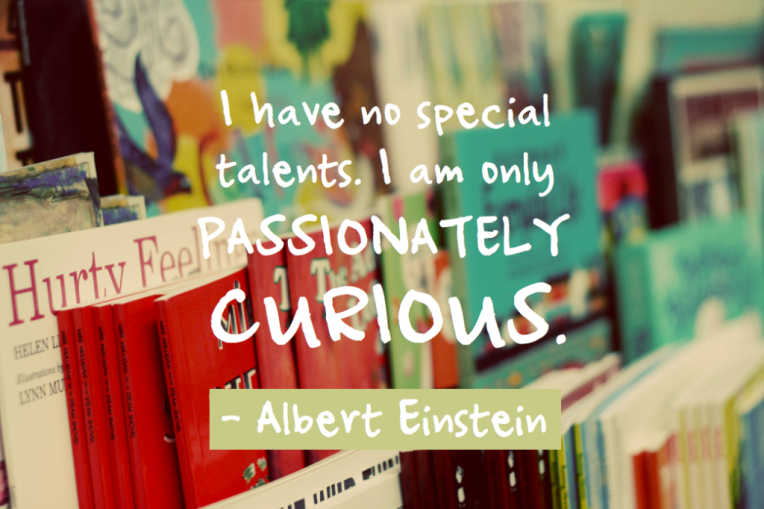
i-have-no-special-talents-i-am-only-passionately-curious-albert-einstein-quote-1024x682You don’t need to see a professional, necessarily, but I do recommend that you spend a significant portion of your future learning. Read or listen to audiobooks. Turn your Facebook news feed into a glorious reader – I get feeds from Ancient Origins and Brain Pickings and BBC History and Psychology Today and a dozen more, some of which are in keeping with what I do professionally, others because I want to develop my curiosity. I have unsubscribed most of the people who bore me and now it has become a treasure trove of wonder. Einstein is right, as usual.

So here’s the rub – little by little. I’m often wrong, but it seems to me that most change comes in a dream. I tend to become without fanfare or even notice. One day I realize that something has changed, inside of me. That’s it, that’s the epiphany. I was hoping for bright lights and a cheesecake but it seems that little by little, we move forward if we want to. It is the accumulation that counts, not the parade. Momentum seems to be important and momentum takes… well… momentum. I’m a poet.

So I read and I write and I learn and try to become a Jedi – science and philosophy and psychology and faith and history and any cool story on my feeder. Little by little, counsellors tell us, we begin to build something called resilience as we learn how to put our lives together and turn down the emotional volume that keeps screaming into my ears. We learn to lower our expectations, again. We learn to call bullshit on our personal cognitive distortions and the lies to which we are so passionately invested. (Yes that is a link to an article about herpes). We learn new skills, new perspectives, and new coping mechanisms. We unlearn the sick ways we have long trusted to keep us alive but unhealthy. This is not a short process and I am not there yet, though some of you may be. I am constantly resurprised by my own stupidity and immaturity. It’s embarrassing how childish I can become, if pushed.

So we press on. As we often say, unless I start getting high again I really cannot imagine a Plan B.


Why I am not Charlie

A perspective is something we can learn from, in spite of our differing opinions or values. By understanding different pictures of the same stories we enrich our understanding and ultimately, that brings wisdom. This is not a political forum and any attempts to hijack for stuff that isn’t interesting won’t make the cut. Neither is it a forum to discuss sexuality outside of psychological constructs (no moralizing). So, with that in mind, here’s a cool article from a smart person that stops us in our tracks and asks us some hard questions about our intentions and our intentions.

How do philosophers, sociologists, theologians and psychologists think about things like the horrific situation that unfolded this week in Paris? We can learn from a few of the smart people who do this for a living, even if we don’t agree with everything they share…

scottlong1980's avatara paper bird

imagesThere is no “but” about what happened at Charlie Hebdo yesterday. Some people published some cartoons, and some other people killed them for it.  Words and pictures can be beautiful or vile, pleasing or enraging, inspiring or offensive; but they exist on a different plane from physical violence, whether you want to call that plane spirit or imagination or culture, and to meet them with violence is an offense against the spirit and imagination and culture that distinguish humans. Nothing mitigates this monstrosity. There will be time to analyze why the killers did it, time to parse their backgrounds, their ideologies, their beliefs, time for sociologists and psychologists to add to understanding. There will be explanations, and the explanations will be important, but explanations aren’t the same as excuses. Words don’t kill, they must not be met by killing, and they will not make the killers’ culpability go away.

To abhor what was done to the victims, though, is not…

View original post 2,316 more words

The Weatherman

Joseph Stalin had only one real job before going into revolution as an occupation. He was a weatherman. He also had smallpox. And a webbed foot. And one arm shorter than the other because of an accident with a horse. His dad was an alcoholic, a peasant. As a psychology guy I find these seemingly random facts incredibly interesting.

Nature and nurture.

There is no way to be certain but it may have made a difference that the defender of the largest geographic region in the world during the nazi attack called Barbarossa was intimately familiar with geography and weather. The nazis were ultimately stymied by the cossack winter. Was that a coincidence? What impact did his pockmarked face have on his bad attitude? What was it like growing up as a Georgian peasant at the end of the 19th Century Russia? Did growing up in poverty influence his decisions? How was he moulded?

Chances are, you can’t really escape your past. I look like my father, I have his hands. My kids are just better looking versions of me, poor slobs. There are scars, outside and some deep down. You have been imprinted by your past, by your culture, biology, and family systems.

Hitler attacked late. In the famous account we now know that at the last moment he decided to detour over to Hungary and flex his muscles a little. As a Canadian I can appreciate how short summer can be. The timelines were incredibly tight. Hitler had to have Moscow by winter. He was a few weeks late. The German soldiers had not come prepared for the Russian winter. Timing is everything when it comes to the weather. A weatherman would know that.

We may never fully understand the influence of seemingly insignificant detours in our lives. You chose one school or another and it changed everything. You met one person who transformed your future. You were born to particular people with specific dysfunction. You learned certain coping mechanisms in certain ways from certain people. The person I have become has been no accident, in spite of it happening by accident. We all carry the impressions from our little piece of crazy.

One of the reasons that this stuff takes so long to master must be because we have spent a lifetime being imprinted by our surroundings. The jury may occasionally be out, with regard to the biological impact that your forebearers  have had on you, but one thing is certain – nurture may have more to do with your life than nature. There are specific and significant mechanisms that interact when you live in an environment such as yours. There are entire branches of psychology dedicated solely to this, family and cultural systems theory and therapy. It is impossible to understate the impact living in such dysfunction could have upon a vulnerable and developing psyche. You are what you eat. And who you love. And where you live. And how you are hurt. Chances are there are also a bunch of other influences, whether apparent or not.

10885501_10152888523605049_5123057925881569940_nI am a Williams. That probably means nothing to you, but my family has created a mythos around our heritage that is taught to subsequent generations. This Christmas my parents bought everyone around me a T-shirt with “Be calm and let Williams handle it”, even the still-to-be-born Williams affectionately referred to as “Jellybean” (he/she received a onesie). If you are a little child in my world whose name ends with Williams you have undoubtedly been reminded how awesome and lucky you are; just because you are a member of this elite and ofttimes condescending tribe. My kids think that to be a Williams is a big deal. Generations of winners. It’s all a lie.

I mentioned recently that my family were/are peasants. Our history floats on a river of alcohol and impulse-control problems. My dad is an orphan. My mom, as a child, probably never met a teetotaller. I come from hard stock, unforgiving and obstinate… and talkative. Many had very large noses. Serfs.

This history touches my life every day. I have acquaintances who are one or two generations further removed from their peasant ancestors. That fact alone has a massive impact on every aspect of my life. There is not, and never were, the merchant assets to pass down to the next generation. This led, inevitably, to fewer options and a far greater likelihood of generational poverty. Williams’s don’t go to college, or at least they didn’t. There was no tradition nor cultural expectation with regard to education. My family simply did not go to college, we went to war. I am honoured to report that my father, at 76, is in university… again. I received my high school diploma before he did.

These are not insignificant cultural markers. How you grew up, and who you grew up with, affects everything from finances to self-esteem, where and how you live, who you date, how you raise your kids, how you self-medicate, how often you travel, your values and spirituality and intelligence and ability to cope. Further exposure to experience or abuse melds the psyche in early childhood, and sometimes much later. If your parents broke up, this will impact your everything. If you were/are abused, if you make poor relational choices (for the aforementioned reasons), if you grew up around violence or addiction or a passive-aggressive parent or three-ply toilet paper, everything factors in.

A man who earned his living by predicting tomorrow’s weather probably did not get confused when the snow started to fly in early October. His troops were cold weather fighters who used the land and the cold (and the biggest secret peasant army hidden east of the Urals that the world has ever known) to defeat the undefatigable Third Reich. Stalin knew hardship. The Nazis were almost in Moscow and all seemed lost, but Stalin did not leave – why? He was depressed but he was a Georgian peasant who had risen to the top by killing every single person (and their family) who stood in his way. The boy who had been teased for his scars and his bum arm wasn’t laying down for anyone. Some people have wounds that have defined them, shaped them.

Who I am, and where I come from, is so fundamentally important that it’s almost embarrassing to discuss. Yet time and again we are resurprised by our foibles and cannot understand why we act the way we do. We date the same kind of person over and over. We continue to experience the same difficulty with relationships, or finishing projects, or hoarding, or painting the kitchen every other month. For some, anger has become our constant companion. Others have identified themselves as broken for so long it is impossible to imagine a world wherein wholeness is even an option. Understanding the role our history has played in our dysfunction is crucial to healing. As the man said, those who cannot remember the past are condemned to repeat it. This oft-quoted line has been liberally applied, but I believe it can apply here.

There is a possibility that you may not be as nuts as you think you are. Perhaps it really is your parents fault! Whatever the truth, it’s important to find out. Learning is how we wrestle this pig to the ground. Again.

One last story.

When I was 29, I woke up one morning and realized that I had been having a repeating nightmare. I could remember it being a little different, years ago, but wasn’t sure how. In the dream I was always chased by two guys who grabbed me and threw me into a white van. I believe the van was once brown but it changed colour, I have no idea why.

That day it dawned on me that I had been having a version of this dream since childhood. I decided to look a little deeper. Over a period of time I was able to trace the dream back to when I was 9 or 10 years old. So the question was, why?

Pinocchio.

I am old enough that I believe that I saw Pinocchio, probably on a Sunday night, and probably while watching The Wonderful World Of Disney. I remembered how frightened I had been when the slimy Fox and the Cat (or whatever they were I’m too lazy to Wikipedia it) grabbed Pinocchio and threw him into the cart with the donkey boys. Could it be?

I never had the dream again. It could be that, once I realized why I was having this nightmare my subconscious was able to move on. It might be that I’m more brain damaged than I think. Either way, I’m all good.

I know it sounds like I am suggesting that if you can trace back your abuse to a specific time then you would miraculously “get over it”. If you’ve been here before you know that’s not my thing. This story is an anomaly. I find it interesting, however, because of the power of such narratives. There is a connection between our thoughts, motives, history, and mental health. Quitting cocaine is a great step but chances are that isn’t your complete problem. Your life is your problem.

There seems to be a real correlation between how much I know about this stuff and how fast I move forward. The more I learn, the faster I run.

Timing2

Why didn’t I do this earlier?

I feel like a child who is only now beginning to understand how to think. When I was twenty I knew everything. At thirty I knew that I had been a moron when I was twenty. At forty I started to grow up. Here I am again, a kid in a candy store; cognizant of my own tiny intellect.

Why didn’t I do this earlier? Chances are, that was not possible. The stars have aligned, to steal a metaphor, at this particular time. I would like to believe that I could always understand what I now know to be self-evident. The reality is, however, that I was a bit of an idiot for most of my younger life. There were moments of clarity, but these were usually skewed by rushes of immaturity and fragile ego.

I hadn’t hurt enough yet. I hadn’t been broken.
I still believed that everything happened for a reason and that life was fair. Those were difficult coping mechanisms to bid farewell. I am learning lessons that I can only now begin to understand. So why didn’t I learn earlier? Maybe the question should be, why am I learning this now?

Welcome to the process.

I am a strong advocate of timing. There are many times in the counselling room, however, when mentioning this may get me fired. This is due to the unfortunate, though accurate, fact that many things cannot be processed until time has passed. You simply are not ready to move on yet, for example. There have been times in the counselling room when I have longed to simply say, “there really is nothing you can do about that today, you just have to endure”. It takes time to work through depression. It takes time to grieve. You can see where this is headed. As a counsellor sometimes it is my job to sit with you through this, in spite of knowing that this may take some time.

I remember the week my life fell apart. I have spoken of this before but it bears repeating. A doctor told me that it would be two years, but that I would be fine. He was wrong and a poor therapist. There are experiences that take decades to fully comprehend and deal with. The news that no one wants to hear on their first appointment here is, “this is going to take years”. That is one hell of an advertisement for counselling, “come every week and this is going to take years. And, oh ya, it’s really really going to suck and you actually have no freaking clue how bad this can get before it gets better”.

Any takers?

There are no billboard ads for this. Many of us have complex comorbidities that have taken years to perfect and which are deeply entrenched in our childhood. There has been sex or violence or slander or pain on a level that you rarely talk about. I am firmly convinced that I need to work on my mental health for the rest of my life.

You Had A Bad Day

The race is not always to the swift,
Nor the battle to the strong,
Nor satisfaction to the wise,
Nor riches to the smart,
Nor grace to the learned.
Sooner or later bad luck hits us all.  Ecclesiastes 9:11

You had a bad day. Chances are, you’ve had more than a few. We all have. Sometimes I just crumble under the weight of stuff and responsibility and stress and money and traffic and things my friends are going through and insomnia and the grind and more stuff. Sometimes I’m not as tough as I pretend to be on the internet.

The text message goes something like this: “Can you believe ______________ did that again? I don’t think I can take it anymore! Things are never going to change and things are not getting better (like you promised). How much longer can this go on?” I average, if I am honest, a few of those messages a day – life seems to be hard for many people.

So I tell clients to take a few deep breaths. Now might be a good time to try that. Take a step back. Mindfulness. I open my toolbox of tricks and get to work. I am learning how to understand the emotions charging through my system. I have a wisdom rock. I try to change my perspective. More breathing. I need a plan.

The best time to prepare, we all know, is before the battle, not during it. It goes without saying, almost, that I should prepare for bad days. This seems like a no-brainer, we would never take a driving test without preparing. We would not want to take a university test without studying first. Why is it, then, that so many of us keep getting ambushed by our daily lives?

Here’s Shane…


Exiles

This week, in a moment of personal abandon, I took myself (alone to a matinée, no less) to see “The Imitation Game” starring flavor of the year, Benedict Cumberbatch. It’s a great movie to see without your wife in case your eyes leak.

I find that I strongly identify with the metaphor of the exile. I strongly connect with the outsider who does not find redemption. There is a self-indulgent piece of my software that thinks it can understand the story of the brilliant mess. This may not be for any so obvious desire as to feel justified in one’s own dysfunction. I realize I often indulge my egoism and believe myself “different” but that isn’t the whole story here. Perhaps there is a piece in many of us that finds truth is such feelings of aloneness. Some of us have learned to play the game better than others, though we still struggle to fit in with what someone somewhere describes as “normal”.

Sometimes it is the people no one imagines anything of who do the things that no one can imagine. (from The Imitation Game)

Many of us feel that we live in a world that only partly understands us; and we are not always good at understanding that world. Throughout history there have been the stories of the exiled, the loner, the stranger, the anti-hero, the classic underachiever who finally finds their way – only to be ultimately disappointed. You see this in the all-consuming rush to be unique, to define ourselves by clothing or ink or motorcycles or grooming as something beyond the ordinary. The minutia of the daily grind has only served to exacerbate this emptiness.

I am certainly not a man struggling not to be sterilized because of a lifestyle choice, misunderstood by the whole world – a world he knew he had played a major part in saving. Alan Turing experienced life on a level I could never imagine, portrayed by Benedict Cumberbatch as a man obviously struggling with what was until recently regarded as Aspergers. There is no solid evidence to support such a diagnosis but it made for an intriguing tale of a misfit who saved the world. Turing is usually described as a genius and arguably one of the most influential men that most people had not heard about until this week.

The work of Bletchley Park is the stuff of legend among most of the history geeks I hang around with. The operation involved thousands of individuals at it’s zenith, and they are credited with saving perhaps as many as fourteen million souls, perhaps more. Turing went on to be convicted of being a homosexual and chemically castrated. He poisoned himself, a lonely and broken man for whom the world was an unwelcoming whore. The hero who chose the right over the easy and was punished for it in the end. A powerful narrative, timeless.

This offends our sense of fairness, once again. We speak of this often around here but it continues to haunt my life. Turing should have had his Hollywood ending, clicked his ruby slippers, and been honored as the amazing juggernaut that he was. Such was, indeed, not to be the case. There are many times when doing the right thing only adds misery to our lives, in spite of the fairytale endings that others get, but we never do. Sometimes the rich get richer and bad things do happen to good people and no one ever stops by to apologize. Bad people do not always, or even usually, get their “just desserts”. It is one thing to accept this intellectually, it is another thing altogether to accept this on an emotional level.

Bitterness. That is the reward for those of us who cannot learn to cope with this unpleasant reality. Exiles often wonder when it will be their turn. Sometimes that turn does not come in ways we think are fair.

It is a sad movie, and becomes even sadder when you get to the parking lot and google Alan Turing. I knew the outcome going in, though still managed to feel bad for this eccentric and misunderstood man. Walking to the car we want to believe that somehow, and in some way, people like Turing get what they deserve. Not in this life.

Learning to let go of that expectation for my life has been difficult. We desperately want to believe that people will eventually understand our particular mad genius. Alan Turing is testimony to the fact that for many of us, there is no rainbow and ticket home from Oz. Your mother may appreciate your uniqueness, but chances are that society cares very little what your mother thinks. It’s one thing to know you are unique. It’s another thing altogether for the world to stand up and notice. That sucks.

I don’t want to end on a low note. In counselling we learn that the trip towards wisdom has a little tiny bit to do with, as the 12 Step people say, learning to live “life on life’s terms”. That is mindfulness. That is psychology and philosophy and faith. As I endeavour to embrace the waves of stress and disappointment and then allow them to pass through me, I am learning to lower my expectations of life and those around me. This is, because of my limited understanding, always going to be a “here but not yet” experience. Most revelations are, in my experience.

I am an exile, and chance are you are as well. We are all alone, misunderstood, and insecure. The sooner I accept who I really am, not just who I wish I was, the faster I will move forward. I have to believe that.

One final thought. There is a piece of my ego that is tied up with the idea of being an exile. Many who have been told they were less, or different, or ugly or slow or whatever sick tag you want to wear. Sometimes we learn to cope by embracing that wound and wearing it like a badge of honour. There is some value in that, I’m not here to deny it’s efficacy. I have also learned, however, that it is easy to turn that label into a point of pride. It’s hard to let go of something that defines us. There are those who have allowed that brokenness to define them. To keep them broken.

Growth is about forward momentum, not momentary successes. Allowing myself to change my expectations of those weird normies around me is a step. So is accepting the fact that I’m a bit of a weirdo, too. But that’s another story.


The Price of Ignorance

In the fifties and sixties Dr. Benjamin Spock changed the way parents thought about their kids. He believed that children had rights, were individuals, and as such deserved to be treated with respect. Growing up I heard him described in varying terms, usually something along the vein of “pinko” or “hippy”. He is perhaps best known as the man who changed parenting styles and worked with the liberal-left seeking political and familial reform. He was considered an icon for parenting and permissiveness and he may just have caused the death of tens of thousands of babies.

Spock, with relatively no scientific data to support his seemingly offhanded comments, advised parents to place their babies on their stomachs for sleep. Here’s the Wikipedia:

Spock advocated that infants should not be placed on their back when sleeping, commenting in his 1958 edition that “if [an infant] vomits, he’s more likely to choke on the vomitus.” This advice was extremely influential on health-care providers, with nearly unanimous support through to the 1990s. Later empirical studies, however, found that there is a significantly increased risk of sudden infant death syndrome (SIDS) associated with infants sleeping on their abdomens. Advocates of evidence-based medicine have used this as an example of the importance of basing health-care recommendations on statistical evidence, with one researcher estimating that as many as 50,000 infant deaths in Europe, Australia, and the US could have been prevented had this advice been altered by 1970, when such evidence became available.

At the time, no one understood what the effects of placing children on their stomachs would be. Spock was not qualified to give this advice and shows us, yet again, the price of ignorance.

You will probably never see a movie about the great scientist, Thomas Midgley, unless he is the bad guy. In the 1920’s Midgley orchestrated the further introduction of chlorofluorocarbons for business application. Midgely’s work would eventually contribute to the destruction of the Ozone Layer. His work to introduce leaded gasoline would poison thousands, and further destroy the environment. It had all seemed like such a good idea at the time. He was, after all, a brilliant and dedicated scientist. He is remembered as a man who “had more impact on the atmosphere than any other single organism in Earth’s history.” And not in a good way.

You may never destroy the North Pole or the Ozone Layer, but chances are that our ignorance plays an significant role in our dysfunction. We employ things called “coping mechanisms” (I know you know this) and cognitive distortions to deal with the stress and trauma that has been meted out in our direction. We have childish and often highly erroneous ways of thinking about ourself and others, which keeps us in emotional bondage. We are convinced that we know how things really are, in spite of sometimes overwhelming evidence. Going to counselling is basically an exercise in addressing and dealing with my screwed up ways of thinking and doing life. Anyone who believes that they know exactly what is wrong with them and how to fix it has probably never been in my office.

There is a price for ignorance. Our inability to become like water and embrace mindfulness and resilience is a major source of our dysfunction. It takes time to, in the words of Immanuel Kant, understand the difference between the phenomenal and the noumenal worlds we all live in. We catastrophize and listen to the screaming noise of our Amygdala. We come from a long line of weirdos (nature) and have learned a very specific and messed-up set of life skills (nurture). People hurt us and break our heart. We are moulded by our experiences and have learned to do life in distorted and misguided ways. Well at least I have.

By now you can probably understand what the article is driving towards. We cannot change our past, and most people are not willing to do the incredible amount of hard work that is required to move forward. Wholeness, whatever that means, requires learning and pain. Self-destruction is free and you can reach your goals from your Xbox.

Learning is not optional. Many of us have heard of the 10,000 Hour Principle. The 10,000 hours idea basically states that it takes approximately this long in order to master anything. Many of the greatest painters, greatest composers, whom we have always believed to be “gifted”; may have been so, but most of their best stuff still took years to produce.

I will never spend 10,000 hours in the gym. You might. I no longer seek physical mastery. I seek spiritual, emotional, psychological wisdom. That is my journey, though I still need to keep training. So, with this in mind, I endeavor to read (mostly listen to, but I get to count that because that’s a rule I made up) at least 1–books a year. You will never see me without ear buds on, outside the gym. Friends often tease me about that very thing. I dare you to test that theory. I am not saying this to brag, I just know the math. This concept is, obviously, not infallible and prone to caricature.

If I want to be a spiritual master, according to this principle I need 10,000 hours of practice. If I want to be a psychological master, same arithmetic. This gives me a goal to strive towards, and I need that. This is why I read, or at least fake read. This is why we study or go back to university in our forties and fifties. This is why people keep going to counselling, long after they are finished with their crisis. This is why people study philosophy, and faith, astronomy and quantum physics. Like you, I seek wisdom.


Creeps

Last night my wife and I surfed Netflix enough until, like most of us, we gave up and watched the documentary on Lance Armstrong – something far outside my comfort zone. I am not ordinarily a fan of movie stars and supermodels, and to be honest probably wouldn’t get out of my chair if one came to the house. The documentary was, however, interesting to watch unfold. I could tell, relatively early, that he was lying his ass off. I do this for a living and my counseling hat was pinging like mad. He wasn’t even very good at it, and it suddenly struck me why so many people were so unsurprised when the poop finally hit the fan. I turned to my wife to pontificate about micro-expressions but it became abundantly clear that she was way ahead of me. She was pinging too, albeit perhaps on a somewhat more subconscious level. She described him as a creep.

That word comes up often in my line of work.

Time and again, perhaps because of my dual worlds of addiction and counselling, women describe men as “creepy”. We have all known a few females, as well, who kind of “freak me out”. We are prone to believe that this is something that has no foundation in evidence-based realities; but we may be wrong. Upon further probing, people who have been creeped out inevitably describe surprisingly similar feelings. There are facial ticks that are registering. Certain intonations strike them as “off”. There are fewer contractions and often more confrontation. People who have “their radar on” may not know why, but they definitely know who. I have invested some time endeavouring to calm any personal boundary issues, and I heavily monitor my space and posture for this exact reason. I rarely hug, and never very close. If you visit me in my micro-office we will take opposite corners. I have spent too much time learning from women to not find myself hyper-vigilant in this regard.

I believe creeps are real. Many are described using terms like “narcissist” and “psychopath”, though usually by wives who are not qualified to diagnose and are deemed too emotionally involved. They are, therefore, often misregarded (I made that up). In my experience, more women than men have this sensitivity to the creep factor, perhaps many more.

I continue to be resurprised when I am in the presence of a “creep”. They seem to lack basic self-awareness. They often describe themselves as “smooth” and popular with the ladies. Often they actually are, and sometimes for very nefarious reasons. By way of example, there are those who are strongly attracted to narcissists. Something in the seeker’s psyche is broken and seeks fulfillment in controlling, and often very physical, relationships. Part of counselling often includes addressing a client’s choosing mechanism, and many people have had to address their attraction to dysfunction in an office very much like mine. Many of us, myself included, are prone to make the same relational mistakes over and over, for very psychological reasons.

Many clients and friends have included a crap detector in their emotional toolbox. There are people out there, for reasons that escape most of us, who glean satisfaction through manipulating and controlling the people closest to them. Such individuals are often highly charming, though indubitably self-serving and emotionally unhealthy. To use the internet word of the month, people like this always obfuscate our lives (I know you’ll Google that) and inevitably leave a wake of hurt and unresolved trauma.

I advise clients that if someone is too charming, too slick, or too nice, it’s probably too good to be true. Dating is an exercise in lying to each other and we all know that on one level. Your charmer’s ex probably wasn’t as bat-shit crazy as you have been told. We have a tendency to want to believe in the fairy tale ending, often at the expense of real world objectivity. I don’t care who he/she is, they have significant issues. You can disagree with me all you wish, but chances are I’ll be proven right. I do not enjoy winning that argument, perhaps I’m just a bit tainted from sitting in an office talking about pain everyday. That is highly possible.

Women Aren’t Equal?

It has been hard for me admit to myself, in a vocation swarming with quality woman, that a female could still feel unequal in 2014. There is a joke we tell of how it’s ok to be anything except a middle-class white guy. All my bosses are women. My wife’s a woman and she is perfectly capable of handling me if she chooses. I usually hang around with women. Women aren’t equal?

There are a ton of things to write about here but I like looking at the weird stuff. It may not surprise you to learn that men, by the mean, have difficulty understanding, on an emotional level, what it feels like to be just shy of five-feet tall. I’m 6 feet plus 2, I have a black belt so that I can be blissfully misinformed. I grew up with lots going on and excelled with a ball in my hands (shut up Cory). I have no idea what it would be like to have a partner who can beat the crap out of me on a whim. My wife could take me, I’m not allowed to hit girls. My mother will hurt me. My father would be disappointed, a man in his 70’s whom every woman loves. I dare you to take the challenge.

I have never known physical violence that I didn’t initiate or deserve.

So when I tell you that I am only now beginning to understand, I ask you to excuse my large frame of mind. The sheer volume of fear I have listened to has begun to ring true. I learn slow. Of course I know this stuff intellectually, I can read. But I am still partly a man, and most of us have difficulty with emotional intelligence when it comes to this kind of stuff.

So many women who live with fear every day of their lives. I could never really understand, as a younger man, why women were afraid to walk alone. I love walking alone. It’s zen, baby. So when you told me the first few hundred times, it sounded a bit ridiculous. I’m not excusing what was. I’m the tallest one in my family. I hang around with ninjas. I’m a white male who plays with weapons.

To all my patient female friends who have not given up on me, you win. It was a good fight, figuratively speaking, but I might be getting a taste. I am constantly amazed at the burden others can carry, and fear has to be one of the worst emotions with which to run a tab. The anxiety, the depression, the trauma, it may not be biological. Imagine you have emotional Fibromyalgia. Everything hurts and it doesn’t make sense and everyone is a potential problem. People with Fibromyalgia live in a body that is constantly in varying states of shock.

Some people live in that state, on an emotional level as well. I have heard the stories. She ran into the McDonalds only to find the two sketchy males in hoodies were only 11 or 12. The right makeup to wear if you have a bruise. What mood is walking through the front door tonight? I always believed that my home was my safe place. What if it isn’t? Any counsellor can tell you that living in that heightened state of tension releases chemicals all over your body. Things change in your core. Things are released in your brain… and in your mind. You learn words like cortisol and neurochemistry. The diet can take a hit. You no longer sleep through the night. The motor is already running and you haven’t even had coffee yet.

Here’s Wikipedia: Cognitive conditions, including memory and attention dysfunctions, as well as depression, are commonly associated with elevated cortisol,[9] and may be early indicators of exogenous or endogenous Cushing’s. Patients frequently suffer various psychological disturbances, ranging from euphoria to psychosisDepression and anxiety are also common.

Cortisol is a good thing that can become a very bad thing. Other things happen neurologically that are not in your best interests. The words self, medicating, and behaviours, are used one after another in the same sentence. Fear can do that to a person, to an emotionally vulnerable person. Let’s be honest, most of us are emotionally vulnerable. You know how this sentence ends. Weight gain or loss, body image, self-esteem, problems with relationships, fear, anxiety, the whole toolbox from hell.

This is the kind of stuff people like me hear all day, every day. It’s not an isolated incident and if you can relate to any of this I will remind you that there are hundreds out there. Thousands. Millions. You have been saying it for years and you are absolutely right. Everyone does have mental health issues. We didn’t know this because there was a time, not so very long ago, when talking about this thing of ours was not really popular. People who went to see a counsellor were somehow “less”. Well baby, it’s now 2014 and daddy’s got a new pair of pants. It’s all good, all of a sudden.

I have become firmly convinced that each and every one of us needs some help, sometimes. It is the human experience. I do not think I could do this without a great deal of help from a couple of people who walk life right beside me. I have at least two other worlds of friends from different hats I have chosen to wear. I need those people very, very much. But I digress.

What does it feel like to be small? I walk around blissfully ignorant of the war that women feel everyday in every part of the world. Or am I wrong? Here’s the thing – this is a blog. It’s not in my book yet so it doesn’t have to be a finished product. Could this be true?

Like I said, I’m recent to this. Time for class. Talk to me.

Weekend Casual – Stories

I am in love with stories. This is marginally interesting because growing up, I never read a book. Not one. Not once, at least not after maybe 12 years of age.

A couple of years ago I had an idea for a literacy program called “One Good Book”. It was based on the lives of my son Ben and I. Both of us refused to read until we were around twenty years of age. All it took was one good book. I thought it was a great idea and my wife happily pretended I wasn’t mentally-challenged, and they weren’t interested in the idea, of course. I imagined videotaping (do we still call it “taping” and if so, why?) the two of us telling our story. My book was the mindless man-soap-opera The Bourne Identity. I can’t remember what book it was for Ben. I absorbed that book, and it’s cheesy cousins within a week or two, and I was hooked. Reading, mostly listening to audiobooks, is my thing now; and the richness it has brought to my life is beyond measure. Nothing is better than a good story.

I am fairly confident, and a few of my friends can easily verify this, that I have spoken in public somewhere in the neighbourhood of 2000 times. Two thousand times. By any measure, that is more than a few. I have learned a few things along the way. Number 1 is leave them wanting more, not less. If you are a pastor or a presenter you better be a lot better than me or I want you off the stage in around twenty minutes. If you are a minister and you speak for fifty minutes your parishioners are probably lying to you. Just saying. If you want me to listen harder, tell me a story.

I am still amazed by how few storytellers are out there. I will forget your facts but I will remember the story of Yurtle the Turtle for the rest of my life. I am pounded by information all day, every day, so why should I pay special attention to yours? Just saying.

Stories intoxicate me. Do you remember the story of the dime? the train ride in the French countryside? Can you remember the cadence from that story about MLK? I can hear Churchill’s slow, desperately measured voice crying, “we will fight them on the beaches”. King decrying, “I can see the mountain”. the Black Douglas, The story of Le Chambon. Or The Dardenelles, or Masada. It’s David hucking rocks at a giant or Medusa’s hair. Here’s to everyone who has ever drawn a line in the sand and said, “We have the Jews, and you’re not getting them”. For millennia humanity has poured it’s heart into stories because stories matter. Don’t give me information, tell me a story.

Want to hear a story?

Sometime

“Courage is not something you have, it’s something you earn.”

the_blitzMalcolm Gladwell tells the story of the bombing of London in World War Two. The Germans called it the “blitzkrieg” or just the Blitz“In the years leading up to the Second World War, the British government was worried. If, in the event of war, the German Air Force launched a major air offensive against London, the British military command believed that there was nothing they could do to stop it. Basil Liddell Hart, one of the foremost military theorists of the day, estimated that in the first week of any German attack, London could see a quarter of a million civilian deaths and injuries. Winston Churchill described London as “the greatest target in the world, a kind of tremendous, fat, valuable cow, tied up to attract the beast of prey.” He predicted that the city would be so helpless in the face of attack that between three and four million Londoners would flee to the countryside.

In 1937, on the eve of the war, the British military command issued a report with the direst prediction of all: a sustained German bombing attack would leave six hundred thousand dead and 1.2 million wounded and create mass panic in the streets. People would refuse to go to work. Industrial production would grind to a halt. The army would be useless against the Germans because it would be preoccupied with keeping order among the millions of panicked civilians. The country’s planners briefly considered building a massive network of underground bomb shelters across London, but they abandoned the plan out of a fear that if they did, the people who took refuge there would never come out. They set up several psychiatric hospitals just outside the city limits to handle what they expected would be a flood of psychological casualties. “There is every chance,” the report stated, “that this could cost us the war.”
David and Goliath, Malcolm Gladwell

The government was sure that the residents of London would be shell-shocked. Everyone knew that it would be only a matter of time before Britain was boarded. Everyone was wrong. For a lot of reasons that Gladwell illustrates, people in London in World War Two gave ‘the finger’ to the Nazis and shrugged it off.

The experts are often wrong. That psychiatrist who diagnosed you might not have had a clue what was really going on. Those meds may work for some people but that does not mean they work for you. Research is changing so fast that none of us can keep up, and I do this all day. Sometimes the people we trust to know the answer are googling it while you are waiting in their office (This is, in point of fact… a fact).

The experts believed that the people would be afraid. It turned out that when people survive a bombing they begin to feel invincible, and in the end the Germans only managed to make a strong country into a very pissed-off enemy. That was one of the lessons of the story, I suppose. They were not afraid, they were afraid of being afraid. In counselling we call that catastrophizing. What was the worst that could happen if the Germans came? What if we lose? Making a mountain out of a mole hill. Come on, you know what I mean. The people who should know were convinced that the Blitz would be the beginning of the end. It turned out to be the end of the beginning. Everyone underestimated the RAF, and never have so few given so much for so many, or so the story goes. Churchill stood alone against the world, a ragged bulldog who just wouldn’t lie down. The worst didn’t happen. Not even close. And that is why history is cool.

Sometimes, often, I care way too much about crap that shouldn’t matter. I get sucked in to the drama and forget to reach for my Wisdom Rock. It’s hard to be Zen when the kids are screaming. But hear me here: It’s not about last time, it’s about sometime. Sometime you will get better than this. Sometime things will be different. ‘Sometime’ is not a cognitive distortion. Sometimes this stuff works. Sometimes. We call that hope, and without it you’re pretty much screwed.

There are moments when catastrophizing does WAY more harm than good. It can take me places where I have a hard time coping. I know there is that statistic somewhere that can prove me right, the one about how most of what we are afraid of never really happens. You know the one. But let’s be honest, it’s not about who is right and who is hurt. It has to be about me.

Try that on for size. It’s even hard to write. It has to be about me. I am no good to anyone if I am not strong. People count on me. I do this for a living and it gets inside me, infects me, for better and worse. What good am I to my wife, my kids, my partners, if I am emotionally wrecked? This is a hard lesson for a Canadian to learn. It feels selfish to my prairie ear.

Many of us are afraid of the unknown. The “what-if’s” have happened more than once. What the Germans didn’t understand, and what we all tend to forget, is that you cannot break a spirit that gets stronger every time you bomb. The Brits were prepared to gas the Germans on their own beaches, if pushed. You do not piss off the British Empire. They are stronger than they let on.

Sometimes you just have to endure and learn.  It’s not about last time, it’s about sometime. You cannot be beaten if you learn every time you are hit. You will win in the end. I have to believe that because I’ve seen it happen literally hundreds of time. I’ve felt what it feels like to be “ok” and I want more of that. A bunch more.

You can do it. You are, like the fairytale, stronger than you know. Courage is not something you have. Courage is something you learn. Malcolm is, in the end, right as rain. You’ll have it when you need it if you practice what you have learned. That isn’t rocket science but this stuff is hard and it is important. It needs to stop being “hurt enough I have to” and start becoming about “learning enough I want to”. Getting better is about learning – I will die on that hill, if necessary. You can’t get better if you aren’t getting smarter about your own particular piece of crazy. We’ve argued about this before. I get paid to research and I listen to audiobooks like a drug addict, what can you do?

I know, it’s a sweet gig.

Cue the cheesy ending – “You’re bigger than you know”.

My Teacher

I had an interesting conversation with a colleague some time ago. We talked about the cost of trying to make a difference. It was a very cool hour. We weren’t rock stars, we were just talking about philosophy.

Both of us had been hurt, trying to try. Giving a damn seems to cost more than the advertising brochures promised. Caring forces you to give up some of your dreams of glory. You know exactly what I mean, don’t you? I’m not a hero, that is abundantly clear if you read anything I write. That ego stuff has nothing to do with what I’m writing at this moment with my counsellor hat on. I’m at work right now and “at home” Scott is hours away. And I’m a guy.

In the hard light of reality I know that I am allowed to admit that most of us really do want to make a difference. When my life is erupting and my family is cray cray I can forget that I am, at heart, an idealist. That’s easy to forget when you have scars. It’s hard to accept that caring for other people usually hurts us. I am still a kid at heart.

Any measure of wellness that I feel now I learned the hard way. I’m not as good at this as I like to portray in public. Most of us aren’t. And one of the worst lessons I have had to learn is that most of the real wins, the authentic difference, came after you have been hurt really bad. I am not confident that I learned much when everything was going my way. Pain teaches me.

That really sucks.

Injustice And The Third Way

It isn’t fair and I don’t like that. On some level, most of us have had to face the harsh reality that doesn’t feel fair. But is it?

No. There is no Pixar ending.

Sitting in the old counselling office one rainy day this truth began to open up wider for me. I began to see threads, real or imagined, in many of the stories of pain and trauma that funnelled their way through my door and sometimes my life. It may be that this cognitive distortion, this need for life to “make sense”, has been responsible for a larger slice of misery than at least I ever imagined.

The stories are similar. Depression or anxiety brought on by trauma or heartbreak with a sense of cruel incongruity. We have been wronged and something needs to be put right. We simply cannot accept that there is no payback. It’s so… unfair.

As the good book says, and I proceed to steal and compare myself, albeit tongue-in-cheek, to the great Apostle Paul, “I do not come to you as one who has attained. Nonetheless I press on.” Like you I wonder why good people seem to suffer and total jerks continue to prosper. She left and it hurt and she never came back. I know that feeling. It’s bad. He died without ever getting his “just desserts”. Some of those Nazis escaped to Argentina and lived off the rewards of their raping and pillaging and genocide. As I consumed Martin Davidson’s book, The Perfect Nazi: Uncovering My Grandfather’s Secret Past, it was apparent that the author never was able to see his grandfather pay for his heinous crimes. There is no glass slipper ending. Gru doesn’t really adopt the cute little girls – they get thrown into the social welfare system and spend their childhood in Foster Care. They became sexually active early. Chances are they have issues with addiction and end up marrying poorly. That’s the real world and it is many things, but it is not fair.

But here’s the problem. I am DNA’d to believe in fairness. I cannot seem to get it through my dense skull that reality cares very little about my sense of injustice. It is up to me alone to move forward, and it’s very, very, hard. Years.

There are three ways, I think. There is the way I want, the way I don’t want… and the way I don’t know yet.

I have a friend, a real friend who I see in the real world, who has been working on her stuff for years. Not too long ago she came to me and uttered, “Five years. It’s been five years and I’m still not fixed.” It was heartbreaking, because she is a rock star.

As I wrote in my last post, some people go through things that are beyond coping. There isn’t a toolbox in the world that prepares you for the loss of a child. As I’ve said even recently, you get a free pass for that. I would go crazy. I cannot imagine a scenario in which I would be ok if I lost one of my kids. It’s simply not reasonable to imagine, yet in ways that are beyond my meagre understanding, some people keep going.

I just finished rereading Gladwell’s David and Goliath: Underdogs, Misfits, And The Art Of Battling Giants. He’s a storyteller. I like stories. In that book he points again and again to average people who, when faced with insurmountable odds, found a third way. He doesn’t call it that, but he seems to understand. Mennonites who have learned that vengeance sometimes creates more pain than it heals, even when your baby is defiled. Huguenots who stood up to the scariest dictatorship we have known and said, “We have Jews, come and get them”. Poor people and zealots and losers who came to understand that they have only one life; and the need for justice was ruining what little they had left.

There is the way I want, the way I don’t want… and the way I don’t know yet.

Five years of reading, learning, letting go, and moving forward against impossible odds. No one comes to a counsellor to sign up for that program. Most of us who are in process would happily abandon it at any time for a magic pill or a glass of good tequila.

Like most of us, it started with a broken toolbox of coping mechanisms. Imprints from childhood and generations of dysfunction, broken promises and unfulfilled expectations. Death had robbed her of a piece of her life. Choices. No role models who were not also broken. That ugliness inside. So much pain and hurt it was overwhelming. Some of you have been there… are there.

It’s hard to believe that you might be a success story. There is no pink cloud, no happy ending, no days of bliss without Xanax. But on some deep levels, people can fundamentally change. She still reads everyday because, if nothing else, she has learned that there are no shortcuts to wisdom. She needed to get started. There were days and months and years when it didn’t seem that there would ever be a good day again, but she was wrong. She knows that now. I don’t talk to her like a counsellor anymore, we just exchange information, sometimes everyday. There has to be a good reason to work this hard or I couldn’t live with myself and do what I do for a living. I’ve seen too many people find a third way to believe that my life is hopeless anymore. There must be a way from where you are to where you need to be or I quit.

Here’s the last thing I’ll say about this here. I didn’t have a clue what the third way was for years. I thought, many times, that I had this covered, but I was very wrong. I knew what I knew and I was willing to die for the cause, but the cause was flawed. No one could tell me that because I was right.

But one day I realized I wasn’t. Letting go of what I knew to be fact was exceedingly difficult.

Realizing that I had to work on this stuff every day for the rest of my life was at first disheartening, then exciting. It sure didn’t start out “exciting”. It was horrible. How do you stop believing what you have known to be true all your life? How do you “fake it until you make it” when you feel like you are lying to yourself? How do you hope again when you have been proven wrong in hundreds of ways?

Those are very good questions and this isn’t Sunday School and we have to figure this out for ourselves (with a little help). I can’t give you a slick closing sentence to make you or I feel any better. As I have often been counselled, I need to be relentless in my desire for change. There is only one game in town.

ADHD And The Power Of Being An Outsider

Weird fact. Many many people I know who are ADHD and ADD get “hyper” after they take Melatonin. Some can drink coffee and then nap. I have noticed a trend lately, in the stories I hear; and I find this mildly interesting. I guess I could look deeper into this but… squirrel!

In my ‘D&A’ world (drug and alcohol) I have known several hyper people who like ‘down’ as opposed to ‘up’. Heroin is a down. Chill. Cocaine is not a down. You can solve all the world’s problems in twenty minutes when you are high on coke but the next morning your careful notes may not make sense (true story). Some of us like both. Some of us are just stoners. There is a feeling that comes with that revving down of the motor. Some people self-medicate so that they can be like the rest of us are all the time.

I have no research to support this but, when I think about my love for storytelling, it makes for an interesting tale. Some of us have self-diagnosed ourselves with ADHD long before anyone suggested tests. Some of us were wrong.

But here’s the interesting thing. Some of us were right. In a world of slowed cameras and boring lineups we knew we didn’t fit in. And a few of those who knew they were different lacked something call practical intelligence.

Practical intelligence is not the same as intellectual intelligence. Many of us are intellectually bright but still have difficulty fitting in. Practical intelligence is not the same as emotional intelligence, either. Ask any twenty year old female who chooses to date a twenty year old male and they can tell you about emotional intelligence, even if they don’t know the technical verbiage. Emotional maturity is the capacity for wisdom, the understanding of the emotional context in life. People who are emotionally intelligent are often described as “discerning” or “intuitive”. You know who you are. As I have written elsewhere, often girls develop emotional maturity faster than boys, especially heterosexual boys, for a variety of reasons. Chief among them are the way that boys and girls learn to communicate, and the importance of feelings. Younger generations of men understand this better than the yuppies, but we are still a fair ways behind.

Practical intelligence is something much different. It is the capacity to understand how the culture operates and then operate effectively within that culture. We call it “playing well with others”. Several people I know who feel they are ADHD admit to struggling with the confines and rules of the passive majority. They don’t always understand why the passive-aggressive people with “middle of the bubble” personalities who know how to sound boring seem to go further than we think they should. Some of my clients complain that they shouldn’t have to try to fit in, that society is “dumb” or “complacent” or just plain bullshit. It’s not that they can’t fit in, it’s that they won’t. It’s not that they won’t fit in, it’s that they can’t.

Some of you know of what I am speaking. You may have difficulty playing well with others. Popularity may have escaped you, in spite of relatively good looks or even a stunning charm. Some are prone to say whatever they feel, ofttimes disregarding the feelings of others. Maybe they have greater difficulty with impulse control, or addictions, or just “being nice”. They don’t suffer fools. I don’t know if this is really a “thing” but I have heard the stories. Many, many, stories. The sheer volume of the story has impressed itself upon my subconscious. I seem to hear this tale over and over again, year in and year out. It may not be a “thing” but it’s a “thing” around here.

I say this with a level of confidence because I too have struggled with practical intelligence. I was listening to a book some time ago and the author mentioned this issue in a new way. I have known of this concept for decades but did not apply it to my own story. I have a certain lack of practical intelligence. That is difficult to write because, by the main, I like to consider myself fairly intelligent and intuitive. I have know for years that I have difficulty being “normal” or whatever vanilla word works. I know several of you are probably lining up to question my definition of normal, but you know what I mean.

A few among us have never been able to fully integrate into the dominant culture and they occasionally come from tragedy or poverty or a little from Column A and a little from Column B.

My own story is familiar. My father was an orphan. My grandparents were alcoholics. My family was exposed to addiction. We did not come from wealth or security or education. I was the first person in my family to graduate from high school and I am a middle child of two parents. I am not endeavouring to become even more self-absorbed, none of this is my story – it’s only my history.

I grew up in a safe place, everything else was gravy.

My ancestors were not privileged, and had to fight to steal a piece of the Canadian Dream. My father was opening, and often running, a local gas station by the time he was 14. After joining the military he would often borrow a military “flip” back to Toronto from the prairies (think almost half of the second largest country on the planet) in order to open the garage and work the weekend. Who would fly thousands of miles to work for minimum wage? My ancestors were tough, and they were poor. They were not promised the untold wealth of even the middle-class. They were not like me, they had to earn it. They knew how to drink and they knew how to fight but they could never figure out how to work the system. Practical intelligence.

I grew up with cable television. We were the first people on our block to watch Love Boat. I have never known poverty because my father made sure that I grew up in a world where he held three jobs so that I could have one, and an educated one. No one told me about college because it had never been a part of the equation. I stumbled-in by accident. My parents sacrificed so that I would qualify for student loans and never understand what it was like to go hungry. Some of those lessons leaked into my life.

There are times when we are shaped by our world more than by our biology. Ancestors who could not flourish have traumatized value systems and coping mechanisms. Certain social graces were not learned. They have not “flourished” yet. They never grew up understanding wealth or education or leisure. Generations of oppression teaches lessons that can become of a part of your fabric. Poverty and injustice leave scars. I’m not suggesting my ancestors experienced anything akin to what our African-American brothers and sisters have endured. I’m simply saying that many of us were not the Real Housewives Of Vancouver. But this is not my story, only my history. The moral of the story is that many of us were peasants. We came from hard stock that was not in touch with their feelings. Our ancestors served in wars as cannon fodder, never calling the shots but usually storming hills. Cutlas fodder. Roman fodder. You may believe that you were a concubine to Caesar in a past life, but chances are you were probably digging ditches.

Just ask the African-American in Mississippi or the openly gay man in Steinback, Manitoba. Ask the sons and grandsons of those who fled the potato famine in Britain or came to this country on a boat from the Far East. For some, the new worlds only promised empty stomachs and unrealized dreams. For them, the colonies did not turn out to be the land of milk and honey, just more minimum wage jobs.

Some of us figured it out better than others. Someone has to stop the cycle. My dad and mom decided it would be them.

Certain heritages are closer to the earth are still working out the kinks. Among this demographic you often find the one who will not share his toys. Or maybe, just maybe, he knows how to run a service station.

Perhaps he has ADHD.

Re-thinking food…

Poignant reminder for this season…

Judy's avatarThe Project: Me by Judy

Scott Williams shared an interesting post about the power of thought:

https://scott-williams.ca/2014/11/28/happy-wednesday/

I’ve stated that I never did drugs, alcohol, or nicotine. My drug of choice has always been food. Better yet, or worse as the case may be, you can’t go cold turkey off of food. This gives one the built in excuse that you can’t give it up.

Scott’s information gives me the opportunity to rethinking how I deal with food. It starts in my head first. I knew this, but Scott’s blog helped me clarify the chain of events from thinking to eating.

I still want to stop using food as a punishment and celebrate food instead. This is probably a good time to go over what happened over the holiday. Yes, I overate. No, it wasn’t as bad as it has been in the past. I ate too much, but I didn’t eat as much as I wanted…

View original post 76 more words