Why Does My Woman Talk So Much?

Young Couple in Relationship ConflictShe keeps nagging. Is she needy? She keeps wanting to talk about feelings. Attention. Attention. Attention.

In heterosexual relationships many men, after being with the same woman for a while, begin to think of her as a problem to fixed. She keeps using the “C” word – communication. As men it has been beaten into us that communication is the key to a good relationship but all the time? Seriously?

Much has been made of the caricature of the goal-oriented male. In years gone by many authors have written at length about the propensity men have to neglect their wives’ emotional needs after being together for some time. Remember how much you talked when you were first dating? Hours and hours were spent texting and phoning and whispering sweet nothings. I have had many women tell me that after the wedding the dating stopped. They feel like the man they married is not the man they fell in love with. Where is the intimacy they once enjoyed?

Hundreds of years ago a lifelong commitment was not very long. A peasant male may get married at eighteen or nineteen. He could look forward to a desperately hard life that ended in his late thirties. Standing up in front of a priest and saying “til death do us part” was an eighteen or twenty year commitment. No big deal. With today’s lifestyle opportunities and advances in medical science, if you get married at twenty, you can look forward to sixty or seventy years with the same spouse. Few of us consider the real cost and commitment when we are pie-eyed in love. Sixty or seventy years!

The world has also changed drastically. Women are no longer trapped financially and socially in a marriage that is going nowhere. Consider the following. Most broken relationships I work with were ended by the female. She is also usually between thirty-five and forty-five years old. Why is that?

The children are in school.

Cinderella - Prince Charming & CinderellaMany men have no idea how important communication is to their spouse. They assume that if she isn’t complaining that she is happy. Women complain all the time anyway so if he ignores her or blows it off she’ll probably forget why she was angry in a few hours. Ha!

This Valentines, if you are a man in a relationship with a woman, realize that she wants more than chocolates. Give her your time, your heart. Be vulnerable. Start the conversation with, “I don’t have a clue what I’m doing but I love you and I want to figure out how to do this.” Ask for her help. Chances are she’s better at this than you are.

You can do it.

P.S. – She’ll probably still take the chocolates…

Five Ways You Can Improve The World With Almost No Effort

stolen from Cracked.com

There is a certain point at which problems just seem insurmountable. What the hell are you going to do that will suddenly fix world hunger or global warming, or stop people from fighting wars? You’re not a billionaire or a politician. It’s easier to just throw up your hands, go back to bed, and let someone else take care of it, especially since naps are fantastic.

But the good news is that for absolutely no effort or cost whatsoever, you can make profound differences in the world. These are meaningless little things that you probably didn’t even know made an impact at all, and they can be easily scheduled in between your nine daily siestas.

#5. Keep Your Damn Cat Indoors (Before It Obliterates the Ecosystem)

Cat

This being the Internet, most of you adore cats. And what’s not to love? They’re easy to domesticate and are one of the lowest-maintenance pets out there. The trouble is that your beloved kitty’s fondness for catching pests can become a huge problem the second you let your snookums outside. How huge? Well, cats are now listed among the world’s top 100 invasive species. And yes, we mean domestic cats — not feral. So, yeah, your putty tat’s pwedatowy pwowess is way less adorable once McFluffin starts decimating local ecosystems.

The problem is that most of us tend to vastly underestimate the impact of domestic cats in the wild. Thanks to human breeding and protection, their population density is actually 100 times higher than feral cats in the same environment, and most ecosystems simply aren’t prepared for those numbers. Domestic cats also have fewer risks from predators, as they have safe homes to retreat to whenever, say, stray dogs enter their territory. That means domesticated outdoor cats have all the benefits and hunting skills of feral cats and none of the drawbacks that force other animals to be more cautious. The result is basically a natural apocalypse every time cat owners open the front door.

But maybe you’re convinced that your outdoor cat isn’t an insatiable killing machine — after all, you feed the little guy. Why would he feel the need to hunt?

See, that’s what everybody thought. So they did an experiment: A University of Georgia researcher tied small video cameras to cat collars and obtained nearly 2,000 hours of footage of kitties roaming the suburban wilds. They watched as these well-fed cats hunted prey ranging from mice to chickens, not even bothering to eat them. Yep, these cats were specifically hunting for pleasure, often hiding the evidence, all the while roaming through forests, across rooftops, and deep in sewage systems. Just murdering everything they saw.

Even worse, these cats are putting endangered species at risk. Cats in England kill an estimated 275 million animals annually, and this U.S.-based report compiles sources implicating domestic cats in the extinction of 33 bird species, on top of a kill count of 1 billion birds. Overall, this knowledge changes one’s perspective of the Internet Cat Video Festival, which now comes across as a heartwarming death cult.

So keep your freaking cat indoors! If you’re already feeding your cat, letting it outside only creates a feline serial killer that murders for pleasure, decimates local wildlife, and occasionally even risks its own life for cheap thrills. At the very least, it’s easier to hug your tabby when you know it hasn’t been rolling around in bird blood and your neighbors’ feces. 

#4. Sneeze into Your Sleeve

For all of our medical advances, some of the world’s biggest killers are run-of-the-mill viral infections. Respiratory diseases like influenza and pneumonia are the third most common way to die worldwide, as they take out up to half a million people per year (and you’re doubly screwed if you live in a poorer country). And let’s face it: We suck at disease prevention. We live our lives like we’re still completely in the dark about how these things spread — we go to work sick, we cough on each other on the train, we don’t think to disinfect shit like our keyboards and doorknobs unless somebody sneezes on them right in front of us (and hell, probably not even then).

But the truth is that you don’t have to wear one of those sterile space suits if you want to stop the spread of your unholy pestilence — it just takes a few really simple and almost effortless steps. Washing your hands frequently is a great start, but here’s one that’s even easier:

When you feel a sneeze coming on, smash your face into your elbow and sneeze directly into your sleeve.

You see, there are three ways respiratory diseases like the flu can be transmitted: through the air, water droplets, and physical contact. Coughs and sneezes create overlapping transmission opportunities, as they’re a triple whammy of infected air and snot droplets that blast out of your pie-hole and splatter onto nearby surfaces. Blocking a cough with your hand or a tissue isn’t entirely effective, since the air rushes around your fingers or directly through the tissue. But more than a few researchers have found that using your upper arm or elbow as a sneeze guard actually restricts more transmission avenues than any other method short of locking yourself in a bunker until your cold passes.

Scientists reviewing high-speed video footage of people coughing noticed that your arm does a few unique things that hands and tissues can’t quite achieve. To start, it drastically slows down the speed of air exiting the body, which lowers the velocity of droplets trying to get as far away from you as possible. It also splits and redirects the airflow so that droplets have limited directions to go instead of the usual “anywhere within noseshot.” Finally, it keeps drippy snot wreaths off of your pristine mitts so that viruses aren’t being rubbed on doorknobs, faucets, and light switches by your dirty, filthy paws.

Sleezing” isn’t a foolproof practice, and it’s no substitute for vaccination — but it’s enough to make scientists and medical professionals worldwide sit up and take notice. Everyone from the Center for Disease Control to the freaking MythBusters have endorsed sleeve-sneezing. And all it requires is an arm — preferably your own, but a total stranger’s will do in a pinch.

#3. Recycle Your Old Phones

One reason why electronic gadgets will never be as cheap as, say, candy bars is that they contain precious metals. Obviously these metals are considered “precious” for a reason — there is a limited amount of them in the world, and obtaining more of them is a huge pain in the ass. Specifically, it requires massive, highly elaborate mining operations that, oh by the way, create tons of waste products.

Gold mines in particular have been compared to nuclear waste dumps, thanks to their ability to produce deposits of cyanide and other pollutants. So there’s quite a bit of environmental baggage attached to your shiny new iPhone, and odds are you’re going to dump it for a new one in a year or two. The same goes for your laptop — where you find circuit boards, you find elements that had to be ripped out of the Earth at great cost to people and the environment.

The good news is that even if your phone or computer is outdated, the minerals used to make them are still periodic-table fresh. The gold, copper, silver, palladium, and other precious metals contained in aging electronics can all be melted down and reused as raw materials for the electronics of the future. Circuit boards, for example, contain anywhere from 30 to 40 times more copper than what you’d get out of the equivalent weight of mined ore. Gold is even better, since circuit boards hold up to 800 times an equal amount of gold ore dug up from underground mines. Technology manufacturing has already done the work by putting these resources in one place; the only thing left to do is recycle them once we’ve finished.

“But wait!” our theoretical cynic out there asks. “It’s not like recycling would eliminate the need for mines. Surely we’re not getting rid of electronics quickly enough to meet the demand.” Well, the demand is pretty high, but you’re underestimating just how disposable our technology is. Anywhere from 100 to 130 million cellphones are tossed into the trash each year in America alone. Considering that 1 million phones produce about 35 kilograms of gold, phone recycling has a higher output than many gold-producing nations. The problem? Only 1 percent of those phones are recycled.

And that’s just phones. The EPA reports that in 2009, approximately 2.37 million tons of electronics were discarded into the waste stream. That includes televisions, computers, printers, and even computer mice. Recycling these items could provide incentives to cut down on the environmental waste produced by mining operations and prevent electronic waste salvagers in developing nations from risking their lives for a pittance.

So what is the laborious and expensive process to recycle your old gadgets? Well, it involves dropping them in a box, for free, the next time you’re out buying something. Within North America, retailers like Best Buy, Staples, and even Walmart will collect most, if not all, of your used electronics (just do a search here for a location near you), meaning you could literally donate your out-of-date computer the very day you pick up a new one. There’s basically no reason not to do it, other than pure spite.

#2. Donate Your Placenta

Many of you only know about “stem cells” due to the controversy they cause, particularly in the U.S., where the funding of stem cell research has been criticized by abortion opponents. But if you’re not sure what exactly they are or why they’re important, in short, stems cells are special cells that can turn into any other kind of cell, which has massive implications for medicine (note: you are made entirely of cells).

And there are many ways to obtain all kinds of these life-saving stem cells. For example, did you know that a specific type of stem cell is produced in huge concentrations within the human body and used in a variety of life-saving medical procedures, and right now we’re tossing them in the trash?

“Sounds great!” you’re thinking. “Where are they?” We’ll give you a clue: You A) throw it away in terror after your baby is born and B) make a pact with everyone in the maternity ward that it will never be mentioned again. We’re talking about that demon pepperoni that feeds your bundle o’ joy and your nightmares after childbirth: the placenta.

Yes, before you go tossing out (or chowing down on) that bloody flapjack that popped out of your or your significant other’s nethers, know that science has discovered that the placenta is actually chock-full of perfectly good stem cells that can be used for medical research and treatment. The placenta and umbilical cord contain hematopoietic stem cells, which is a fancy name for cells that can literally create blood. They’re the same type of cell that’s extracted from your hip during bone marrow transplants, except the placenta conveniently flops out of the body during childbirth, rather than having to be painfully drawn out with a needle.

The discovery is a big freaking deal, by the way, as hematopoietic stem cells can treat blood disorders like sickle cell anemia, immunodeficiency diseases like HIV, multiple forms of cancer, and more. It’s been predicted that 1 in every 400 Americans will need hematopoietic stem cell treatments over the next 70 years. Thankfully, mothers are already producing a free side of stem cells with the birth of every bouncing baby.

So if you’re pregnant, you’re fully capable of contributing to a very necessary medical cause. All you need to do is follow this simple two-step process: 1) Find out if your birthing facility of choice accepts hematopoietic stem cell/cord blood donations and 2) tell them you want them to keep your placenta and umbilical cord. Congratulations! You have helped one person’s life while simultaneously bringing another into the world. Just resist the urge to use your placenta as a spa facial or enjoy a lotus birth. (Seriously, don’t click that Wikipedia link. It’s like Basket Case, but real.)

#1. Smile

“Wait, really? Smile? That’s your goddamned world-saving advice, Cracked? What are you, Mr. Fucking Rogers? GO PLAY WITH YOUR PUPPETS!”

Look, if you follow Cracked on a regular basis, then you already know that it doesn’t pay to be an optimist. We’ve already written about how the very concept of being happy is flawed at best, and how the life expectancy of optimists is generally shorter than that of pessimists. But you shouldn’t bury your good mood in a shallow grave just yet. While maintaining a perpetually cheery demeanor may not benefit you personally, it works wonders on literally everyone else around you. According to science, smiling improves the lives of everyone in a real, measurable way.

In one experiment, a group of researchers arranged for 800 random passersby to be smiled at as they walked through a supermarket. Immediately following the smile, the individual would encounter someone who had “accidentally” spilled a stack of computer disks onto the ground. Researchers recorded how the unwitting volunteers responded and compared it to data from a control group that hadn’t received a smile before the encounter. Even accounting for variables like gender and attractiveness as motivating factors, people who received a smile were 10 percent more likely to help the person.

Roll that around in your head for a minute. All it took was a single smile to make 10 percent of people more considerate to a person in need. Now think about all the prodding and reminding it takes before a person will even consider doing something as worthwhile as donating to a food bank. And just a few more smiles could make all the difference.

And that’s just the start. It turns out that genuine smiles have a “halo effect” that benefits anyone who sees them. This effect makes you more altruistic, increases your ability to cooperate with others, and even enhances your memory. Seeing that facial expression just makes humans work better.

When you see a smiling face, even if it’s just a photograph, your brain’s orbitofrontal cortex and hippocampus start going bonkers. That’s your brain forcing itself to remember more details about the other person, like their name, their appearance, or where you met. Think about the last time you walked down a crowded city street. What do you remember? Odds are you’ve already forgotten most of the neutral faces you passed, but a smiling face is going to stick out in your mind for a long time afterward.

Basically, these studies prove that “When You’re Smiling, the Whole World Smiles With You” isn’t just a catchy song, but a verifiable scientific fact. Now go out there and grin at everyone in a 50-foot radius. It’ll be like you’re emitting a cloud wherever you go that magically forces everyone in the vicinity to be better people. And it costs you nothing.

Guest Blogger – “Not Worthy Of Love”

Today’s guest blogger prefers to remain anonymous, for obvious reasons…

Like many others I have experienced several areas of abuse in my life, from parental figures, those in positions of authority, and even my husband. Although I live each day fearing some kind of altercation I make no effort to change or get away from it. To those outside it seems hard to understand why.

Do I want something better? Sure I do.  Do I long to feel loved?  Absolutely. Do I wish for a relationship that does not rule with guilt, mind games and intense anger? I can’t even imagine. Do I wonder what it would be like to be an equal in my marriage?  Everyday. But do I think I deserve such things? Not even a little bit.

My world was rocked at a very young age, as a child much too young I was introduced to sex.  It was horrible and awful, a secret that was to be kept leaving me feeling dirty and ashamed. For years, into my late twenties in fact, I carried that secret, and the shame grew.  I punished myself, as a child I tore at my skin creating large open sores.  It was my punishment, and it was my cry for help.  I was shuffled from doctor to doctor, none able to figure out what had caused my skin to open up.  So they bandaged me up and I carried on not saying a word.  Inside though I was screaming for someone to notice how I was hurting.  Didn’t they see my bandaged hands, couldn’t they see my wounds, my pain.  But no one could see how I was suffering inside, they only saw the physical wounds I had created on the outside.

Years past and I became a teenager, boys entered the picture.  My early teenage years saw breakups and typical teenage heartbreak.  But as it progressed into later years I learned quickly what men wanted from me as a series of older men started hitting on me.  It always started with a showering of affection; they would tell me I was beautiful and special.  The broken child in me longed to hear it, to feel somebody loved me, somebody cared.  More than one showed up at my high school at lunch and drove  me away for my lunch break.  My friends worried, tried to intervene even, but I craved the attention they gave me and slowly broke away from any friends that discouraged me.  Each man pushed the boundaries a little more physically, until I would eventually say no and the relationship would end. Slowly  I was forming the realization that if I didn’t want to have sex, men didn’t want me.   And then one day at the age of 17 a man 18 years my senior didn’t stop when I said no.  His anger raged at me and he told me that I couldn’t say no to him after leading him on all this time.  I was scared, I cried but I let him take from me what he was after. When he dropped me back at school I felt more broken, dirty and ashamed then I had ever felt. I believe completely it was my fault and I told no one.

At 18 I found myself pregnant.  At 19 married to a man who was controlling, angry and abusive.  At 21 I had two children was depressed and slept all the time.  At 23 I began a series of affairs, with married men.  Men who, in my eyes, were good, kind, and loving men.  The type of men who would never choose me as their wife because I believed good men don’t choose women like me. They would, however, choose me for sex and in that moment it felt like enough.  It felt like love, but I would go home emptier than I was before.  I felt more dirty and more ashamed each time. And so I started cutting myself.  I lived in a vicious cycle I couldn’t get out of.  I felt like I couldn’t stop myself, but I also couldn’t live with myself because of what I was doing, I hated myself.   I most certainly could never forgive myself.

And then one day I decided it had to end, I left my husband.  I stopped having sex with other men, and I even stopped cutting myself.  I remarried and secretly wished for a happy life I knew I didn’t deserve. I worked hard so that from the outside my life looked pretty close to perfect.  I thought I could make myself forget it all by changing my life.  Everyone believed things had turned around for me. But the truth is I had married a man remarkably similar to my first husband.  And the abuse cycle started again.

Every day I struggle with finding self-worth, to feel valued, loved and respected.  Every day I believe a little less that I will ever find those things. Truth is I probably never will in my marriage.

So why can’t I break free? Because he is willing to stay with me, because I fear being alone, because I believe my past means that no good and decent man would choose me. Because I do not feel I am worthy of that kind of love.

I feel unable to move past what I have done and what’s been done to me. I see myself as used, dirty and damaged.  My body is covered in self-inflicted scars, I have made it ugly. Every time I think I am making progress I find myself here again.  Even now I am hiding cuts on my body so no one can see them, and when I see them I silently remind myself that this is why no one will love me.  No one really could.

I fully believe that people are made new in Christ, but I remain unable to see myself as anything but this horrible person.  I would love to say I have found healing, and self acceptance, that prayer has healed me, or counseling.  But it isn’t reality.  I have felt God’s healing at times in my life and I continue to work towards healing.  But I am human and I battle my head daily.  I used to believe I didn’t have enough faith for God to completely heal me.  I know believe it’s about the journey, the things we learn and grow from along the way.  Even if it takes a life time.  I may never see full healing this side of heaven, but can you imagine how amazing that day will be when it comes.

Wannabes and Fakers

Some time ago I read a little book called Posers, Fakers & Wannabes, by Brennan Manning & Jim Hancock. In the first little chapter was a story about a monk in his earlier years. He described an episode during a catholic ritual where, after hearing a reading of Psalms 51 by a superior, they would enter their cells and whip themselves with coiled telephone wire to rid themselves of their lust. He shares how he scourged himself in religious fervency and zeal leaving blood blisters on his back and buttocks. He recalls hearing a fellow penitent lashing himself rigorously in the cell next to him. The man was so zealous Brennan was sure the man was going to wound himself severely, so he stole a look into the man’s cell.

To Brennan’s horror and surprise, the man was sitting on his bed with a “bemused smile and a cigarette in his left hand. It was the wall he was whacking, not his own body, thwack, thwack, thwack…”

Recently I have been doing independent study, primarily for personal interest, on the power of cults and specifically Scientology. Reactions are swift and pointed today over Scientology’s commercial during the Super Bowl yesterday. Many are surprised that a religious group could afford, or would even be allowed to advertise on such a grandiose scale. Scientology has been much maligned of late, but remains a powerful force, especially in southern California. I have always been fascinated by people who would be willing to “drink the purple koolaid” for a cult leader or magnetic personality. I am fairly certain no one would kill themselves for me and that is probably a good thing. There is something in many of us which is drawn to supernatural solutions to our life issues and quest for meaning.

Listening to a video on YouTube recently about prominent Scientologists who have “blown” and quit (usually in the face of extreme persecution), I was stuck by one lady’s confession that after attaining OT3 she assumed that she would be about to use telekinesis and would no longer struggle with sickness or loneliness, pain or problems. Because of the strict rules of Scientology she was not allowed to talk to other OT3’s about her progress and, though she could not feel or practice any of these miraculous benefits, assumed the other practitioners could. This is reminiscent of some Christians I know who beat themselves up because, even though they had been practicing the spiritual disciplines for years, still weren’t seeing the miraculous results they assumed everyone else was. They incorrectly assumed that they were the only failure in the room.

There are no magic pills.

I have never met anyone who, after joining a church or seeing a guru or listening to Oprah never struggled again with life. Often people who join a church, for example, are led to believe that somehow they will not have the same struggles they once had. Later, sometimes much later, they realize that they still have issues and problems in life that they alone must deal with. Some of these people become very disillusioned, even exacerbating their distress.

Last week I spoke with a person who contended that counseling is only for people who do not have enough faith. I reminded her that she was a person of faith yet still battled physical pain, depression, a broken romantic relationship, and a wayward thought life. She was offended that I would be so blunt and told me, in so many words, that she was going to be “released” from all her problems at an upcoming spiritual retreat. I encouraged her to go and reminded her that I would still be around if things didn’t work out. She laughed at me and left the appointment.

I am not interested in demeaning spirituality, prayer, or the spiritual disciplines. I happen to believe that they things are very valuable and important. I am concerned, however, when people put expectations on their beliefs which even Jesus never promised (although L. Ron Hubbard may have). The most spiritual people I know have often endured unspeakable pain and trials. At least one of them was crucified for his belief. In fact, most of the spiritual giants I can recall were subjected to intense pain.

I have a picture in my office called Einstein And The Therapist. It reminds me that even the smartest among us, the most talented, even the most spiritual, needs a little help from time to time. It is my firm hope that you will find relief from your pain through prayer, meditation, or even Oprah. But if not, find a friend or a counselor who doesn’t suck.

You’re worth it.

Are You Dating an Abuser?

Psychology Today: Emotional abuse, verbal abuse, and domestic violence are on the rise, especially among young people. The risk of falling into an abusive relationship is greater than ever.

There are obvious red flags to avoid in a prospective lover, such as angry, controlling, possessive, jealous, or violent behavior. Unfortunately, most abusers are able to mask these tendencies in dating. By the time many people notice the obvious red flags, they’re already attached to an abuser, which makes it much harder for them to leave the relationship.

More useful than a list of obvious red flags are guidelines based on very early warning signs of a potentially abusive relationship, signs that are visible before an attachment bond is formed. The following is a list of qualities to look for in a potential lover. Avoid them at all costs.

Note: During the early stages of your relationship, your partner is not likely to do any of these things to you. But witnessing these attitudes and behaviors toward others is a sure sign that they will turn onto you, sooner or later.

Very Early Warning Sign #1: A Blamer

Avoid anyone who blames his negative feelings and bad luck on someone else. Special care is necessary here, as blamers can be really seductive in dating. Their blame of others can make you look great by comparison:

“You’re so smart, sensitive, caring, and loving, not like that bitch I used to go out with.”

“Why couldn’t I have met you before that self-centered, greedy, woman I used to date?”

“You’re so calm and together, and she was so crazy and paranoid.”

Hearing this kind of thing might make you think that all he really needs is the understanding and love of a good woman to change his luck. This disastrous assumption flies in the face of the Law of Blame.

The Law of Blame: It eventually goes to the closest person.

When you become the closest person to him, the blame will certainly turn on you.

 Blamers can be dangerous to love because they usually suffer from victim identity. Feeling like victims, they see themselves as justified in whatever retaliation they enact and whatever compensation they take. Blamers will certainly cause pain for you if you come to love one.

Very Early Warning Sign #2: Resentment

Resentment is a negative mood caused by focus on perceptions of unfairness. Resentful people feel like they are not getting the help, consideration, praise, reward, or affection they believe is due them.

Everyone has to put up with a certain amount of unfairness in life. We don’t like it, but we deal with it and move on; we try to improve our situations and our experiences. The resentful waste their emotional energy by dwelling on the unfairness of others (while remaining oblivious to their own unfairness). They think (mistakenly) that they don’t know how to improve their lives. They use resentment as a defense against a sense of failure or inadequacy.

Resentful people are so caught up in their “rights” and so locked into their own perspectives that they become completely insensitive to the rights and perspectives of others. If you fall in love with a resentful person, you will eventually become the brunt of that resentment and almost certainly feel shut out and diminished in the relationship.

Very Early Warning Sign #3: Entitlement

People with a sense of entitlement believe that they deserve special consideration and special treatment. They may cut in front of others waiting in line, smoke wherever they want, drive any way they want, say anything they like, and do pretty much anything they choose.

Driven by high standards of what they should get and what other people should do for them, the entitled feel chronically disappointed and offended. So it seems only fair, from their myopic perspectives, that they get compensation for their constant frustrations. Special consideration seems like so little to ask! Here’s the logic:

“It’s so hard being me, I shouldn’t have to wait in line, too!”

“With all I have to put up with, I deserve to take a few supplies from the office.”

“With the kind of day I had, you expect me to mow the lawn?”

“All the taxes I pay, and they bother me about this little deduction!”

“The way I hit the golf ball, I should get the best seat in the restaurant!”

“I’m the man; you have to cook my dinner!”

After the glow of infatuation wears off, the entitled person will regard his feelings and desire as more important than yours. If you agree, you’ll get depressed. If you disagree, you’ll get abused.

Very Early Warning Sign #4 Superiority

Superiority is the implication, at least through body language or tone of voice, that someone is better than someone else. Potential abusers tend to have hierarchical self-esteem, i.e., they need to feel better than someone else to feel okay about themselves. They need to point out ways in which they are smarter, more sensitive, or more talented than others. This, too, can be seductive in dating, as he will point out ways in which you are superior, too.

The most abusive form of hierarchical self-esteem is predatory self-esteem. To feel good about themselves, persons with predatory self-esteem need to make other people feel bad about themselves. Many will test high in self-esteem when they come for court-ordered treatment, while everyone else in their family tests low. But once intervention increases the self-esteem of the emotionally beaten-down spouse and children who then no longer internalize the put-downs, the predator’s self-esteem invariably declines.

A variation on this very early warning sign is self-righteousness. If you dare to disagree with him, you will not only be wrong but immoral!

Very Early Warning Sign #5: Pettiness

If he makes a big deal out of nothing or focuses on one small, negative aspect of an issue, a relationship with him will be disastrous. This might show itself as being extremely particular about how his food is prepared in a restaurant or seeming impatient if someone drops something.

In a love relationship, his petty attitudes and behavior will make you feel reduced to some small mistake, as if nothing you have ever done right in your life matters. You will feel criticized and diminished for the smallest of infractions, real or imagined.

Very Early Warning Sign #6: Sarcasm

Sarcasm comes in many forms. Sometimes its just poorly timed humor – saying the wrong thing in the wrong context. Sometimes it’s innocently insensitive, with no intention to hurt or offend. More often it is hostile and meant to devalue. The purpose is to undermine a perspective the sarcastic person doesn’t agree with or to shake someone’s confidence, just for a temporary ego gain or some strategic advantage in a negotiation.

Sarcastic people tend to be heavy into impression management, always trying to sound smart or witty. Their tone always has at least a subtle put-down in it. In dating this will be directed at others. In a relationship, it will center on you.

Very Early Warning Sign #7: Deceit (intentional and unintentional)

Unintentional deceit happens all the time in dating, due to what I call the “dating self.”

We all try to put on the best face possible in dating. Most of us will exaggerate our good qualities at least a little, if we think the other person will like us more if we were just a bit more like that. “Oh, you’re religious? Well I’ve been feeling a bit more spiritual lately, so I’m going right home and read the Bible, or at least watch the movie version.”

This kind of unintentional exaggeration is meant less to deceive than to motivate the self. The exaggerator really wants to develop qualities you like; he’s just not quite there, yet.

Of course, the dating self often includes blatant deception, as in, “Oh, did I tell you that I went to Harvard?” or, “Yes, I know some rich and famous people.” Deceit shows a low-level of self-respect — and respect for you — that can only bode ill in a relationship.

Very Early Warning Sign #8: Minor Jealousy

Minor jealousy does not come off like the obvious red flag of controlling and possessive behavior. It looks more like this: He’s slightly uncomfortable when you talk to or even look at another man. He might not say anything, but he looks uncomfortable.

The tough thing about minor jealousy in dating is that you actually want a tiny bit of it to know that they other person cares. (You certainly don’t want to love someone who wouldn’t mind at all if you slept with the entire football team.) But a little bit of jealousy goes a long, long way. Think of it as a drop of powerfully concentrated liquid in a huge bucket of water. More than a tiny drop will poison any relationship you might develop with the jealous person and, more important, put you in harm’s way.

Even minor jealousy has the potential to be harmful. Jealousy becomes dangerous once it turns into obsession. The more we obsess about something, the more imagination takes over, distorting reality and rational thinking. Jealousy is the only naturally occurring emotion that can cause psychosis, which is the inability to tell what is really happening from what is in your head. Most severe violence in relationships involves some form of jealousy.

Very Early Warning Sign #9: Rusher

I have had clients complain that their boyfriends don’t pursue them or try to sweep them off their feet. I always tell them, “How lucky you are!” 
Guys who go “too fast” (defined as whatever makes you uncomfortable), do not respect boundaries. One definition of “abuse” is “that which violates personal boundaries.” It is not flattering that someone wants you so much that he does not care about whether you are comfortable. Make sure that any man you become interested in shows respect for your comfort-level, in all senses of the word.

Trust in Yourself
   While a certain caution in dating is a good thing, you want to be sure that your caution is proactive, rather than reactive; you want it based on trusting your instincts, rather than distrusting love.

Trust in yourself stems from your deepest values. As long as you stay attuned to the most important things to and about you, you will naturally gravitate toward those who truly value you as a person.

But even if you are firmly grounded in your values, it’s possible to be fooled by hidden resentment, anger, or abusive tendencies in the people you date. That’s because it’s easy for those prone to such tendencies to put on a false dating face. Because they have a more “fluid” sense of self than most people, it’s easier for them to pour it into any container they think you might like. But they can’t and won’t stay in a nice container once you establish a relationship. Then their resentment, anger, or abuse will emerge in full force.

Multiple-Victimization
  Research shows that if a woman has been mistreated in the past, even in childhood, there’s a good chance that she’ll be mistreated in her next relationship as well. It’s called, “multiple-victimization,” and it is often misunderstood.

I have heard far too many women clients say things like, “I could walk into a room full of doctors and therapists and fall in love with the one criminal.”

Or they ask with sad and bewildered eyes, “Why do I only attract resentful, angry, and abusive partners?” They wonder if they put out signals that say, “Please abuse me!” This particular misconception has even infected a few professionals who have ridiculously theorized that some women “want to be abused.”

If you’ve experienced multiple-victimization, please understand this: The problem is not that you attract only resentful, angry, or abusive suitors; it’s that, by and large, you have not been receptive to the gentler, more respectful men you also attract. This is not due to your temperament or personality; it’s a normal defensive reaction. After you’ve been hurt, of course you’ll put up subtle barriers for self-protection. Non-abusive men will recognize and respect those barriers. For example, suppose that you work with someone who’s attracted to you. But he senses that you’re uncomfortable with his small gestures for more closeness. He will naturally back off and give you time to heal, or he’ll settle for a non-romantic friendship. But a man who is likely to mistreat you will either not recognize your barriers or completely disregard them. He will continue to hit on you, until he breaks down the protective walls that surround your hungry heart.

The following “intimacy test” can help you become more sensitive and trusting to the non-verbal signals about attachment that ultimately rise from your core value.

Intimacy Test
  Can you disclose anything about yourself, including your deepest thoughts and feelings, without fear of rejection or misunderstanding? ________

Is the message of your relationship, “grow, expand, create, disclose, reveal?” Or is it, “hide, conceal, think only in certain ways, behave only in certain ways, feel only certain things?”

Grow___ Hide ___

Does this relationship offer both parties optimal growth? ___

Can you both develop into the greatest persons you can be? ___

Does your partner fully accept that you have thoughts, beliefs, preferences, and feelings that differ from his? ___

Does he respect those differences? ___

Does he cherish you despite them? ___

Does he accept your differences without trying to change you? ___

Do you want to accept that your partner has thoughts, beliefs, preferences, and feelings that differ from yours? ___

Can you respect those differences? ___

Can you cherish your partner despite them? ___

Can you accept them without trying to change them? ___

A greater sense of your core values will give you more confidence that you can detect the very early warning signs of abuse. Listen compassionately to the faint messages of your hungry heart. Then it won’t need to make the kind of desperate outcries that suspend your best judgment, scare off appropriate matches, and attract resentful, angry, or abusive partners.

Published on December 17, 2008 by Steven Stosny, Ph.D.

Four Difficult Ways To Simplify Your Life (That Are Worth It)

Life is a precious gift. Don't waste it being ...

Sometimes you need to do hard things that you don’t really want to do because they’ll make your life easier. I mean … probably.

See, I always feel weird about writing these advice columns, because there are people who do them better than I do, and because my most important advice will always be I”m still an idiot so please don’t listen to me. But there must be a few other idiots out there, because I occasionally get messages from readers with questions. Questions about life and stuff, instead of questions about the area of my expertise (nothing!). So I’ve put some answers together, with the warning that I don’t know if these are the right answers; they’re just the things that work for me that I’ve found to be true, right at this particular moment. Expect me to come back next year with a brand new set of answers (“Ignore everything I said previously and invest all of your money in gold!”). Until then …

#4. Let Go of That Sweet, Sweet Anger

Nothing feels more satisfying than having baseless anger validated. It’s why you smile when a politician you don’t like gets caught up in some terrible scandal. It’s one of the weirdest evolutionary developments to happen to the human brain. A new co-worker shows up at the office, and you make a split-second decision that you don’t like him. Something about his face or the way he speaks or dresses fills you with venom, but you have no reason for having all of that animosity, so you keep quiet about it. Suddenly, you hear a story about this person leaving a mess in the bathroom, or finishing off the last of the coffee without refilling the pot, or drinking too much and acting rude at a company function, and then a part of your brain lights up and whispers Yes. We were right. We were right to hate this person, and now we don’t have to be silent about it anymore. Now our hate can focus and burn bright. Yes.

I get that way. I get angry a lot. I have a short temper. I’m always ready to fight. More than anything, I have rules. I have a strict, very black-and-white set of rules in my head, and if someone breaks one of those rules, even if the rule is stupid, even if I’ve unconsciously broken that rule myself in the past, even if I never explained the rule to anyone, I will hold a grudge. Passionately. I’m great at it.It’s my least favorite thing about myself.Eventually I realized that none of the most positive moments in my life were centered on how angry I was at someone or something. I figured out that when I showed off photographs from some great party or some important milestone day in my life to friends, I didn’t point out all of the people who weren’t there because we were on bad terms at the time. I learned that none of my favorite anecdotes started with “I was still not speaking to [random person] when I went on [crazy adventure].” None of my greatest memories were made greater by the absence of people I was feuding with based on some perceived slight.But we’re so good at feuding. How can it be a bad thing?

Your life won’t be measured by how angry you can get. No one will eulogize you for your reputation as a dedicated grudge-holder, and if they do, you’ve failed.You have to learn how to let go. You have to learn how to let go of the anger, even though cutting someone out of your life entirely might make everything appear simpler by virtue of the fact that you have one less person to humanize or care about. You have to learn how to let go of the anger, even though you have no cosmic guarantee that anyone else will let go of their anger. You have to learn how to let go of the anger, even though, when it burns brightest, it feels so fucking good.

It’s not as simple as making a decision. It’s like anything else you want to be good at: You have to work at it. And, like anything else that takes work, you’ll feel better when you master it.

#3. You Have to Be Jealous of Everything

It’s not hard to see why jealousy stuck around, out of all the things that could have evolved within the human brain. You have your tribe, and you have things, but you worry that this other tribe might have more things or, worse yet, better things. You can’t let that stand. For the good of your tribe — for the good of you — you need to hate the other tribe, resent them for what they have, and, if possible, take it.We don’t really live in tribes anymore, but we’re still governed by jealousy. Sometimes it still inspires social bonding, or a bit of healthy tribe competition, but mostly it just makes one guy cranky at another guy because his Xbox is better.I learned the most important lesson about jealousy from a comedian whose name I no longer remember, which is very unfortunate. She was speaking off the cuff about jealousy in some interview, and she said, “If you choose to be jealous of someone, you have to be jealous of everything.” It sounds simple, and maybe you had that thought before, but you’re much smarter than me. I’d never considered it, but it’s important.

The times that I’d been jealous, I’d been jealous of an opportunity that another person got. Or I’d been jealous of someone else’s relationship. Or I’d been jealous of someone else’s height, or rent, or patience, or ability to grow substantial facial hair, or any other damn thing. But you can’t do that. You can’t pick one thing to be jealous of. If you’re going to be jealous of someone’s nice car, you have to be jealous of everything else in that person’s life. Are they living in a terrible apartment in a bad part of town to be able to pay for that car? Then you have to be jealous of that, too. Are they insecure enough that they think they need a nice car in order to be liked? Then you have to be jealous of that, too. It’s not a straight trade.

You don’t get to trade your shortcomings for someone else’s best assets. It’s a package deal. It’s the full suite, or it’s nothing.Thinking about jealousy in that way was one of the healthiest decisions of my life. It turns petty jealousy into nothing, and it turns real jealousy into genuine awe.For example, here is one of the greatest piano players in the world. He puts a cover song on YouTube once a week that he shoots in one take, with no rehearsals, playing from memory and by ear. Maybe you’re jealous of his skill, but you need to remember, you have to be jealous of everything. So, if you covet his skill, you also have to covet the years he spent practicing and studying and learning instead of doing anything else.Also, if you’re jealous of his talent, you have to be jealous of his physical limitations, too.

See, he got so good at the piano because he had a hard time moving around as a kid, because his entire lower torso was butt. No legs, just stacks of butt. Butts on butts. You may want his musical talents, but would you give up your legs? And replace them with butts?

#2. No One’s Keeping Score

There’s an important distinction I want to make right up front: Earlier this week, my co-worker David Wong explained how you might be accidentally making people hate you because they feel you owe them one. He’s right. That sort of thing happens all the time. I’m not trying to contradict him, even though one person believing that another owes them might sound like a score is being kept. That’s not what I’m talking about.

I’m saying that no one is keeping track of how many times in your life you were right.

I help make this show about people arguing over pop culture at a diner because, before I worked at Cracked, I used to argue over pop culture at a diner with friends of mine. Usually we just traded jokes while breaking down our favorite movies and shows, and every once in a while we’d get into an argument over a pointless bit of movie trivia. I’d claim that Bill Paxton was the one in Twister, my buddy would swear it was Bill Pullman, and another friend entirely would be convinced that it was actually the pig from Babe: Pig in the City (which I maintained was the same pig as in the first Babe movie, which started an entirely new fight).

This was before smartphones, so we usually just let the argument die. Or, rather, everyone else let the argument die. I went home and watched Twister and confirmed my rightness. Then I’d wait until the next time I saw my friends, and I’d say, “Oh, hey, just so you guys know, it was Paxton. In Twister. So …” I didn’t do it to be smug, although, yes, I was insufferable. I genuinely thought “Everyone probably wants to know the truth, because we argued about this, which means it must be important. They’ll all be so happy when I share with them this truth!”

Totally insufferable. And totally pointless. I have an easy time writing for After Hours because I remember every single time I was right and wrong in my entire life. It’s a tally that occupies space in my brain, space that is supposed to be dedicated to remembering birthdays and my pin number, both of which I’ve since had to tattoo on my chest.

The bottom line? No one else is keeping score, and you’re not doing them a favor by correcting them or keeping score for them. You’ll never accumulate enough check marks in your “right” column to be deemed infallible by your friends, and you won’t get points for pointing out someone else’s mistakes because you don’t get points for anything, because there are no points.

#1. The Important Stuff Won’t Happen

The question that I get asked on Tumblr most often is “When did you know you were going to be a writer?” “What made you decide??” “What was the moment where you learned ‘Yes, it is decided: I AM WRITING!‘”

Kids will write to me, usually right before or after they start college for the first time, saying that they might want to maybe someday consider writing, but they also have a lot of other interests, and they’re wondering where they need to go and what they need to do to get hit by the Big Decision Bus that tells them, unequivocally, what they want to/should do with their lives. And they assume, because I’m a working professionalish type person, that this bus clearly must have hit me at some point.

I guess the moment I knew — really knew — that I was supposed to be a writer was when a very nice company paid me enough money to do it instead of doing my old job, which was bartending.

That’s all. I mean, I wrote and I studied English in college, but I also studied a ton of other stuff, and I would have pursued something else or continued my education, but I got offered a job doing a thing I liked that happened to have “writer” on the business card, so I took it. I know that a lot of extremely creative and interesting artists talk about their decision to write or act or perform music like it was preceded by some cosmic, life-changing event, and that my answer sounds very dry and heartless by comparison, but it’s true. No light went off. No switch was flipped. A famous writer didn’t collapse at my doorstep, hand me a pen, and croak out “This burden is yours now” before dropping dead.

I’ve always been nervous about answering with rules, because if you tell someone there’s a “right” way, they’ll immediately freak out if they’re thinking they’re doing things the wrong way. Like “When I was a sophomore in college, there was a MOMENT — one of those profound moments that all real writers have — and then I knew, from that day forward, ME: WRITER.” I don’t want anyone’s takeaway to be “But I’m already a senior and I still don’t know and OH MY GOD I’VE DONE EVERYTHING WRONG!” And I don’t want the takeaway to be “Got it: Sophomore year. Sophomore year of college is when I’ll know what I’m supposed to do. Phew!” No. Not phew. There’s no moment, no one ever knows. I still don’t know. I’m writing today, but that’s right now, not my whole life.

If you’re anticipating some grand moment, then you’re wasting all of your time waiting for the universe to tell you what to do when, really, the universe doesn’t know, doesn’t care, and doesn’t have time to tell you to study dance magic, because the universe is too busy coming up with ways to wipe humanity off the face of the Earth.

Don’t wait for the universe or anything else to give you a sign to tell you what to do with your life. That’s crippling. Just do things.

via cracked.com

Taking Advice

Everyone has opinions. Lots of them. When you are in crisis or seeking advice, to whom should you turn?

I once had a female friend who was very fond of offering unsolicited advice. She was prone to offer her opinion on many areas of my life, whether I felt I needed her advice or not. When I would not jump to what she would suggest she would tell me, exasperated, “I don’t know why I even give you advice, you don’t do what I tell you to!”

That’s the problem with advice givers. Either they are just shooting into the wind or they expect you to follow their lead – in spite of the fact that they really often do not know what you are going through or the circumstances particular to your problem. Psychology Today has a good piece on the problem with taking advice from your friends.

So, ask a friend for advice and they will give you the advice from their perspective, from the world as they see it. They will have good intentions, think they ‘know’ you and your situation, but the subtle differences between people can nullify the advice they offer.

Yet most people love advising others. The reasons for this are psychologically complex, such as:

  1. Some people get a sense of self-satisfaction from hearing about others’ problems. It can make their own problems seem smaller.
  2. People like to impress their views on others. Not because they are right but because it increases their own perceived value or sense of self-worth.
  3. Others may want you to take a course of action that suits them. For example, if you split up from a partner and the two of you spent time with friends – perhaps went on vacation together – the friends’ advice will be tainted, often unconsciously, by the negative consequences for them of your break-up.
  4. Helping behaviour has high social approval. People often like people who offer advice or help.
  5. People want you to do what they do in life.  This confirms their own choices; your needs may come second.

Often the advice people offer give an insight into their own problems. Because they know themselves well and have privileged access to their own situation their advice will reflect themselves, not the person who is the object of their advice.

 Sometimes asking a professional isn’t much better. Let’s be honest, some counselors suck. They are condescending, or subjective. They have all the answers or seemingly none at all. I remember going to a counselor who kept asking me, “And what do you think?” What I was thinking was, “I’m paying you eighty bucks an hour. I know what I’m thinking, I want to know what you are thinking!” I didn’t need a professional to parrot back to me my problem. I knew my problem. What I didn’t know was what to do about it.
The saying goes, “Opinions are like butt-cracks, everyone has one.” It’s important to be careful when asking for advice. Most people either want to make you happy or have a similar experience they want to relate. Few of us, unless we are fully awake, manage to provide objective and helpful truth when asked.
So take what your mom says with a grain of salt. Get opinions from several sources. Read about your issue on the web from good sources. Google “my Issue + cbt” or something like that. Email me and I’ll try to steer you in the right direction. Talk to someone with no emotional investment in your problem. Find someone with some years and take them out for coffee. Find a counselor that doesn’t suck.

Working Out

“It is amazing how complete is the delusion that beauty is goodness.”
― Leo Tolstoy

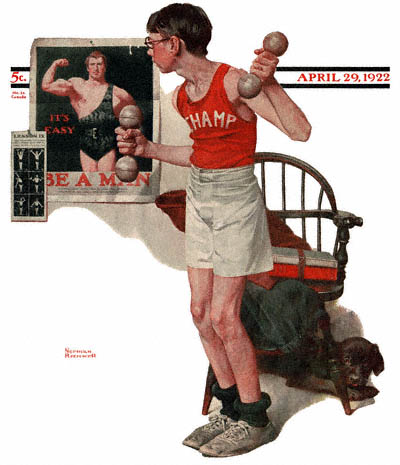
I have written in the past about my attempts to become a body-builder when I was in my early twenties. To make a long and boring story short I worked out like a bomb for almost two years and looked virtually the same as when I started. It didn’t help that every wall was a floor to ceiling mirror. I tried everything – eating emasculated chicken, dieting, water pills, and supplements guaranteed to pump me up like a helium balloon. Apparently the patented molecules had never encountered anything like my bird-like metabolism before, for after two months of drinking that vial sludge after every meal, all I could show for my efforts was that I had apparently lost the ability to have a bowel movement. That made me gain weight but not the kind of weight that I was going for.

There is no end to what some of us will go to in order to look good on the outside. And I’m not here to do a social commentary on makeup and Lululemons and Helly Hansen. Don’t really care about slamming you for how you dress or how much you spend on lipstick and stuff. I may never truly understand how that eyelash medieval torture device works but I support your right to attempt to use it without pinching your eyeball.

But here’s the deal. There is no end to what some of us will go to in order to look good on the outside. It’s no big deal when you’re talking about what kind of boxers you buy to wear outside your shorts. It’s a big deal when it leads to pride and elitism. It’s problematic when it defines how we feel about ourself. It’s horrific when it leads us to do anything in an attempt to fit in.

Defining ourselves by what we see in the mirror has been rammed into us by the stick-figured girls in the media who still manage to pull off a six-pack with their Botox and fake breasts. Men photoshopped into perfect thousand dollar suits and new cars with a brainless bimbo on each arm. Culture tells us that this is success, that this is beauty. Those of us with stretch marks or bellies, with poor cheek bones and weak chins will never measure up. If you don’t believe me take a look at Travolta or Shatner or Elton John or Joan Rivers. They have mutilated their hair lines and faces just to pretend to not be aging. They are paying thousands of dollars to fight a fight they cannot win.

We are all getting old. Deal with it.

Apparently a man’s nose grows his whole life. So do his ears. At some point I’m going to look like Dumbo. Not much I can do about it.

I am listening to the audiobook, “The Game”. It’s a textbook for pickup artists teaching them how to get any woman – the things to say, the ways to act. I have no intention of using this material, I use it to warn women that they are targets. The book is replete with tactics including how to make the desired mark feel worse about herself, how to separate her from her friends, how to ignore her until she begs for your attention. I wrote about some of this in the article, “How To Pick Up Vulnerable Women In Their Twenties”. At the time I used my oldest son as a consultant and now I’m a little freaked out how much he knew without ever knowing this book exists.

The point I am trying to make is that the system for belonging, for finding love, for feeling valued, is largely screwed up. We lie when we date, seeking to put our best foot forward. We look for love in all the wrong places. We think love can be found at a bar. We judge each other by what we look like. It’s all a game, a psychologically damaging contest that dismisses the best of us, the brightest, the kindest, the most worthwhile… the unbeautiful.

I am conscious that for many of us, we have struggled our entire life to fit in and feel good about how we look and who we are. We have never been satisfied by the look of our shell. Here’s the bad news.

You probably never will be.

Ever.

The opposite of bad self-esteem is not good self-esteem. The opposite of bad self-esteem is self-acceptance. Esteem follows acceptance, not the other way around.

These are your cards. You can diet, eat right, work out, take bowel-clenching supplements, but that won’t change how you feel about you on the deepest levels. If you don’t believe me ask a skinny person. We are a generation with low self-esteem and insecurity. It is a plague that is propagated every day, every time we turn on a computer or a television.

You will never be able to compete with Photoshop. Maybe it’s time to stop that treadmill, take your toys and go home.

Imagine if we tried our best then didn’t care about the rest.
Imagine if we could care less about our love-handles and flaws.
Imagine accepting ourselves exactly how we are, in spite of what we look like.
Imagine the freedom.

Vulnerable.

“The most beautiful people we have known are those who have known defeat, known suffering, known struggle, known loss, and have found their way out of the depths. These persons have an appreciation, a sensitivity, and an understanding of life that fills them with compassion, gentleness, and a deep loving concern. Beautiful people do not just happen.”
― Elisabeth Kübler-Ross

Conformity

I am amazed by the similarity of people in various professions. Is it that each job brings with it changes to the people so eventually they look alike? Or rather, are we drawn to certain occupations because of who we are? And how often do we ‘change’ or try to at least, to fit in with the group that we want to belong to? This starts young and we can see it all through grade school into college. And for what outcome do we do this? Acceptance? Personally, I’m done chasing acceptance.

Here’s an example. Have you ever noticed how many ministers/pastors seem so similar? There has definitely been some temperament profiling going on. I have known hundreds of ministers and after a while it began to dawn on me how much alike they are – outgoing but not aggressive, confident but not opinionated, absolutely dead center on the extrovert/introvert scale. It’s true, look around you. I have been at conferences with literally hundreds of pastors. You can count the number of controversial personalities on one hand. If you are looking for marginal personalities, check the kid’s table. Most of them make a brief appearance as youth pastors.

A little known fact is that most youth pastors have a shelf life of only a few years before leaving for good. Why is this? I counsel several ex-youth pastors and they have admitted to me that they never ‘fit in’, that the pressure to conform was overwhelming; and that most of their creativity was shot down by established mores and hierarchical power brokers within the church culture. They expressed an increasing frustration and heightening awareness of their own worthlessness, brought on by repeated rejection and character assassination.

Unfortunately these are not isolated cases. The pressure to conform in society is overwhelming.

I love the Tony Campolo story about conformity. He starts by pointing out how important we like our children to feel. Imagine them at their first day of kindergarten. The school principal comes to the microphone and reassures the parents, “Here at hippity hop elementary school we take seriously the trust of your children. We like to think of each child like a little flower that needs to be watered and nurtured until it can blossom.” So the kid grows up thinking he’s a little flower. And everyone treats her special.

But the day comes when she has to get her first job. I’m pretty sure the foreman doesn’t get up and say, “Here at Landmark Lumber Mill we like to think of each employee as a little flower…” No way! The name of the game is conformity. About fitting in. About not making waves.

Institutions, by their very nature, stringently require conformity. It can be argued that effective organizations must not be constantly threatened by opposition or change to operate efficiently. Marginal employees and leaders are guilty of polarizing issues and straining relationships. They are difficult to bear with, without a modicum of understanding and equanimity. Many people simply do not put up with the extremes of opinion and action, viewing it as self-indulgent and evidence of a lack of restraint. Ultimately they come to be judged as immature or in need of Ritalin. One has but to witness the horrendous rise in childhood medication within the school system to see the practical application of current cultural philosophy. In a recent issue of Reader’s Digest they cited studies that concluded that while only a few percent of the general population of Canada suffer from Attention Deficit Disorder, over twenty percent of school students have been recommended for mind-altering drugs. It is far easier to dismiss and medicate than it is to recognize the inherent lack of appreciation for differing personalities. I have little doubt that I would have been recommended for such medication as a child had I been born ten years later. There is less and less room for ‘busy’ children in established organizations.

Considering the psychological ramifications, the societal pressure, and the subsequent lingering feelings of inadequacy, it is no wonder that marginalized personalities have a higher rate of chemical and emotional abuse. A vast majority of society’s disposable people exhibit anti-social behaviour and lack a general sense of propriety and culturally acceptable behaviour. An investigation into their pasts often reveals that they experienced catastrophic rejection as a child and continued to struggle with conformity well into adulthood. The example of Columbine High School put a magnifying glass on the potential dangers that we as a society face when we refuse to assign value to those who are unable to easily move within accepted norms.

I know a little bit about what it feels like to not fit in. My grade three report card actually said, and I quote, “Although Scott does well academically he thinks he can run the class and frankly I am getting sick of it!” Grade three, already a leader. Sweet.
One time, a very long time ago, my father asked his pastor at the time what to do with me. Apparently I was a handful. The old guy gently reminded my father that the story was not over yet, that often the most high-strung and oppositional kids grow up to be great leaders. This was sage advice.
I am keenly aware that I write for many people who have been beaten down by the system, by the expectations of others, by the death of dreams. It is tempting to feel marginalized when people are actually marginalizing you. As they say, it’s not paranoia if they are out to get you.

You’re ok just the way you are. I have spent much of my life chasing acceptance and it is vastly over-rated. I am tired of trying to “fit in” and chances are you are as well.

The story isn’t over yet.

The Neurologist And The Nazi

Paris International Exposition: Nazi Germany p...

After I had my grand mal seizure last fall I was encouraged (forced) to see a neurologist for an assessment of my EEG. He was young, engaging, and when he realized where I work and what I do for a living let his guard down a little and we talked shop.

During our discussion he admitted to me that at least some of what he learned in medical school was information provided by the nazis in World War Two. Needless to say I was intrigued and pumped him for information. I have known for some time, being an amateur history and World War Two buff, that the experiments on the prisoners at the concentration camps had not been destroyed. I imagined that some of their research, no matter how heinous, must have worked its way into some form of science. I was a little surprised, however, to find out that a neurologist educated in Canada alleged that at least some portion of his understanding of neurology could be traced back to the Third Reich. Debate rages over the ethical ramifications of such use, though several credible sources, even Jewish sources, trumpet the pragmatic value of morally tainted data.

At this point it is tempting to look on the bright side and make platitudes about how “good can come out of bad” or something inane like that. Not going to happen.

No amount of understanding, at least in my mind, even remotely justifies what happened. I have seen some of the pictures, read about the experiments with altitude, cold, pregnancy, mutations, proposed medicines, poisons, etc. It’s just not worth it.

As a counselor it is tempting to try put a positive spin on pain or problems. I know personally that I am a much better person because of the emotional and personal breakdown I had over a decade ago. I realize that I have learned lessons and matured in ways that can only come about through pain. Trauma teaches lessons, if we are willing to hear them.

Was it worth it?

Nope.

If you liked this article you might want to check out – Lowering Your Expectations.


It’s Always Darkest Before The Dawn…

stolen from Ivonne…

Regrets collect like old friends
Here to relive your darkest moments
I can see no way, I can see no way
And all of the ghouls come out to play

And every demon wants his pound of flesh
But I like to keep some things to myself
I like to keep my issues drawn
It’s always darkest before the dawn

And I’ve been a fool and I’ve been blind
I can never leave the past behind
I can see no way, I can see no way
I’m always dragging that horse around

Our love is questioned, such a mournful sound
Tonight I’m gonna bury that horse in the ground
So I like to keep my issues drawn
But it’s always darkest before the dawn

Shake it out, shake it out, shake it out, shake it out, ooh whoa
And it’s hard to dance with a devil on your back
So shake him off, oh whoa

And I am done with my graceless heart
So tonight I’m gonna cut it out and then restart
‘Cause I like to keep my issues drawn
It’s always darkest before the dawn

Shake it out, shake it out, shake it out, shake it out, ooh whoa
And it’s hard to dance with a devil on your back
So shake him off, oh whoa

And it’s hard to dance with a devil on your back
And given half the chance would I take any of it back
It’s a fine romance but it’s left me so undone
It’s always darkest before the dawn

Oh whoa, oh whoa…

And I’m damned if I do and I’m damned if I don’t
So here’s to drinks in the dark at the end of my road
And I’m ready to suffer and I’m ready to hope
It’s a shot in the dark aimed right at my throat
‘Cause looking for heaven, found the devil in me
Looking for heaven, found the devil in me
Well what the hell I’m gonna let it happen to me, yeah

Shake it out, shake it out, shake it out, shake it out, ooh whoa
And it’s hard to dance with a devil on your back
So shake him off, oh whoa

You Just Got Hit

Bad day“They have a saying in boxing – everyone has a plan till they get hit… well guess what, you just got hit. Whether or not you get up is up to you.”  from The Ghost And The Darkness

I remember, years ago, hearing a minister talking about the worst day he ever had. I won’t go into details but suffice to say, it wasn’t much of a day. No one died, nothing bad happened. He was inconvenienced. I remember hearing him and thinking, “That’s the best you got?”

Some people get through lives relatively unscathed. I don’t know them personally but that’s the rumor. For the rest of us, however, life is a series of adventures and misadventures. I have a theory that almost everyone has experienced some form of trauma by the time they are forty. I can’t prove this but it seems to be true in the world I live. To quote the greatest family movie of all time, The Princess Bride, “Life is pain highness, anyone who says different is selling you something.”

We all get hit, from time to time. The older I get the more I notice how differently my life has turned out than I had anticipated. You can have all the plans in the world but they won’t help you if you get Fibromyalgia, or cancer, or are in a car accident. We are all just one bad moment from having our lives drastically changed. Twelve years ago I had my life all planned out, then I got hit. Some hits you never fully recover from. Perhaps that shouldn’t even be the goal. Trauma changes us. The trick may be to use situations we hate to change us in the right direction.

Life isn’t fair. Sometimes the rich do get richer and the pretty people do get all the breaks. Sometimes the jerks yand the liars do get ahead and there really seems to be no justice in the world. The Nortel legal battle in Canada, among others, demonstrates that the laws that apply to some, do not necessarily apply to the rich. The right set of high-priced lawyers changes everything.

Have you ever noticed that rich men usually have better hair? There is no justice.

It’s easy to get bitter.

But it doesn’t help one bit.

Have you ever noticed that the older people get the more they become a caricature of themselves? It is as if our personalities are water-soluble and as we age more and more of the water evaporates, leaving us with more “us”. As the capacity to exercise social restraint wears away you begin to see who that person really is. Old people seem to go one of two ways; either they become more gracious, more beautiful, or they get more bitter. So many bitter people.

I do not want to become bitter as I grow older. Already I can see the my tendency to become judgmental, or critical, or just grouchy. There have been people who have hurt me deeply and my natural inclination is to hold grudges and carry that pain forever. Perhaps I am not alone in this.

At the end of the day, like most things, it is about choice. Choice and a great deal of hard work. Left to our own devices many of us will gradually slip further and further towards negativity. Awareness is important. Hard work is much more important. Working on myself cannot, must not, be something I only do when I need to get something or someone. My life is not a thing to be fixed, it is a project to be nourished.

I know from personal experience how damaging it can be to live with bitterness and unforgiveness. I like to say it’s like taking poison and hoping your enemy will die. And it really is that harmful to us to live this way.
Joyce Meyer

← Back

Thank you for your response. ✨