Many spouses will stay in a relationship that is sick and twisted, but why?
It is a truly terrifying story – a young girl grows up in a sick home and is repeatedly sexually abused by a relative or family friend. This person then becomes sexually active at twelve of thirteen with a boyfriend who in his mid-twenties or beyond. Often this is followed by a period of extreme promiscuity. They are sexually intimate with every boyfriend and come to believe that this is expected of them if they want to stay in that relationship. She starts to associate sex with being loved or loving someone else appropriately. They often engage in sexual acts which they do not enjoy, most of which are degrading in some way. They have an overwhelming compulsion to “perform” in order to be loved. For some strange reason, however, after they have settled in with someone they discover they are not truly happy and still have trauma and self-esteem problems. They struggle to find the intimacy and completeness in romance that they so desperately yearn for.
In counseling it often becomes apparent that this person is actually attracted to the sickness they have come to associate with love. They go after the “bad boy” or they seem to hook up with men who are always emotionally unavailable, their romantic interests usually are selfish, misogynistic or emotionally unhealthy.
If you can relate to what I am writing about then it’s time to ask yourself a question, “Am I attracted to this person because of their sickness or their health? Is this person irritating me right now because they are desiring something healthy (emotional connection, vulnerability, working on the relationship, planning for the future, stability, etc)?
Is it sick or is it healthy? I often send my patients home with this homework. For the next two weeks ask yourself, whenever you feel emotional in your romantic relationship, is this sick or is this healthy?
When he ignores me I pursue him. Is this sick or is this healthy?
I feel repelled by his attentions. Is this sick or is this healthy?
I am overly critical or easily angered by this person. Why? Is it sick or is it healthy?
He/she never seems to live up to expectations. Is this sick or is this healthy?
You get the idea, a good exercise for whenever we are struggling with our loved ones. Ask yourself, “Is what I am experiencing a result of a healthy and legitimate concern, or is this an unhealthy response to a sick situation?”
From ladywithatruck: I was in an abusive relationship as you know. I went back to him many times. Why? Because every time we split he would have an epiphany and realize and admit to and apologize for everything he did wrong. I would feel validated, heard, valued, loved and willing to look at my part in things and do my part to save the relationship. We would get back together, I would be putting 110% into “us” and he would recant or “forget” ever admitting fault.
His article is dedicated to her insight.
When I read these words, comments on a recent post, I had a bit of an epiphany myself. I realized, maybe for the first time, that in virtually every relationship I have worked with, if the woman is the one to leave, the man will have an epiphany a day or a week later. I myself was full of epiphanies, that breakup those many years ago that shaped my life. As a guy I knew beyond doubt that if I could just do something, I could salvage this thing. I needed to do a bunch of sentimental things, placating things, say the right words and this situation would be fixed. This was what I would set my mind to until things were back to normal.
The worst part was that I knew better, was a proponent of better. I was a professional, but I was still a guy.
That was the day my journey really began. But I digress.
I know full well that there is something in men that ignores a situation if it seems too daunting or unwinnable. I cannot tell you how many times wives tell me that their husband no longer communicates, no longer wants to date, no longer spends hours in conversation (or minutes). It is very difficult for women to understand that this is a very natural and learned response for many of us, and just because it seems unbelievable to you doesn’t mean it isn’t happening. As I have written many times men, especially men over thirty, do not grow up in a culture that encourages or teaches emotional connection. Our social connections were and remain mostly shallow. Patrick Warburton in Rules of Engagement is not as much a caricature as we would like to believe. Few men spend hours a week trying to connect emotionally with anything, it’s a lot of work.
Years later, when the relationship breaks up it usually comes as quite a shock to the guy who is left. Things were going along swimmingly, everything seemed “ok” even if she wasn’t interested in sex anymore, at least with him. She was always sort of frigid. What does she want, anyway?
As bizarre as it seems to the leaver, your choice to go really was a shock. Sorry but it’s true. We have an amazing capacity to compartmentalize our lives and ignore issues which are going to cost too much emotionally. It comes as no surprise then, that when men are confronted with the immanent demise of their relationship they tend to do the wrong thing – they do things. ‘Doing’ is an area where I am comfortable and I understand the rules. Women are incredibly difficult to understand (believe it) and there will be so much anger, so many long conversations, so many hours spent talking about stuff that I don’t care about. Even if I did care half as much as you I still would not understand what to do and you refuse to tell me. I need to figure out a way to placate you.
Women who leave understand that they have gotten their hopes up and expected more than he was willing or able to give. Men like projects, and projects end. Understanding that emotional investment in a relationship is a lifelong project is a lot for a man to get his head around. Becoming that guy is a huge commitment (to fundamentally change your personality) and takes a hell of a lot of work with little or no initial rewards. You won’t suddenly enjoy those long talks about things that don’t seem to matter. There is no instant payoff for giving unselfishly and relentlessly to a woman who is suspicious of your motives and prone to become overly critical. And nothing wounds me deeper than a condescending spouse.
Is it worth it? I cannot answer that for you. I only know that for me, the work has occasionally become part of the pleasure. The more I learn about my wife, the better I see her motivations and personality, the easier and more fun it gets. For some reason it isn’t as hard as it used to be.
She certainly seems to be thinking more like me lately…
Some men hate my writing, and with good reason. I have a propensity to tell men that they are not meeting their partner’s needs – without offering enough positive and practical advice. It’s almost as if I am saying, “Here’s the problem but you need to figure it out yourself.” That sounds suspiciously female to their ears, their partner (if they have a female partner) has been saying that to them for years. What am I, one of them? Where is the step-by-step guide to winning her heart? Where are the slick tactics that you see on other websites (which appear far more helpful because they offer quick and easy solutions)?
Part of being a man, I am convinced, is often needing clear instructions when it comes to emotional issues. Emotional intelligence is something we never worked on much growing up. We spent far too many hours shooting things and talking about farting (or was that just my family?). We need to fix things and it would be very helpful if women came with an owner’s manual (such a sexist comment…). They aren’t rational, we think. They don’t process things like we do, don’t seem to have the ability to communicate like we communicate; they think about too much stuff (and apparently they think all the time!). How many times do I have to watch “Say Yes To The Dress” (Atlanta not New York, Randy’s a poser) before she warms to my form?
Men ask me all the time, “What can I do?”
The answer is simple. All you should do is learn how to communicate with women, learn to understand how women think, become a student of the female psyche, spend hours and hours listening without offering solutions until you are sure she is looking for one, activate the emotive side of your personality, learn to give while feeling misunderstood, talk, talk, talk, talk, get counseling and marriage counseling, take some psychology and feminism classes…
Or just do this…
Although I am only a man I am immersed in female culture and constantly hear that female spouses don’t feel safe in their relationship, struggle with trust, and don’t feel important or valued. Many have spoken of feeling emotionally abandoned after a few years of commitment. Time and time again my female clients tell me that their issues with their man wouldn’t matter nearly so much if only they felt special, felt important, believed that they were completely loved.
This sounds really naive, but what if there is something to it? What if I didn’t need to try to fix a thousand past slights but only had to try, try really hard, try every day to win this girl back? What would happen if I decided to make this person whom I love more than anyone the absolute first priority in my life for the next three months? Spoil her.
Listen to her.
honour and cherish her.
become a student of her.
engage with her as much as she wants.
Treat her like a goddess.
Do the things you did to win her heart in the first place.
Even as I write this, after all this training and all this experience, there is still a minuscule guy part of me that thinks this is so lame. So unmanly. So hard.
This may be completely off, especially in cases of abuse, but what if it was a game changer? What have I to lose?
Most of us can count on one hand the number of authentic, lifelong friendships we have. We would like to believe our friends at work and play are deep and meaningful but we know, because it has happened before, that after we leave we will gradually lose contact with people we have cared about. This is a natural, even healthy part of life. Friends come and go, the circle of life.
We have all been hurt by someone who said they would always be there for us. Perhaps we were more invested than they were, we made assumptions and believed that the other person cared as much as we did, but we were wrong. I too have been blindsided, more than once, by someone I loved with abandon only to find out that they had completely different feelings and assumptions.
Every day I counsel people who have been damaged by someone they loved. It helps, perhaps, that I have experienced a little bit of that pain and know at least something of what it is to ‘endure’. People disappoint and rare is the friend who you cannot shake, cannot offend enough to leave. I aspire to be someone like that, as many of us do.
In his book, You Can Make A Difference, Tony Campolo tells the true story of two men who were traveling together on a train out of Victoria Station in London. Twenty minutes into their journey, one of the men had an epileptic seizure and if you’ve ever seen this happen they you know how frightening such an attack can be. The man stiffened and fell heavily out of his seat onto the floor of the train. When this happened his friend immediately took off his own jacket, rolled it up, and put it behind the stricken man’s head. Then he blotted the beads of perspiration from his brow with his handkerchief and talked to him in a quiet manner to calm him down. A few minutes later when the seizure was over, he helped lift his friend gently back into his seat. Then he turned to the man sitting across from them and said, “Mister, please forgive us. Sometimes this happens two or three times a day”. And then, in the conversation that ensued, the friend of the epileptic explained. “My buddy and I here were in Vietnam together, and we were both wounded in the same battle. I had bullets in both my legs and he caught one in his shoulder. For some reason the helicopter that was supposed to come for us never came to pick us up. My friend here picked me up and he carried me for three and a half days out of that jungle. The Viet Cong were sniping at us the whole way.
Understand, he was in more agony than I was. Repeatedly I begged him to drop me and save himself, but he wouldn’t let me go. He got me out of that jungle, mister. He saved my life. I don’t know HOW he did it and I don’t know WHY he did it…but he did. Well, four years ago, I found out that he had this epileptic condition, so I sold my house in New York, took what money I had, and came over here to take care of him”.
Then he looked at his friend and said,
“You see, mister, after what he did for me, there isn’t anything I wouldn’t do for him.”
Real love is like that. When you truly love someone, not just think you do, but love them with every part of yourself there is nothing they can do to drive you away. I love my family like that. There is nothing my children could do, no crime or indignity they would commit, that would make me love them less. I’m reasonably sure you can understand what I am saying. Friendship, however, is not held together with blood. There is no legal contract, no external pressure forcing you to care. Friendship is about loyalty.
Loyalty.
I do not hear much about loyalty, outside of movies and documentaries about the mafia.
Trust, faithfulness, sacrificial love, unselfishness, commitment – character traits that are not automatic or easy to assimilate. Loyalty is inconvenient, it is costly. It walks in, as they say, when everyone else is walking out. It’s easy to talk the talk, make promises, spew platitudes; but it is another thing altogether to walk the walk. Loyalty shows up at three in the morning and holds your head when you throw up. Loyalty doesn’t keep track of slights or demand tit-for-tat.
I’ve been reading an awesome book lately by Rick Hanson called Buddha’s Brain – The Practical Neuroscience of Happiness. Hanson is neuropsychologist, author, speaker and meditation teacher. His book isn’t about Buddhism as much as the intersection of psychology, brain science and contemplative practices. I discovered him on my friend Scott’s blog in the article I referred to above.
I’m massively interested in brain science, because it gives concrete evidence and thus strategies for dealing with the nebulous emotional things of life. This has added to the foundation of CBT techniques I’ve been learning and practicing. Coming to understand the science of the brain and the inner universe has had as large an impact on my thinking as coming to understand the science of the physical world and the larger universe. Bill Bryson has a great book called, ‘A Short History of Nearly Everything’, if that’s something you’re interested in exploring.
I’ve spent over half of my life exploring christianity. I ’found god’ at 24, married in to it, and it continues to impact me, though not always in positive ways. Although there are parts of it I love, there are also other parts that have stripped me of my ability to appreciate it overall.
These past years, I’ve deconstructed my belief system and in doing so, have become a dissenter within the circle I once belonged. Sadly, in such circles, alternate views have little place. If you’ve ever stepped outside or challenged the belief system or code of conduct of a religious community, you’ll know what I mean. It usually involves at least a questioning of your character and faith, and often far more.
As I’ve dissembled the thinking I once accepted, some big issues have come up. This is my philosophical shortlist, ignoring the other practical and relational impacts.
– If there’s a benevolent god, interested and acting on my behalf in the minutiae of my daily life – why then is that god seemingly absent in the daily lives of people in far more extreme circumstance?
– Would an all-knowing benevolent god insist we belong to an exclusive ’club’ of understanding or would that god take in consideration our differing cultural and religious upbringings and sexual preferences?
– Is truth really a narrow path or is it an encompassing one with room for the many positive contributions from other avenues of thought?
– How, given the vast scientific evidence for the evolution of the world and it’s species, can religion blind itself to such findings?
But perhaps most notably for me, is the question of how religion can claim to understand the complexities and mysteries of eternal life, when we can’t even comprehend the complexities and mysteries of this physical life. At least not yet.
A few years ago, I was taken with the book, ‘Eat, Pray, Love’ which was later made into a movie. The movie was dismissed as a chick flick, a romantic comedy. At the best of times, I can barely endure chick flicks, but Elizabeth Gilbert’s story is more than that. It’s a memoir, a personal recount of her journey in, an awakening of sorts.
Gilbert traveled a path of personal healing. faith and self discovery that began in Italy, progressed to India and concluded in Bali. Each of those parts of her life contributed to her evolving, broadening spiritual mosaic. I imagine her journey in continues still.
The idea of a spiritual mosaic is new to me and in some ways makes me a little uneasy. It’s not the well-traveled road I’m familiar with, but I’m liking what I’m learning. I’m incorporating into my daily routine meditation, mindfulness and visualization – because they literally change the physiology and landscape of the brain toward peace, love and self-mastery. Whether they answer the existential question of what lies beyond, is still, well, a question.
I have no idea what lies beyond this life. Is it jeweled streets? Is it the music of string theory? Is it one-ness with the universe? Is it nothing ? I don’t know. And neither does anyone else, no matter what authority they claim it upon. But I do know it’s within my power to live and love well.
My youngest son asked me anxiously the other day, ‘Mom are you still a Christian?’ And honestly, I’m not sure I am, except by my own definition. Just as I’m an art student, a student of philosophy, religious studies, psychology, literature and science – by my own definition.
Is that enough? Is a rose by any other name still as sweet?
David Flowers is a counselor and doesn’t suck. He sent me a head shot to include in his bio but I never post a picture of someone better looking than I am so you’ll have to go to his blog to check him out at davidkflowers.com.
This is from David:
I came across a meme on Facebook this week that blew me away. Perhaps you’ve already seen it.
A great deal of my work is in premarital counseling, mostly with people who have never been married before. The main work I do in premarital counseling is help couples understand the usually unreasonable expectations they have of each other, and of what marriage will be. They naively think the most important thing they’ll do in marriage is take care of each other. My work is to get each partner to understand that a healthy relationship, by definition, consists of two healthy individuals. This means the single most important gift spouses can give each other is for each of them to get their own act together, to deal honestly with their own issues.
Five Reasons Why Getting Your Act Together Is An Awesome Gift To Give Someone Else:
1. The more deeply and honestly you deal with your own issues, the less inclined your spouse will be to bring them up.
Let’s face it, most arguments between couples consist of each of them telling the other what is wrong with them. The faults of others are easy to see. “You’re so stubborn.” “Yeah, well you’re so critical.” If stubborn lady works on her stubbornness, and critical guy works on being less critical, and they are open with one another about it, they will each be less likely to use those things as ammo in an argument. The best thing you can do is admit them and work on them.
2. The more you get your act together, the easier it will be for others (not just your spouse) to love you.
Conversely, the more broken you are, the harder it will be to love you. If you are needy and insecure, you will suffocate your partner. If you are demanding, you will exhaust them. If you hate yourself, you will always be miserable. If you take everything personally, almost everything your spouse says, no matter how well-intended, will hurt your feelings. People who love themselves have faced their issues squarely, and people who have faced their issues are easier to love because they are not constantly spewing their unresolved goo all over others.
3. Getting your act together is a way to keep investing in the relationship.
In too many relationships couples think (or worse yet, say!) “We’re married now. You have to love me, warts and all.” This is when she starts greeting him after work in an old bathrobe and a mud mask. He returns the favor by farting under the covers. They eventually end up in my office for counseling and can’t figure out how the magic leaked out of the relationship. Answer: The magic leaks out when you stop trying. Since no one ever fully gets their act together, working on yourself is a way to keep trying, all through your life.
4. You’re the only person you can change
Too many couples want each other to change, and to be completely accepted by the other. When you commit to a life of getting your act together, you turn it around. You determine to accept your partner completely and change yourself — the only one of the two of you that you can change.
5. It gives your spouse what they want
Your spouse married you because they love you. Assuming your spouse is a basically good person, they want you to be happy, healthy, and whole. The more you improve yourself, the happier you become and the happier you are, the happier your spouse will be with you.
I have directed this post toward married couples but unmarried couples can apply it, and parents can apply it to relationships with their children. Parents are always asking me, “What is the best method of discipline” or “How long should I keep my child in time-out.” I always say, “Parents — get your act together personally. When you are secure, when you feel good about yourself, when you know you are loved and valuable, you will naturally raise your child with this same assurance.”
Getting your act together, then, is a gift to the world!
Question: How have you seen important relationships improve as you have continued to get your act together? What relationships do you now realize suffered because of your unresolved issues?
Your brain contains more than 100 billion neurons that flawlessly work together to create consciousness and thought. It is an astonishing marvel of evolution and adaptation, and it is also a huge dick.
What do we mean by that? Well, everyone wants to be happy, but the biggest obstacle to that is the mushy thing inside your skull that you think with. Evolution has left your brain with all sorts of mechanisms that are heavily biased toward misery. We can’t guarantee that reading this article will help, for your brain is as crafty as it is sadistic. But at least you’ll understand it better.
#5. Your Brain Latches onto the Bad Stuff by Design
At some point in the last year you’ve spoken to a woman with supermodel looks who would not stop talking about how horrible it was that she had gained half a pound or had a faint pimple on her forehead. You realized that this was a person who somehow could look at her fashion-magazine face in the mirror and only see the pimple. It’s so annoying — why can’t she just focus on the positive?
But of course, we all do it to varying degrees — you might pass 5,000 cars on your morning commute, and 4,999 of them might be perfect, polite drivers. But then you pass that one guy in the SUV who literally stuck his buttocks out of his side window and took a flying shit on your hood. When you get to work, are you going to talk about the 4,999 good drivers or the flying hood shitter? You’re going to focus on the negative, because your brain is hardwired to devote more attention to the misery in life.
Researchers have found this in a laboratory setting: They can show participants pictures of angry and happy faces, and the participants will identify the angry faces much faster than the happy ones. How much faster, you ask? So fast, we answer, that the participants had no conscious recollection of ever seeing the faces. That’s right — your brain already identified the shit parts of your day before you even knew it. You have a sixth sense for misery.
And that was a great ability to have back when evolution was deciding which of us would reproduce and which would get eaten — we needed a brain tuned to spot threats. Giggling at the butterflies instead of running from the tiger puts you in the express lane through the tiger’s intestinal tract. We focus on the negative because it’s the negative stuff that gets us killed — there was no evolutionary advantage to stopping to smell the roses. But this has left us with a brain that not only devotes our attention to the bad stuff, but also makes us remember it a lot better. Think about the implications in your everyday life — you can wind up walking away from a pretty good job or relationship because you only remember the bad times.
If there’s a good side to it, the effect does seem to reverse as we get older, when nostalgia starts to set in and we focus more on the good memories. Unfortunately, for many of us the only effect of that seems to be that we can’t stop talking about how freaking great things were back in our day.
#4. Killing Negative Thoughts Only Makes Them Stronger
All right, you think, if negative thoughts are so powerful and make us so miserable, we’ll just force ourselves to stop focusing on them. After all, we’re conscious animals; we have control over our own brains. Now that we’re aware of the problem, we just won’t do it — we’ll look in the mirror and force ourselves to not think about the pimple.
Sure. First, let’s try a really simple brain exercise:
Imagine a white bear humping another bear. Try to get a really clear picture of them in your mind. All right, now stop thinking of the humping bears. Use all of your powers of concentration to eliminate all traces of them from your mind. You shouldn’t be seeing the white bears at all now, or their frantic thrusting, even when we repeat the words “humping white bears.”
Did it work? Hell, no! In fact, the more you tried to not think about bear sex, the more you thought about it. This, unfortunately, is the same thing that happens when you try to force yourself to not think about the pimple in the mirror: Suppressing negative thoughts actually makes them stronger. You read that right. Negative thoughts are like the Sand People: If you chase them away, they’ll come back in greater numbers.
It’s actually insane when you think about it — we’re constantly trying to banish bad thoughts from our mind, but the human brain simply doesn’t have a mechanism for doing it. After all, the only way to know for sure that you are not thinking about horny white bears is by monitoring your thoughts and “scanning” them for any traces of them. So the process basically goes like this:
“Am I thinking about humping white bears?”
“Well, I wasn’t, but now I am …”
Psychologists call these ironic thought processes. They are the reason why you only want the stuff that you can’t have, why trying to suppress laughter only makes you laugh more, why you fail at stuff when somebody is watching, and so on. Telling yourself not to be afraid of failure puts failure right at the center of your thoughts. It’s the difference between overweight people who are always counting calories and rail-thin people who have to be reminded to eat at meal time because otherwise they just “forget to eat.” The overweight dieters are constantly failing because staying under the calorie count requires them to do the one thing they should be avoiding: thinking about food.
This is the cruel irony of people who are chronic worriers. Brain scans show that people who are constantly worrying about every little thing have much more active brains than other people … but the extra energy is wasted. When worriers try to complete a task they worried about, they end up doing worse than non-worriers doing the same task. So much of their brain power is being used to try to foresee all the bad outcomes that they almost guarantee that one of those bad outcomes will occur.
Meanwhile, people who aren’t concerned about what will happen can dedicate all their concentration to solving whatever problem is in front of them, meaning their chances of success are higher. That’s right — you could say that some people succeed purely because they’re too dumb to know why they should fail.
#3. Grief Is Addictive
Think about how much of our entertainment is based around negative emotions. Why do we like scary movies? Or sad songs? Why do we watch movies about disasters or obsessively follow morbid news stories about sensational murder trials? If something horrible happens to us, why do we find ourselves constantly thinking and talking about it?
If you were trying to come up with some kind of logical explanation, you could maybe say that it’s because focusing on terrible things reminds us of how good we have it. But the science says that we actually take pleasure in the negative emotion itself. We willingly dive back into misery again and again for the same reason we willingly board a roller coaster or go bungee jumping: We get a rush from it. That is, the pleasure/reward centers of your brain light up and release dopamine. And you can get addicted to whatever causes your brain to release dopamine, whether it’s chocolate or fistfights.
And just as with any addiction, there are some people who can handle it better than others — we all respond differently. And what researchers are finding is that some people get addicted to grief.
They think this may be why some people can just pick up and move on after a trauma, while others never do. They just keep reliving it, refreshing that feeling over and over. Because of the jacked-up way your brain is wired, even the most horrible thing that’s ever happened to you gave you a rush. Don’t get us wrong — that chronically grieving person you know isn’t enjoying it, any more than the junkie “enjoys” being an addict. They just get trapped in a feedback loop because they’re subconsciously afraid to let go of the one strong emotion that makes them feel alive.
And when it comes time to try to break us out of that cycle, something else comes into play, which is the fact that …
#2. You’d Rather Be Unhappy Than Uncertain
To all the teenagers reading this: You are lovely people. Thank you for reading Cracked. But holy frijoles, you do some completely idiotic things. Don’t worry — it’s completely normal. Thanks to evolution, the teenage brain is all about taking risks, like attacking a woolly mammoth with flimsy spears and having lots of sex with multiple partners, all for the continuation of the species.
For that decade of life, young people don’t have a “NO” switch in their brains, and while it meant that a lot of them fell off cliffs while chasing the woolly mammoths, overall it has been beneficial to the species. In fact, you could argue that the people who are successful later in life are the ones who never gave up their lust for taking stupid risks.
But for the most part, as you get older, your brain wants you to stop taking those risks. You already did all your kid-having, now you need to settle down and stay alive so you can raise those children. Forget mammoth hunting; you’re picking berries. You are less likely to quit your job and start a garage band at 50 than you were at 17, and that’s a good thing.
The problem is that most people grow so scared of risk that they are more likely to stay in situations that make them miserable than take a chance at happiness. Sure, you only drew a three of hearts out of the deck of life, but if you ask for a new card, you might wind up with a deuce. You stick with the misery you know.
And even worse, it actually gets to the point where a change that works out for the better can be scary because it’s better. In other words, even if you take the risk and the risk pays off, if you’re not used to happiness, then it just feels weird, or phony. Studies have found that taking depressed, self-critical people and trying to make them think positively about themselves just confuses the shit out of them. Make them stand in front of a mirror and shout compliments at themselves and they just think it’s weird and pointless. “What is this? Are you making fun of me? This is stupid.” It actually takes a whole different type of therapy for those people, because they see warmth and happiness and can only think, “What the hell is this shit?”
Some of you think that’s absolutely bizarre, and some of you know that as your everyday life. Ask yourself: When you’re sitting in a bar or coffee shop and there’s a group of friends next to you just laughing and having the time of their lives, how do you react? Do you find yourself annoyed by that? Do you hate them just a little? There you go.
#1. Being Happy Takes Effort
Imagine a happy person in your mind. Maybe you’re picturing a kid diving into a swimming pool, or an athlete hoisting a trophy, or Richard Branson parasailing with a naked supermodel on his back.
Now imagine a depressed person. You picture him sitting on the sofa in the dark, maybe drinking alone, staring at infomercials at three in the morning. Maybe he just never got out of bed.
The primary difference there is that the former person is actually doing something. It’s ridiculous to imagine the roles reversed — there aren’t any sad ballads about people snowboarding.
So despite how much cocaine Sigmund Freud did, it appears he was right when he said that unhappiness was the default position of our brains — meaning that happiness takes effort. As one study put it, having the right genes and being surrounded by the right people are a part of the equation, but the rest is doing things that make you feel good.
And if reading this made you roll your eyes and say, “Well, duh,” then you have to stop and realize how many people never do this. How many people do you know who say their ideal vacation would be to just kick back and do nothing at all? All of the “doing” in their lives comes at the job or at school — all the stuff that they’re forced to do by other people. So they think that relaxing means doing nothing at all, rather than doing the stuff they like.
They fall into the trap of thinking that happiness is simply the absence of doing unpleasant tasks instead of actively doing pleasant ones … and the human brain just doesn’t work that way. And this isn’t going to get any better as time goes on; among seniors, their satisfaction with life didn’t correlate with the state of their health or anything else — it was based on whether or not they had friends and hobbies.
Of course, it’s never harder to go out and make friends or start a new hobby than when you’re in the throes of depression, and at that point, all of the above cycles that keep you in that valley start coming into play. Hey, when we said your brain was a dick, we weren’t kidding.
Reality can be cruel. Sometime ago I was handed the inglorious task of telling a beautiful young woman that she had herpes. She was sure it was a bladder infection, but ultimately the science didn’t lie. There is a stigma that comes with something that is sexually transmitted, especially if you have a partner that does not have an STI.
The thing is, you can deny the reality all you wish, it will not change the facts. It’s like being pregnant, there is no “sort of”. Such it is with life. There are certain realities that come screaming your way no matter if you are willing or not, ready or not, believe it or not. Immanuel Kant believed that there were essentially two different worlds – the noumenal and the phenomenal. The phenomenal world is the world as we perceive it. The noumenal world is the world as it really is. They are rarely the same thing. For those of us raised on The Matrix it is the difference between the blue and the red pill. The real world is seldom as we perceive it.
We put on our sunglasses and filter everything to fit our view on the world. We have been raised to believe certain things, use certain coping mechanisms, employ certain cognitive interpretations and distortions. There is something in all of us that wants to believe we are the exception to the rule. Other people cheat on their partner and get caught but I am too smart, too slick, the exception. I can cheat on my taxes and get away with it. I can cut corners, take shortcuts, skim relationally, and do whatever the hell I want because, although other people get caught, I am not going to be held accountable. Sometimes we are even right.
Sometimes we can get away with enough that it actually reaffirms our excuses and entrenches this belief in our psyche. I see this often in counseling. People want to have their cake and eat it too. On a regular basis an individual will seek me out in order to get permission to do something cheap or immoral, or just a bad idea. They are looking for a professional to condone their desires. Often they leave disappointed.
Although it is not my job to judge others, I do recognize a bad idea when I see one. And I see many. Day after day people walk through my life and describe how they are trying to take a shortcut, convinced that they will not be held accountable. After doing this job for years I am often tempted to stop them mid-sentence and tell them how things are going to turn out in six months or a year. To quote Agent Smith from The Matrix, “That is the sound of inevitability.”
I am guilty of occasionally telling my clients who are vulnerable, in recovery, or in the midst of crisis, “If it feels good, don’t do it”. If you are still with me at this point you undoubtedly understand what I am trying to teach them. Of course it is good to do good things. The problem is, however, that many things that are instantly gratifying are in fact horrible options. Snorting cocaine is instantly gratifying, so is cheating on my wife. The surge of chemicals in my brain overwhelms me with yummy goodness. It seems like a good idea at the time. That’s my phenomenal world talking, and it’s lying to me. Wisdom rarely whispers to easiest route to success.
Real growth has little to do with taking shortcuts. You can get your black belt in martial arts online if you mail ten dollars to some spurious Do Jang but that doesn’t mean you know how to fight. There are no shortcuts to a real black belt, or a real degree, or actual wisdom… or healing. One of the screensavers that pops up on my computer at the office says, “I’m not telling you it’s going to be easy, I’m telling you it’s going to be worth it.” That’s reality. – If it seems to good to be true, it is. – If anyone tells you that you can be whole in eight sessions of anything, they’re wrong. – You can’t change anyone else, just yourself. – Guilt/feeling bad is not the same as doing anything – No one else is to blame for your life – Trauma doesn’t usually just go away – Prayer doesn’t fix everything.
Sometimes you have to get off your ass and do something – No one cares as much about your problems as you do – The real world is boring, make friends with that – Everyone is as screwed up as you are… trust me on that … and to repeat – If you aren’t enough without it, you’ll never be enough with it (Cool Runnings)
Sitting on the beach at Puerto Vallarta with my dad, watching the waves come in and out, fighting off local vendors and splashing in the waves, it’s easy to imagine life could always be like this. Those days in the sun are easy to embrace. Why can’t they last forever?
The real world is far less memorable. I don’t take two hundred pictures of my normal Monday to Friday. Weeks, even months, can come and pass without nothing of great significance happening. Get up, get dressed, go to work, come home, cook and clean, talk and watch tv, chores, hygiene, bed. Over and over and over again.
The real world is boring. I have mentioned before that one of the hidden issues with addiction recovery is that the real world is mundane. Addicts are used to spending most of their waking hours fantasizing about highs, planning and financing their addictions, getting and imbibing, coming down, burning out; not a boring day. Stopping drinking or drugs or whatever is only a small part of your battle. Dealing with a life-view and lifestyle is far more complicated and difficult. Learning to settle with what you have, where you are, and what you are doing is not natural. Television and movies tell us all the time that life should be a series of orgasms and car chases.
People who have little experience with drugs or addiction often ask me why people get high. The reason is, drugs are awesome. At first. People get high and drunk because it’s really fun. For a while. If there were no negative ramifications to chemicals many people would get high all the time. The temptations to escape from a boring reality is extremely tempting. When you are inebriated you don’t have to worry about the day-to-day hassles and problems that never seem to go away. And therein, lies the rub.
They don’t go away. Ask anyone who has come back to work after vacation. Nothing has resolved itself, there is usually no break. Often, after a day or two back in the real world it is almost hard to imagine you were ever on that beach in Cabo. Problems and pressures are a part of life and trying to escape from your persistent reality only prolongs the issues. Procrastination has no healthy payoff.
We love to pretend. Pretend we are not getting older, pretend that our relationship will magically fix itself, pretend that we will reach our goals in spite of doing nothing. We pretend that our addictions are not hurting us, our anger issues are no so bad, the way we treat our partner is not abusive. We pretend that we don’t need counseling or that our childhood trauma, if we ignore it long enough, will stop affecting our lives. We pretend that we are happy. We pretend that we are not afraid of death. We pretend that we can continue to ignore our problems, skim through life without passion, buy useless crap and consume, consume, consume and this will bring us lasting contentment and joy.
I don’t believe in magic. I don’t believe you can wave your magic wand and everything will be fine. I no longer believe that all you need is faith and your problems will cease to be your problems. The real world is messy. It will ask of us more than we want to give and take from us more than we want to let go. In counseling we often talk about cognitive distortions, those distorted ways of thinking that help us cope with a dysfunctional world. Unfortunately those same coping mechanisms keep us from moving forward. It is only when we embrace the chaos, wade through the quagmire, and refuse to become numb that we find wholeness. Getting healthy takes guts, and bandaids.
Two roads diverged in a yellow wood
and sorry I could not travel both
And be one traveler, long I stood
and looked down one as far as I could
to where it bent in the undergrowth;
The famous French expression, “Tout comprendre, c’est tout excuser” (literally, “to understand all is to pardon all”) is a dictum that we ought to apply at least as much to ourselves as to others. For the more we can grasp just why in the past we were compelled to act in a particular way, the more likely we’ll be able both to excuse ourselves for this behavior and avoid repeating it in the future.
Becoming more self-accepting necessitates that we begin to appreciate that, ultimately, we’re not really to blame for anything–whether it’s our looks, intelligence, or any of our more questionable behaviors. Our actions have all been compelled by some combination of background and biology. Going forward, we certainly can–and in most cases, should–take responsibility for ways we’ve hurt or mistreated others. But if we’re to productively work on becoming more self-accepting, we must do so with compassion and forgiveness in our hearts. We need to realize that, given our internal programming up to that point, we could hardly have behaved differently.
Why is it so hard to love oneself?
To take ourselves off the hook and gradually evolve to a state of unconditional self-acceptance, it’s crucial that we adopt an attitude of “self-pardon” for our transgressions (whether actual or perceived). In the end, we may even come to realize that there’s nothing to forgive. For regardless of what we may have concluded earlier, we were, in a sense,always innocent–doing the best we could, given (1) what was innate (or hard-wired) in us, (2) how compelling our needs (and feelings) were at the time, and (3) what, back then, we believed about ourselves.
That which, finally, determines most problematic behavior is linked to common psychological defenses. And it almost borders on the cruel for us to blame ourselves–or hold ourselves in contempt–for acting in ways that at the time we thought we had to in order to protect ourselves from anxiety, shame, or emotional distress generally.
As a kind of P.S. to the above, self-acceptance also involves our willingness to recognize and make peace with parts of the self that till now may have been denied, shunned, or repudiated. I’m referring here to our illicit or anti-social impulses–our shadow self, which may have spooked or sabotaged us in the past. Still, it represents an essential part of our nature and must be functionally integrated if we are to become whole. As long as we refuse to accept–or in some way accommodate–split-off segments of self, full and unconditional self-acceptance will remain forever out of reach.When we’re able to sympathetically understand the origin of these darker, recessive fragments in us, any self-evaluation rooted in them begins to feel not only uncharitable but unjust as well. The fact is that virtually everybody harbors forbidden (and quite possibly, outrageous) impulses and fantasies–whether they entail brutally injuring someone we find obnoxious, exercising unbridled power over others, or (indeed!) running naked in the streets. And when we’re able to recognize this, we’re also well on the way to accepting ourselves without conditions. Appreciating that, however bizarre or egregious, most of our “evilimaginings,” are probably little more than fantasized compensations for indignities, hurts, or deprivations we experienced in the past, we can now reconceive our “aberrations” as, well, rather normal.
Further, even as we come to accept our shadow side we can still maintain voluntary control over how these parts of us are expressed–that is, in ways that can ensure safety both to ourselves and others. For as long as we’ve been able to re-connect to our deepest, truest self, we’ll be coming from a place of love and caring. As such, it really isn’t in us to do anything that would violate our natural tendencies toward compassion and identification with all humanity. Owning and integrating our various facets is a transcendent experience. And when we–or really, our egos–no longer feel separate from others, any sinister motive to do them harm literally disappears.
Self-Acceptance vs. Self-Improvement
It should be apparent at this point that self-acceptance has nothing to do with self-improvement as such. For it really isn’t about “fixing” anything in ourselves.With self-acceptance we’re just–non-judgmentally–affirmingwho we are, with whatever strengths–and weaknesses–we possess in the moment.
The problem with any focus on self-improvement is that such an orientation inevitably makes self-acceptance conditional. After all, we can’t ever feel totally secure or good enough so long as our self-regard depends on constantly bettering ourselves. Self-acceptance is here-and-now oriented–not future oriented, as in: “I’ll be okay when . . .” or “As soon as I accomplish . . . I’ll be okay.” Self-acceptance is about alreadybeing okay, with no qualifications–period. It’s not that we ignore or deny our faults or frailties, just that we view them as irrelevant to our basic acceptability.
Finally, it’s we–and we alone–that set the standards for our self-acceptance. And once we decide to stop grading ourselves, or “keeping score with” ourselves, we can adopt an attitude of non-evaluative forgiveness. In fact, once we refrain from our lifelong habit of assessing, and reassessing, ourselves–striving rather to compassionatelyunderstand our past behaviors–we’ll find that there’s really nothing to forgive (remember, “Tout comprendre. . .” ). Certainly, we can vow to do better in the future, but we can nonetheless accept ourselves precisely as we are today, regardless of our shortcomings.
And here I can’t emphasize enough that it’s possible to accept and love ourselves and still be committed to a lifetime of personal growth. Accepting ourselves as we are today doesn’t mean we’ll be without themotivation to make changes or improvements that will make us more effective, or that will enrich our (and likely others’) lives. It’s simply that this self-acceptance is in no way tied to such alterations. We don’t have to actually do anything to secure our self-acceptance: we have only to change the way we look at ourselves. So changing our behaviors becomes solely a matter of personal preference–not a prerequisite for greater self-regard.
It’s really about coming from a radically different place. If self-acceptance is to be “earned,” a result of working hard on ourselves, then it’s conditional–always at risk. The ongoing “job” of accepting ourselves can never be completed. Even scoring an A+ in whatever endeavor we’re using to rate ourselves can offer us only temporary respite from our strivings. For the message we’re giving ourselves is that we’re only as worthwhile as our latest achievement. We can never finally “arrive” at a position of self-acceptance because we’ve inadvertently defined our quest for such acceptance as everlasting.
In holding ourselves to such perfectionistic standards, however, we may inadvertently be validating how our own conditionally-loving parents dealt with us. But we’re certainly not validating ourselves–or treating ourselves with the kindness and consideration our parents failed adequately to provide for us.
To conclude, only when we’re able to give ourselves unqualified approval–by developing greater self-compassion and focusing much more on our positives than negatives–can we at last forgive ourselves for our faults, as well as relinquish our need for others’ approval. No doubt we’ve made mistakes. But then, so has everybody else. And in any case our identity is hardly equal to our mistakes (for such a linkage would represent a bad case of “mistaken identity”!)Finally, there’s no reason we can’t decide right now to transform our fundamental sense of who we are. And we may need to remind ourselves that our various weaknesses are part of what makes us human. If all our faults and failings were suddenly to disappear, my pet theory is that we’d instantly turn into white light and disappear from the face of this planet. So in the pursuit of unconditional self-acceptance, we might even want to take a certain pride in our imperfections. After all, were we beyond criticism in the first place, we’d never have the opportunity to rise to this uniquely human challenge.
I’m on vacation with my dad this next week or two. He’s led an amazing life and we are spending time, between pina coladas and trips to the mainland, working on his memoirs. He’s big into cruises and so we are spending time in the sun together.
As I write this it is still Thursday and the trip is still in the future. I am unsure how it will all shake out but I am fairly certain it will be an enjoyable time with my dad, laughing and talking and reliving a lifetime of memories. This in itself will probably turn into part of the story, part of the adventure.
For me, life has always been about stories. I do a great deal of public speaking and no one tends to remember the amazing insights I have trolled the internet and my library. Tell a good story, however, and people remember it forever. When I have occasion to listen to other speakers, or go to church, I am constantly surprised by how few good stories I hear. For some reason orators have a tendency to believe that I am there to glean information. While this may be true in principle, it is the stories I remember. Perhaps this is one of the reasons people tend to go to church less than they once did, the world has become about sound bytes and tweets and updates and the religious community is still convinced that forty-five minute monologues are sacred and unchangeable. And let’s be honest, most sermonizers I know are only moderately interesting or talented to begin with. There are not many Churchills, or Martin Luther Kings, or Campolos out there.
My father, however, has a lifetime of good stories. Stories too amusing or insightful to let die. In spite of appearing caucasian now, he was actually born a “poor black child”, literally. His mother had a kidney infection and he came out of the womb black as night. He grew up as an orphan, his father died soon after his birth, falling from a skyscraper a few days before he took a different job. His mother died when he was eleven and he wasn’t allowed to see her in the hospital for the six months before she passed because of some asinine policy. A nurse managed to sneak him in on one occasion only.
My dad quit high school to join the air force. After telling an officer to politely “go to hell” he was assured that he would never be promoted beyond corporal. He retired at the highest rank available, in charge of the ground forces at his european base, then the last man to turn out the lights when his last base closed. In the meantime he received the military equivalent of the Order Of Canada for a myriad of reasons. He did alright for an orphan high school drop-out. He is a hero to his grandchildren and pretty tops in my books as well.
I wonder, sometimes, what kind of legacy I will leave when I shuffle off this mortal plain. I hope they will be able to say of me, “at least he tried”.
This morning I was watching TV when a commercial for the new Proactive Dark Spot Remover showed up. Apparently if you pay the money and use this product it will remove the “appearance” of blemishes and restore your complexion to “perfect skin”. Quite a promise… or is it.
Notice what they are not saying. They are not saying that they will improve your complexion or skin at all, only give the appearance of change. The cosmetics industry, a word that means “to make order out of chaos”, has made millions, even billions, hiding the world from the truth. No wonder many women talk of “putting their face on” in the morning or before a date.
This past week The Chive and various other online rags ran a pictorial called “The Face Of Porn: Porn Stars Before And After Makeup.” To say the pictures were revealing is an understatement. Most of the most famous goddesses are less than perfect without artificial enhancement, to say the least. Some were downright homely, not even attractive. It is a reminder of the power of fantasy, of Photoshop, and of an extreme makeover. Cosmetics sell an illusion, an illusion of beauty, of perfection. Makeup is made to cover, it’s a band-aid that does nothing for us except hide our blemishes and present a false face… literally.
Many of us treat our problems the same way. We have spent years trying to cover up our faults and our past. I often tell people when they come for counseling that they may not really want to dig that deeply into their issues. I have an irritating habit of making people very uncomfortable, of asking them to think about things they have spent years trying to bury. Counseling, when it works, is a very painful and humiliating experience. It is much easier to just throw some Proactive on the problem, apply some makeup to our ugliness and give the impression, even to ourselves, that we have taken care of the problem. This is one of the reasons I rarely do groups on Anger Management. I have this annoying habit of treating anger as a symptom, not a base problem. I keep asking clients and patients ‘why’ they are angry and tend to gloss over anger management techniques.
There is an old maxim in psychology that change usually happens much slower than we imagine and the results are less pronounced than we would like to believe. Transforming oneself from a broken, hurting, violated victim of abuse and trauma into a whole person takes years, not months. The twelve sessions that your counselor signs you up for may be an excellent start but will probably not even begin to address a complex life full of dysfunctional coping mechanisms.
Band-aids are far easier and if you play your cards right, you can even find them with pictures of Spiderman on them.
I remember watching Fracture, an excellent movie with one of the greatest actors of our age, and Ryan Gosling. There is a profound place in the movie where Gosling sits beside the bed of the victim and reads to her, “Oh The Places You’ll Go” while she is in a coma. I remember thinking at the time, this is a very disturbing story. Sure it starts out innocuous enough, but soon becomes dark and foreboding.
Wherever you fly, you’ll be the best of the best. Wherever you go, you will top all the rest.
Except when you don’ t Because, sometimes, you won’t.
I’m sorry to say so but, sadly, it’s true and Hang-ups can happen to you.
Harsh reality in a child’s book. Sometimes things are not going to go as you planned. Sometimes you will have hardship and pain. Sometimes…
You’ll come down from the Lurch with an unpleasant bump. And the chances are, then, that you’ll be in a Slump.
And when you’re in a Slump, you’re not in for much fun. Un-slumping yourself is not easily done.
You will come to a place where the streets are not marked. Some windows are lighted. But mostly they’re darked.
Depression. Slumps. Reality. The way is not always marked and it is easy be bogged down in the quagmire.
You can get so confused that you’ll start in to race down long wiggled roads at a break-necking pace and grind on for miles across weirdish wild space, headed, I fear, toward a most useless place. The Waiting Place…
…for people just waiting.
Some of us are in the waiting place right now. Waiting for something to change, for a situation to resolve itself. We are caught in circumstances which we cannot control and there seems to be no end in sight. It is hard to hope in such places, hard to believe that somewhere over the rainbow skies are blue. We are in the waiting place.
I’ve been in the waiting place. I’ve spent years there. You may know what I am talking about because you are there right now or are just coming out. Days and months wondering if there is ever going to be change, railing at God, prayers unanswered, dreams dashed. Time seems to stand still.
I’m afraid that some times you’ll play lonely games too. Games you can’t win ’cause you’ll play against you.
All Alone! Whether you like it or not, Alone will be something you’ll be quite a lot.
In counseling we talk about the pit of depression. The longer you go through depression the deeper it can become. People usually come see me when they are at their worst, and recovery takes months, even years.
Yes I’ve sat in the waiting place and honestly believed that life would never get better. Eventually you get to a place, while waiting there, where you don’t even feel much anymore. Gone is the anger, even the tears. You have cried yourself out. You feel nothing. And that is a dangerous place.
There are some, down the road between hither and yon,
that can scare you so much you won’t want to go on.
Cover of Oh, the Places You’ll Go!
But on you will go though the weather be foul On you will go though your enemies prowl On you will go though the Hakken-Kraks howl Onward up many a frightening creek, though your arms may get sore and your sneakers may leak.
On and on you will hike and I know you’ll hike far and face up to your problems whatever they are.
You’ll get mixed up, of course, as you already know.
Healing is about micro-change, baby steps, and almost imperceptible movement. Anyone who tells you differently is selling something. As I have alluded to many times, there are no magic pills, there is no “secret”. There is only perseverance and tenacity.
So be sure when you step. Step with care and great tact and remember that Life’s a Great Balancing Act. Just never forget to be dexterous and deft. And never mix up your right foot with your left.
And will you succeed? Yes! You will, indeed! (98 and 3 / 4 percent guaranteed.)
Winning is about showing up. The definition of success I ascribe to is “fall down seven times, get up eight”. That is the only way I was able to move forward. After all the crying, and the depression, the suicidal ideation and the self-medicating I realized that no one, no one at all, could fix me. I had to get up and walk.
Congratulations!
Today is your day.
You’re off to Great Places!
You’re off and away!
You have brains in your head.
You have feet in your shoes
You can steer yourself
any direction you choose.
You’re on your own. And you know what you know.
And YOU are the guy who’ll decide where to go.
You’ll look up and down streets. Look ’em over with care.
About some you will say, “I don’t choose to go there.”
With your head full of brains and your shoes full of feet,
you’re too smart to go down any not-so-good street.
And you may not find any
you’ll want to go down.
In that case, of course,
you’ll head straight out of town.
It’s opener there
in the wide open air.
Out there things can happen
and frequently do
to people as brainy
and footsy as you.
And when things start to happen,
don’t worry. Don’t stew.
Just go right along.
You’ll start happening too.
OH!
THE PLACES YOU’LL GO!
You’ll be on your way up!
You’ll be seeing great sights!
You’ll join the high fliers
who soar to high heights.
You won’t lag behind, because you’ll have the speed.
You’ll pass the whole gang and you’ll soon take the lead.
Wherever you fly, you’ll be the best of the best.
Wherever you go, you will top all the rest.
Except when you don’ t
Because, sometimes, you won’t.
I’m sorry to say so
but, sadly, it’s true
and Hang-ups
can happen to you.
You can get all hung up
in a prickle-ly perch.
And your gang will fly on.
You’ll be left in a Lurch.
You’ll come down from the Lurch
with an unpleasant bump.
And the chances are, then,
that you’ll be in a Slump.
And when you’re in a Slump,
you’re not in for much fun.
Un-slumping yourself
is not easily done.
You will come to a place where the streets are not marked.
Some windows are lighted. But mostly they’re darked.
A place you could sprain both you elbow and chin!
Do you dare to stay out? Do you dare to go in?
How much can you lose? How much can you win?
And IF you go in, should you turn left or right…
or right-and-three-quarters? Or, maybe, not quite?
Or go around back and sneak in from behind?
Simple it’s not, I’m afraid you will find,
for a mind-maker-upper to make up his mind.
You can get so confused
that you’ll start in to race
down long wiggled roads at a break-necking pace
and grind on for miles across weirdish wild space,
headed, I fear, toward a most useless place.
The Waiting Place…
…for people just waiting.
Waiting for a train to go
or a bus to come, or a plane to go
or the mail to come, or the rain to go
or the phone to ring, or the snow to snow
or waiting around for a Yes or a No
or waiting for their hair to grow.
Everyone is just waiting.
Waiting for the fish to bite
or waiting for wind to fly a kite
or waiting around for Friday night
or waiting, perhaps, for their Uncle Jake
or a pot to boil, or a Better Break
or a sting of pearls, or a pair of pants
or a wig with curls, or Another Chance.
Everyone is just waiting.
NO!
That’s not for you!
Somehow you’ll escape
all that waiting and staying.
You’ll find the bright places
where Boom Bands are playing.
With banner flip-flapping,
once more you’ll ride high!
Ready for anything under the sky.
Ready because you’re that kind of a guy!
Oh, the places you’ll go! There is fun to be done!
There are points to be scored. there are games to be won.
And the magical things you can do with that ball
will make you the winning-est winner of all.
Fame! You’ll be famous as famous can be,
with the whole wide world watching you win on TV.
Except when they don’t.
Because, sometimes, they won’t.
I’m afraid that some times
you’ll play lonely games too.
Games you can’t win
’cause you’ll play against you.
All Alone!
Whether you like it or not,
Alone will be something
you’ll be quite a lot.
And when you’re alone, there’s a very good chance
you’ll meet things that scare you right out of your pants.
There are some, down the road between hither and yon,
that can scare you so much you won’t want to go on.
But on you will go
though the weather be foul
On you will go
though your enemies prowl
On you will go
though the Hakken-Kraks howl
Onward up many
a frightening creek,
though your arms may get sore
and your sneakers may leak.
On and on you will hike
and I know you’ll hike far
and face up to your problems
whatever they are.
You’ll get mixed up, of course,
as you already know.
You’ll get mixed up
with many strange birds as you go.
So be sure when you step.
Step with care and great tact
and remember that Life’s
a Great Balancing Act.
Just never forget to be dexterous and deft.
And never mix up your right foot with your left.
And will you succeed?
Yes! You will, indeed!
(98 and 3 / 4 percent guaranteed.)
KID, YOU’LL MOVE MOUNTAINS!
So…
be your name Buxbaum or Bixby or Bray
or Mordecai Ali Van Allen O’Shea,
you’re off to Great Places!
Today is your day!
Your mountain is waiting.
So…get on your way!
It’s called a cognitive distortion. We all have heard it, probably most of us believe it. We aren’t sure where it came from. It’s in the bible somewhere or the Dali Lama said it. Everything does happen for a reason.
Tell that to the six million jews who died in World War Two. Or the twenty-five million Russians who perished fighting the Nazis. Tell that to the children born in Mogadishu, or in starvation conditions in Africa. Tell that to the Tutsi’s hacked to death in Rwanda, or the genocide victims in The Congo.
“Everything happens for a reason” is a western, affluent, construct. It is a convenient and heartening way to explain away pain and suffering but it is, unfortunately, not based on any legitimate philosophy and it hurts people. It reminds me of my friend who was told, after his child died, that “God must have wanted another child in heaven”. Such a god would be a masochist and a bastard. The sentiment sounds good on paper but is destructive and hurtful in reality.
I no longer believe that everything happens for a reason. What I do experience, however, is a shocking realization that life is not fair. There really is no payback for every bad deed, at least not in this life. Sometimes the rich are in fact very happy exploiting the poor and have a much better life. Sometimes that bully does not get his comeuppance. Sometimes crap happens. Sometimes life sucks. Some people do get an easy ride while others seem to constantly suffer. There is often no justice for the poor african/american who is condemned to death row because he cannot afford an affluent lawyer. When my good friends lost their baby girl recently there was no “reason” that could even remotely justify or sanctify their loss.
If you are going through a difficult time right now you may not find wonderful redemption at the end of the rainbow, and that is an unfortunate fact. Believing your sexual or physical abuse will someday be worth leaves you open to bitterness and disillusionment. Healing begins when we accept the truth of our brokenness without trying to justify or condone it. Waiting for the good witch Glinda to make everything better keeps us mired in our distortions and unwilling to let go of what is haunting us.
The second half of the Serenity Prayer, the part no one knows, has really helped me come to terms with this. You know the first part: God, grant me the serenity to accept the things I cannot change… Courage to change the things I can, and wisdom to know the difference.
Here’s the profound part: Living one day at a time, Enjoying one moment at a time, accepting hardship as the pathway to peace. Taking, as He did, this sinful world as it is, not as I would have it. Trusting that He will make all things right if I surrender to His will. That I may be reasonably happy in this life, and supremely happy with Him forever in the next.
I think in AA they call that “life on life’s terms”.
We are a people who struggle with self-worth. I meet few people who are happy with who they are. We are the chronically under-valued and the terminally insecure. We have a tendency to look to other people for approval and live our lives in order to be loved. We tell our children to love themselves, but battle with self-loathing.
For years I considered myself a rebel, a person who lived outside the box, who didn’t give a damn about what others thought of him. Looking back it is easy to see how this was a coping mechanism, a way of finding acceptance, if only with myself, as a marginal personality who did not easily “play well with others”. If I couldn’t win at fitting in I would give the finger to the establishment and act as if their opinions did not matter. I gave the impression that I was vain, when in fact I was insecure.
I can see, now that I am getting older, the temptation within myself to act like a performance monkey. Seeking to fit in does not end after high school. We have been programmed since birth to base our feelings of self-worth on what others think of us and what we do. For some reason we are extremely conscious of the opinions of those around us. Those people who choose to criticize us may, in point of fact, be idiots and subjective to the highest degree but this seems to matter very little. Jumping through the hoops of people who don’t even respect is what we do.
There was a time in my life when it seemed important that people liked me. I was running a non-profit and had shareholders who were strongly opinionated and often very negative. I was always available to help salve their broken lives and marriages, and they were always available to critique my performance. I remember vividly one meeting with a couple at a local coffee shop wherein they decided that I needed to be “fixed”. It was to be the last of several meetings, all designed to help me come to grips with my glowering flaws (in their opinion). Late in the conversation it finally dawned on me, I didn’t even really like or respect this couple. I knew their dirty little secrets, their insecurities, their propensity to be condescending and arrogant. I realized that if we did not have a shared vested interest I would never want to be their friend or hang out with them… ever. I had been emotionally prostituting myself in order to appease them – something that now seemed impossible to do. My fear of their disapproval and perhaps disengagement from the non-profit had created a sick codependence.
It is one thing to seek to be kind and a person of integrity. It is another thing altogether to base your self-worth on the opinions of fallible and fickle people whose opinions should not matter. Wholeness is found in the realization that I cannot jump through enough hoops, suck up to enough people, to fill that hole in my heart that wants to be loved. Chasing that dragon is like chasing any other addiction, it just leaves us broken.
Accepting who and what I am, right now, is a daunting and difficult task. Letting go of our need to make everyone happy feels completely wrong. If people had to accept us for who we are would anyone still like us?
In counseling I admonish single clients, often fresh out of dysfunctional relationships, not to date until they don’t need to. They usually look at me funny and I find it necessary to explain – don’t bring your garbage to your next relationship. Don’t use that next person to fill that hole in your heart. Don’t depend on someone else to make you whole or happy. Don’t date… until you don’t need that person to fix anything. Become emotionally self-contained. Work on becoming whole.
When I was a kid, the things I did, were hidden under the grid
Young and naive, I never believed that love could be so well hid
With regret, I’m willing to bet, you say the older you get
It gets harder to forgive and harder to forget
It gets under your shirt like a dagger or work
The first cut is the deepest, but the rest will flippin’ hurt
You build your heart of plastic, get cynical and sarcastic
And end up in the corner on your own
‘Cause I love to feel love but can’t stand the rejection
I hide behind my jokes as a form of protection
I thought I was close, but under further inspection
It seems I’ve been running in the wrong direction
So what’s the point in getting your hopes up
When all you’re ever getting is choked up
When you’re coked up,
And can’t remember the reason why you broke up
You call her in the morning
When you’re coming down and falling
Like an old man on the side of the road
‘Cause when you’re apart you don’t want to mingle
When you’re together you want to be single
Ever the chase to taste the kiss of bliss
That made your heart tingle
How much greener the grass is
With those rose tinted glasses
But the butterflies, they flutter by
And leave us on our asses
‘Cause I love to feel love but I can’t stand the rejection
I hide behind my jokes as a form of protection
I thought I was close, but under further inspection
It seems I’ve been running in the wrong direction
There’s fish in the sea for me to make a selection
I’d jump in if it wasn’t for my ear infection
‘Cause all I want to do is try to make a connection
But it seems I’ve been running in the wrong direction
Oh, oh I love to feel love but I can’t stand the rejection
I hide behind my jokes as a form of protection
I thought I was close, but under further inspection
It seems I’ve been running in the wrong direction
I love to feel love but I can’t stand the rejection
I hide behind my jokes as a form of protection
And I thought I was close, but under further inspection
It seems I’ve been running in the wrong direction
Philosopher William James (1842-1910), said, “The deepest craving of human nature is the need to be appreciated.”
Monique Honaman, Author, HuffPost Blogger
There is an overwhelming number of women who feel unappreciated by their husbands. I often hear the following refrain: “I just want to feel appreciated. For years I have been the cook, the cleaner, the chauffeur… I don’t feel like we are a partnership… I’ve asked, demanded and pleaded that we go to counseling… I can’t do this anymore. I don’t want to live the second half of my life feeling like this. I’m done.”
I’m sure this is nothing new. I am sure my mother felt unappreciated by my dad at times during their marriage. I think that’s probably natural in the cycle of marriage and relationships. Life gets busy. We forget to thank those closest to us.
But times are changing. I have spoken with more women than I can count over the past couple of years who aren’t just complaining about feeling unappreciated by their husbands. Instead, they are doing something about it.
These women, most of whom are in their mid-40’s, have decided they want out of their marriages. Sure, they are scared for what this means for them. Sure, they are nervous about the new unknowns divorce will bring. Sure, they recognize the impact this will have on their lives. For most of the women I spoke with, leaving their husbands means having to secure full-time employment for the first time in years. It mean moving out of the big brick colonial in the suburbs and moving into something more affordable. It means being alone. And you know what each and every woman I spoke with said? “I am absolutely OK with this.” I heard, “I’m OK being alone and starting over on my own… I feel as if I have been alone for years anyway. I don’t need my big house or my fancy car. I don’t mind having to work. I just know that I don’t want to spend the next half of my life living this way. Why should I?”
Wow! To give it all up and start over at 45? It’s surprising, particularly because to the outside world, these women appear to have it all. Their husbands aren’t “bad” people. We aren’t talking about men who are abusive or alcoholics. We aren’t talking about men who are dragging the family into bankruptcy. We aren’t talking about men who have lived a double life full of affairs.
What these women are expressing is a deep personal sadness at feeling disconnected and unappreciated by their husbands. They tell me they have fought for years to feel more connected and appreciated. This isn’t a whim, they assure me. They have thought long and hard about their decision to get divorced. They aren’t simply giving up. They have tried and fought a long battle. But the thing they each have in common is that they have reached their breaking point. They say, “I’m tired of not feeling appreciated, not feeling like I am part of a partnership. I feel like I am the roommate, the bill payer, the cook, the cleaner, the chauffeur… but not someone who is valued and appreciated. I’m tired of asking to be appreciated — begging to be valued — pleading to feel I as if I am important and not constantly playing second-fiddle to everything else going on in his life. I’m done.”
Divorce has become commonplace. Many women thrive after divorce. They live independent, happy lives. Any taboo or stigma that may have existed during my mother’s generation doesn’t exist any more. I think this gives many women the courage to say, “I can do this.” And, they are.
What do we do about this? Many husbands are left with their jaws hanging open in disbelief when their wives file for divorce. “Why didn’t we talk about this? Why didn’t we go to counseling? Why didn’t you tell me you were feeling this way?” The wives smile sadly and say, “We have, we did, I have… and it’s too late now… I’m done.”
I don’t like these conversations. I believe in the institution of marriage. I don’t like to see people quit. What can we do? I know the following advice is oversimplifying the issue — I really do — but it’s a start:
Men, please take the time to appreciate your wife regularly. Thank her for what she does for you and your family. Validate her. Cover her with words of affirmation. Wrap your appreciation of her deep within her heart. This is a marathon, not a sprint. The women I spoke with are not giving up because they weren’t thanked for emptying the dishwasher once. It’s the net result of decades of feeling taken for granted. When I suggest that perhaps having an open dialogue with their husbands alerting them to just how serious this really is and perhaps giving a final chance to make some changes, they tell me it would be too little, too late. “I’m done,” they say.
Clearly, women, this isn’t a one-way street. Appreciation goes both ways. Are you checking to see just how much appreciation you are showing to your husband as well? Do you thank him for all he does, or do you take him for granted? Really think about it. Perhaps you perceive that you are being more appreciative than you really are. What would he say?
I’m not saying that showing more appreciation will lower the divorce rate in our country, but I do believe that showing more appreciation will improve marital relationships. After all, it’s like basketball superstar Kareem Abdul-Jabbar once said, “If not shown appreciation, it gets to you.” And it seems that “it gets to you” is leading more and more towards, “I’m done.”
Most of us are acutely aware of the effect of criticism. I ask people all the time, “If ten people tell you that you are beautiful and one person tells you that you are ugly, which do you remember?” We all know the answer.
Why is that? Is it because, on some level, we are more apt to believe a criticism than we are a compliment? Does that criticism subconsciously confirm something about ourselves that we already know? Does it simply reinforce our negative self-image?
There is also another side to that coin. I don’t know about you but I was raised by a culture that strongly asserted that self-promotion was vanity. Being ‘humble’ meant never complimenting ourselves. People who bragged were assumed to be arrogant. Then one day I stepped into a Christian church and heard the saying, “God gets all the glory”. I learned that anything good about myself was God, anything bad is me. Once again I learned that I suck, that in and of myself I had little to brag about… not that I was allowed to anyway.
I have written before about the legacy my grandmother gave me. She was a firm believer in the axiom, “children should be seen and not heard”. I cannot remember one compliment from her mouth given to anyone, especially me. Then I grew up and had a relationship with someone who used contempt and disappointment as a means of control and discipline. You probably know people like this.
It is no real surprise when people come to counseling and admit to me that they struggle with self-esteem issues. Poor self-image is such a common mental health issue that I don’t know if I know anyone who doesn’t struggle with it. We are a culture plagued by emotional pain, largely as a result of criticism, contempt, and condemnation.
Enough with the criticism already. Most of us struggle everyday with feeling like we are losers, that we don’t measure up and we never will. I really don’t need you to point out my faults, I am intimately familiar with them. We know we have failed. We are cognizant of our glaring ugliness.
Many people feel that they are trying to help when they are critical. After all, how will you ever learn if I don’t help you? Granted, there are times when I have appreciated the cutting honesty of a friend, but this is only effective when I trust that person and believe they have my best interests at heart. Tearing people a new one simply because you are righteously indignant usually only scars and forces that person into a defensive posture. Real friends love you in spite of how you are, not because of who you are. Real friends love you enough to shut up.
They say you can get more flies with honey than with vinegar. You can also get more flies with shit than with honey. It’s a great deal more helpful to love someone back to health than it is to shoot the wounded.

 Many spouses will stay in a relationship that is sick and twisted, but why?


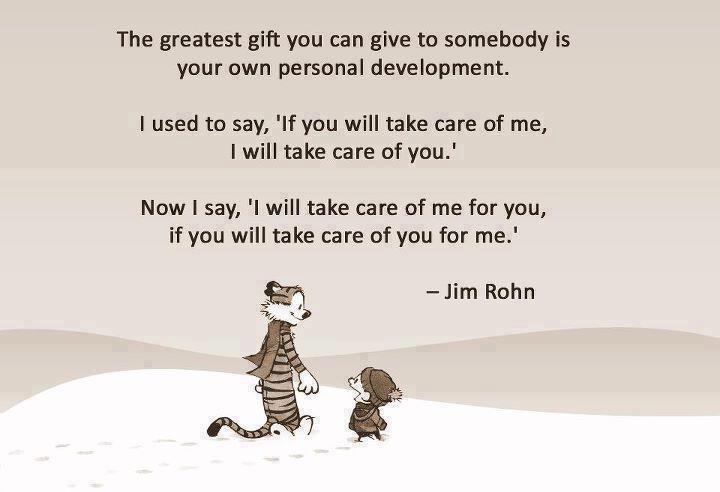



![Cover of "Fracture [Blu-ray]"](https://i0.wp.com/ecx.images-amazon.com/images/I/51Qgp8gpIzL._SL300_.jpg "Cover of \"Fracture [Blu-ray]\"")


 scott-williams.ca