I Need Sex Every Couple Of Days

No I don’t.

I would like sex every couple of days. I would also like chocolate, and bacon, and candy every few hours. That doesn’t mean it should happen.

If I hear of another whiny, manipulative male guilting their partner with this again I’m going to scream. I have been wanting to address this issue for some time but realize that this blog does seem to be hard on men. My hope is that heterosexual men will figure this out.

Almost every day I have women tell me that if they don’t have sex with their man every two or three days that he will whine and complain, even become abusive. So they give in. When I hear that my heart breaks. What a horrible reason to share the most precious gift you can give to another person. Disgusting.

What the hell is wrong with these men? Do they care, even a little bit, about their partner, or are they such slaves to their hormones that they don’t consider the needs and desires of the person who loves them the most? Do they understand female sexuality at all? Do they think whining or threatening is a turn-on for women?

Women need to understand that men do not have to have sex every few days. We get horny, it’s true, but so what? Should we as adults give in to every single urge, every craving, every impulse we have? Should we manipulate and exploit women just because we have a desire? My wife can turn me on just by being in the room, she’s gorgeous (I know that’s shallow but she does drive me wild). Her smile, her touch can still drive me crazy. Is that, therefore, license to invade her personal space, force myself upon her, and manipulate her to do something she had no intention of doing just because I’m a man and dammit, she should have to? Am I saying that I’m weak, I’m pathetic, I’m a slave to my emotions? Even though I teach my children to say no to their base instincts apparently I will never say no to mine. Pathetic. It is no wonder that so many women tell me that they have lost the magic, the desire, for sex with their partner. It is no shock, therefore, that so few women experience regular orgasms with their men.

This issue strikes at the heart of respect, understanding, and selfless love. It speaks to the selfishness and lack of honor that many men have been raised to feel about women. As I said in an earlier article we were raised to believe that sex is really about the male orgasm. Most men actually believe that is the purpose of sex.

They are so wrong.

The Smell Of Rotting Fish

When I was a kid my dad took me fishing on Primrose Lake, a private military lake that is used for target practice and inaccessible to the general public. My dad pulled a few strings and before I knew it we were fishing between bombardments. It was incredible. The fish practically jumped in the boat. It took twenty minutes for three of us to catch our limit of big, big fish. The cleaning took far longer than the catching.

We filled our freezer with fish that summer. Summer also brought holiday time and before long we were off to the family camping trip, thoughts of Primrose Lake far behind us. What we didn’t know was that, just before we left, someone had accidentally pulled the plug on our huge freezer.

Two weeks later.

We got home and the house reeked of bad fish. Why, we wondered, was that odor so pronounced? It didn’t take us long to find our way downstairs and finally open the now completely defrosted freezer… full to the brim with brine and water and dead smelly fish.

What to do?

It was tempting to just close that lid and walk away. We could have dressed up that freezer, even painted it a new color, but that wouldn’t have changed what was inside it. We could have hired a psychotherapist to talk to the fridge, maybe a pastor could have come by and cast a demon out of the thing. It would not have mattered. Dress up that thing any way you want and the fact remains that it still is a freezer full of rotting fish. No amount of therapy could have changed that.

That’s alot like me… like you. I try to make excuses for my problems and blame someone else but at the end of the day the fact remains that it is still my mess-o-fish. It is not my ex-wife’s problem or my kids or my parents, it isn’t even my ex-bosses issue – it is mine alone. At the end of the day I can blame whoever I want, it’s still my problem.

So why is this so hard to accept? Perhaps because blaming other people relieves me of some of the responsibility. Many of us have been through horrific situations wrought by dysfunctional and abusive people who scarred us for life. Unfortunately, however, they are not going to fix us. Most of them will not even feel responsible. No one else is going to help us heal.

Other people may be to blame, but that doesn’t really matter much, now does it. It’s up to us to find a healing, a solution, or a way of coping. It may seem far easier to go through life wounded, blaming others for my issues but at the end of the day I am the only one who is going to miss out of this one life, this one chance at happiness and wholeness.

There is an iconic scene in the movie American History X where the skinhead Derek Vineyard, after being gang-raped by his once cohorts while in prison, has a visit from his African-American high school principal. The principal, Bob Sweeney, who has watched Derek self-destruct as he blamed everyone else for his pain, says, “There was a moment, when I used to blame everything and everyone for all the pain and suffering and vile things that happened to me, that I saw happen to my people. Used to blame everybody. Blamed white people, blamed society, blamed God. I didn’t get no answers ’cause I was asking the wrong questions. You have to ask the right questions.”

Derek turns to him and asks, “Like what?”

Sweeney replies, “Has anything you’ve done made your life better?”

That is a profound question. He knew Derek had pains and hurts, grudges both valid and vile. Like many of us Derek had been damaged by someone or something. Violated. Carrying that hate and that pain was all that he knew. How could he possibly get on with his life after what had happened to him?

Some time ago I wrote a letter to someone who had hurt me, never intending on sending it. The next morning my wife saw it before I could get up and mailed it, as a courtesy. A few weeks later I got a phone call from that old friend. He could not understand why I was angry.

Think about it. For seven years he had not been carrying that pain I felt almost everyday. For seven years he had been perfectly happy and content. He didn’t hurt, only I did. It hadn’t ruined his life.

Has anything you’ve done made your life better?

Think Differently To Break Bad Habits

Smoke 1The best strategy to break a bad habit such as smoking, eating too much, drinking excessively, gambling, shopping excessively, and so forth is to not develop the habit in the first place! I know…easier said than done but prevention is really the very best way to avoid the formation of bad habits. As problematic habits unfold nipping them in the bud in the spirit of prevention is so very important if you can do it.  by Thomas G. Plante

However, for so many people the train has already left the station and the bad habit is now fully formed and causing all sorts of troubles and distress. So now what? What do you do once these habits have solidified? Most people rely on willpower and motivation. This is a big mistake in my view since willpower and motivation vacillate and are totally unreliable day-to-day and over time. We really need to let go of the use of willpower and motivation to deal with long-standing bad habits. It just doesn’t work for the long-term. Rather, we should use social engineering which is a much better strategy for sure. Basically, can you create an environment for yourself that forces you to change behavior for the better? Can you socially engineer your bad habits out of existence?

Let’s take a few examples. Perhaps you are a couch potato and don’t exercise much if at all. If you get an active and fairly large dog that needs to get walks in everyday it will force you to take lots and lots of walks. If you struggle with eating too many problem foods at home you can work to keep the challenging food items out of the house. If you struggle with internet pornography use you can put filters on your computer. None of these solutions are perfect or easy but if you put enough barriers in place (especially those that you can’t dismantle very easily) you are likely to make good progress over time on your bad habits.

The problem with changing bad habits for most people is that they rely way too much on motivation and will power when they should be focusing more on prevention and social engineering strategies.

So, what do you think?

Casual Friday – How Long Have You Been Alive?

Empire State BuildingTony Campolo tells a story about how he challenged his students at Eastern College by asking them, “how long have you been alive”? They responded by reciting their birthdays, almost without thinking. Then he turned to them and asked again, “how long have you really been alive”? He went on to tell of a time that as a child, he stood on the Empire State Building and for a few brief moments, as the wind whipped his hair and the panorama overwhelmed him, felt fully alive. Then he turned to his students again and said, “now, how long have you been alive?”

Some years ago I went skydiving with my friends Fergus and Wendy in Fort McMurray, Canada during an impending rain storm. It was one of those days when you could see the vistas of the horizon and watch the heavy grey clouds roll in like a blanket. It was undoubtedly not a pristine skydiving opportunity but we were anxious to get in a jump, despite our best interests. As we rose to meet the sky the clouds extended over us like a cotton canopy. We leveled out at approximately 6500 feet and flew just under the clouds. I climbed out of the door and held on to the top rim. The wind in my hair I watched the plane skim just under the unbroken cloud. On a whim I reached up and wiped my hand through the fluffy billows, splaying them behind me. For that moment, I was truly alive.

So much of life I have not lived really alive. Days meld into days without end, seasons come and go. It is easy to just exist but not really live. The older I get the more I understand that my life is so short. It’s very easy to live day after day like time doesn’t matter, wasting hours, even months doing nothing notable, nothing meaningful, taking people and situations for granted.

I had a pretty brutal car accident last year. I was in Saskatchewan, visiting friends and attending a wedding. I broke a few ribs and totalled one of best friend’s cars. Everything initially seemed to work out fine. It was a little later that I realized I was quite shaken by the experience and afraid to drive. I had to use some of the cheesy stuff I teach patients to work through it. Things are fine now but I was left with a pervading sense that I am mortal. Last month when I had a grand mal seizure I was again reminded that we are finite beings and need our lives count. Like you, I still have some things to do and want to make my life count for something.

I want to be awake and alive. I want to fan my had through a few more clouds.

If I close my eyes I can see myself clearly from a distance, standing in the doorway, the solid bank of clouds, looking up – then pushing my hand into the solid mass. There is joy on my face. Truly alive.

The Key To A Great Relationship

There are several keys to a great relationship. Here’s the one that has transformed my marriage.

Humility.

Not my humility, mind you. My wife’s. She is the humblest person I have ever met. Admittedly I was initially attracted to the fact that she is immensely hot (I know that is shallow and sexist) and seemed to tolerate me being around, but the more I have come to know her the more I credit the success of our relationship with the fact that she is relentless in her pursuit of compromise and making me happy. I am often hesitant to even mention something I would like to eat or possess because I know she will make it happen. She inspires me to want to try harder and be a better husband. We cannot even have a decent argument without her apologizing for something. It is hard to stay mad at someone who is trying so hard to make you happy.

She does not read this blog so i get no ‘suck up’ points for this, in case you were wondering.

As I write this I am conscious of the fact that many readers do not have this experience. This has not always been my experience either.  For years I lived with passive aggression, emotionally shut down, non-communicative narcissism. Many of us have. It is easy, when things are going poorly, to believe that this is the way everyone is, this is absolute reality. It isn’t even though it feels that way.

I have learned a great deal from both experiences. I have come to understand that my personal self-worth, happiness, and completeness cannot be based on another fallible person. I have lived far too long trying to make other people love me, and failing. I have based too much of my self-worth on whether or not my spouse likes me at any particular moment. I am endeavouring, and I am not there yet, to find my security from within. I have this crazy idea that I need to get to a place where I do not need anyone to feel whole.

In counseling I will often tell patients, “Don’t date until you don’t need to”. I profoundly believe this. We need to get to a point where we do not need someone else to fill that hole in our heart. Only then are we complete enough to love someone else without being needy, without needing them to “complete me”. It is a great deal easier to live sacrificially, think of the other person first, and live humbly when I don’t need her to stroke my tender, insecure, needy little ego.

“When we’re incomplete, we’re always searching for somebody to complete us. When, after a few years or a few months of a relationship, we find that we’re still unfulfilled, we blame our partners and take up with somebody more promising. This can go on and on–series polygamy–until we admit that while a partner can add sweet dimensions to our lives, we, each of us, are responsible for our own fulfillment. Nobody else can provide it for us, and to believe otherwise is to delude ourselves dangerously and to program for eventual failure every relationship we enter.”    Tom Robbins

It’s Not About Success

i climbed that

Some time ago my family was rock climbing just south of the border. We were having a great time when a teenager and his girlfriend stopped to watch and make conversation. As they stood and watched my eleven year old attack the rock face the guy began commenting loudly as to his performance, skill and faults. He started critiquing everything; criticizing my son while at the same time bragging about his rock climbing prowess. He faulted my kid for using a harness and rope (only beginners needed the security of a rope). He explained in great detail how my child was taking the easy route whereas he would only go up the hardest possible course. This went on for some time until I turned to him and said, “I hear you doing a lot of talking, how about doing some climbing?”

Suddenly I was barraged with a steady stream of excuses. He didn’t want to get sweaty; he hadn’t brought the proper footwear; he wasn’t sure he had the time; blah, blah, blah. Being the compassionate, mature person that I am, I turned to him and said, “What’s the matter, you chicken?”

You can look like the greatest climber in the world, own the best equipment, have an expert harness and shoes, but until you get your butt off the ground you’re just a spectator.

Many people have that approach to life. Sam Malone (from the sitcom Cheers) summed it up for us when he said, “It’s not whether you win or lose, its how good you look while you’re doing it.” It’s all about appearances. It’s all about looking good, smelling good and acting good.

There is something wrong with that, and it’s bigger than just an issue with climbing rocks. In counseling I see it all the time. People want the appearance of change but are not willing to pay the price for it. They are still looking for the magic pill.

Let me be honest with you. If you have complex emotional or psychological issues you cannot be fixed in eight sessions. You should be able to see marked improvement but you have taken years, even decades, to get where you are. One session of EFT or EMDR is probably not going to sort you out. The best cognitive behavioural therapist in the world can’t “fix” you in a few sessions. Anyone who tells you differently is selling something. Seriously. Real growth is built on things like perseverance and failure. That’s right, failure. Ask anyone who has battled a serious addiction problem. Most of us quit dozens of times before it took. If that wasn’t your experience than count your blessings.

Overcoming depression, anxiety, trauma, etc. is usually built on a series of failures. You tried to get up early today and you couldn’t do it. You try again tomorrow and probably screw that up to. So you keep trying.

It’s not about success, it’s about momentum. When you are dealing with depression or anxiety, ptsd or bpd, it’s not all about one good day, or one great win. Good things come to those who keep showing up.

Thomas Edison and his early phonograph. Croppe...

History is replete with illustrations to prove this. It’s Edison’s anecdotal story of saying that he found hundreds of ways to not make a lightbulb. It’s the single parent who gets up one more day and does what is right. It’s the student that, in spite of hardship and pain, keeps showing up to school. Momentum is that person who fights and fails and gets up one more time. It’s that definition of success which says, “falls down seven times, gets up eight.

As the saying goes – ninety percent of success in life is just showing up.

Imagine Me Naked

Some time ago I was cleaning up at the little club I used to run, in preparation for the evening’s events. I had been sweating, washing floors and hauling furniture. I usually bring a change of clothing. But not that day.

No one had come in for over an hour. I figured I was safe. With this in mind, behind the bar I proceeded to drop my pants in order to change into clean clothes. At that precise moment a lady walked in and asked for a latte.

Never before have I felt so close to the bar. In fact, we became one as I sought to prepare the latte without letting on that I was wearing no pants. Socks, shoes, shirt, but no pockets.

It reminds me of this bit by Seinfeld:
“Why is it so difficult and uncomfortable to be naked? It’s because when you have clothes on, you can always make those little adjustments that people love to do. Hitching, straightening, adjusting. You know, you feel like you’re getting it together. But when you’re naked, it’s so final. You’re just, ‘well this is it, there’s nothing else I can do.”
That’s why I like to wear a belt when I’m naked. It gives me something. I’d like to get pockets to hang off the belt. Wouldn’t that be the ultimate? To be naked and still be able to put your hands in your pockets. I think that would really help a lot…”

It may shock you to know that I have been in counselling. Maybe not. I once had a counsellor tell me I needed to stand in front of the mirror naked for one minute each day in order to get more comfortable with ‘me’. I told this to someone and they went “eeeew”… which did not help much.

So with all this rolling around in my noodle I continued to grind the beans, praying all the while that I would not have to move. So of course the lady blandly asked where the sugar was, it being at right angles to where I was hiding. I reluctantly told her and proceeded to push my torso inside the small floor fridge as she walked to the condiments.

As she left the club I followed her behind the bar, keeping my beautiful barrier between us until she naively walked out.

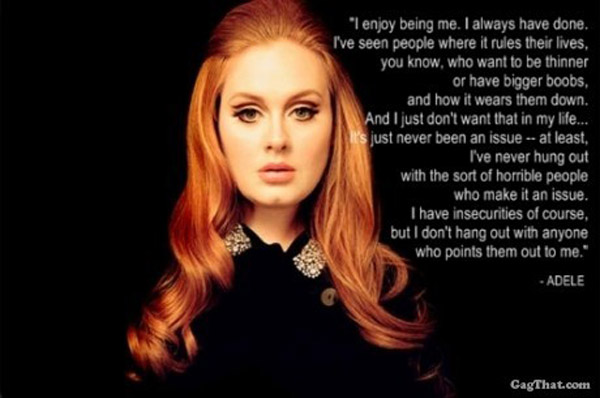
Imagine me naked. Ok, don’t. No one should have to see that. Most of us, myself included, are not in love with our naked selves. I tease my wife that she “secretly dresses me with her eyes”. One of my best friends, Jordon Cooper, says I have a “face for radio”. I am no longer as insecure about my looks as I once was, but can still testify that for most of us, physical appearance has a significant role in determining our self-esteem. My wife once pointed out to me that I was squinting while looking in the mirror at our bedroom sinks. I had no idea I was doing this but apparently was squinting in such a pronounced fashion that Annette thought my eyes were closed – a subconscious reaction to a psychological malady. Body image is a life-long issue for most of us.

A few years ago, again while naked, I had an epiphany. I realized in the shower one day that I had been berating myself all my life and was unwilling to move forward, heal, and stop the body dysmorphia. Like so many of us I wasn’t thinking about my body because I was overly proud or seeking to show it off, I was in fact transfixed on the negatives and unwilling to let the embarrassment go.

It has taken me far to long to realize that this is just a shell and no matter how hard I try or how much I whine I am only going to get older, saggier, less flexible, and probably balder. There is little, short of surgery, that I can do to arrest the passing of time.

A shell. Maybe  a fat shell or a ridiculously thin shell, a hairy or bald shell, a saggy shell or a beautiful one, does it really matter? Isn’t it time that we stop letting plastic, Photoshopped, insecure skeletons or fake vampires with no nipples dictate how we feel about ourselves? It doesn’t really matter what you look like if you are healthy and can learn to like yourself. For some reason my wife thinks I am good-looking and that needs to be enough for me.

Even if she didn’t, I’m tired of jumping through hoops for a shell.


Listening To Your Critics

I met Al in college. He was awkward, clumsy, ugly and small. His mannerisms labelled him – loser. He had a sharp wit but that didn’t seem to matter. Al was an outcast.

I’m not sure of the reasons but a few of us decided to use Al for an experiment. We had heard a speaker talk about loving the unlovely so we decided, with somewhat dubious motivation, to use Al as our guinea pig. A sows ear to a silk purse…

So in typical Pygmalion fashion we began to convince Al, and everyone around him, that he was a winner. We told him he was good looking. we had pretty girls flirt with him. At the college sporting event we started a cheer – “Al, Al, Al”. It wasn’t long before the entire stadium was yelling his name. He ate it up. He became our team mascot, then our school mascot; our own personal Gurgi (from The Chronicles of Prydain, if you haven’t read it to your kids, why not?).

Something started to happen.

It wasn’t long before Al began to look different to us. I wasn’t sure if it was his dress or his manner but he had changed, and continued to change. It wasn’t that he became more like the rest of us, more like society. Al became more “Al” like. He realized that in spite of the media, in spite of all his previous experience, he was obviously good-looking – everyone was telling him so. Apparently he had a good body as well. He was popular, though he probably didn’t understand why.

And Al started to blossom.

It wasn’t long before Al really was cool, very cool in fact. He was hilarious, witty, engaging, even gregarious. He started to approach girls. A few didn’t turn him down. At sporting events he ran the crowd. It wasn’t long before our little Pygmalion was indeed the most popular guy at the college.

Mental health professionals tell us that our self-image is largely determined by the attitudes of those closest to us. If our friends think we are ugly we soon believe them. If they think we are amazing then this too will define us. It is for this reason that I have always insisted that my boys are winners, beautiful, talented, and incredibly humble. just like their dad.

So many of us have been belittled by spouses or friends so long that we have come to believe we are ugly, or stupid, or unlovable. Some of us have been in abusive relationships with someone who reminded us, often in subtle ways, that we are losers. For some reason our self-esteem has been ruined. We no longer think of ourselves as winners, as valuable. We have lost our “Al-ness”. We have succumbed to the inner and outer voices that demean and negate. There are probably people in your life who find their self-esteem from making you feel like less. They need to hurt you to feel good about themselves.

And some of them are closer than we realize.

I have that inner voice that reminds me of my failures and has a list of the ways I fail to measure up. You probably don’t need to tell me my faults, I have a complete index of my mistakes, most of us do. It is easy, the older we grow, to forget that we once loved ourselves, were once allowed to share our “Al-ness” without ridicule. Most of us have become so fearful of sounding arrogant that we can barely remember how special we are, or at least were.

A little Al can go a long way. You just need someone to believe in you.

Stop listening to your critics, especially if that voice sounds an awful lot like yours…

Weekend Musings – There Are Victims And Then There Are Victims

“A benchmark of emotional management and responsibility is the realization that our past can no longer be blamed for our actions in the present.“
Doc Childe and Howard Martin

Every day I work with people who are victims, real or imagined. They grew up in a bad home, someone has rejected them, the white man has dragged them down, people have taken advantage of them, they have been abused, raped, abandoned, the list is endless. There is no shortage of people to blame.

Usually the client or person I am talking to has legitimate issues. They are dealing with things that most people can barely imagine. They are trying, the best they know how, to find some anchor in a life that has been beyond their control. Many patients I have spoken with have gone through horror stories and are endeavouring to move forward. They are the reason I get up in the morning and go to work excited. They are my heroes.

Others are looking for something to pin their pain on. They cannot see any personal responsibility, they will not own their own complicity. They sit and we talk and it is always someone else’s fault. Often they have legitimate complaints but they wear their victimization like a crown and filter everything through with a pre-disposed diagnosis. This week I met with a young man who told me that the reason he could not pass in school was because generations ago people oppressed him. I reminded him that he was not in fact alive a couple hundred years ago and though he has had to suffer historic abuse and that has undoubtedly profoundly affected his life, perhaps the reasons he is failing in school have more to do with the fact that he is skipping and spending his considerable income on crack. He called me a bigot.

I come from generations of alcoholics and the pragmatically poor. My dad was an orphan whose father fell from a skyscraper during his last week of work before going to a new job. His mother died when he was 12. He completed grade 9 in school. He had no social safety net, no social worker looking out for him, no strong family to provide for him, no one to blame. So he didn’t.

Years later my father would stand before the Governor General of Canada and receive the military equivalent of the Order of Canada, our highest civilian honor. He had, in fact, finally finished his high school equivalency in his forties. He had worked his butt off to make something of a shunted life. He is my son’s hero. Wednesday he will be our guest blogger.

Every now and again I will have occasion to feel sorry for myself. Maybe things aren’t going smoothly or my friends have nicer houses or boats. Sometimes I wish I had a family with money and a house on a lake. But then I remember how fortunate I am to come from a heritage that simply would not give up.

As i sit here writing this it just hit me, I have never heard my dad complain about his lot in life. Ever.
Wow.

“People spend too much time finding other people to blame, too much energy finding excuses for not being what they are capable of being, and not enough energy putting themselves on the line, growing out of the past, and getting on with their lives.”
J. Michael Straczynski


Casual Fridays – Lessons From Life

Ford Fairlane photographed in College Park, Ma...

“Children have never been very good at listening to their elders, but they have never failed to imitate them.” ~ James Baldwin

I did not really grow up in a strictly religious home. My grandparents were alcoholics and they taught me different lessons than you would probably learn at “Johnny Church Member’s” grandmother’s house. By the age of eight or nine I knew how to play Bridge, Texas Holdem, Blackjack, Craps, 21, 31, 333, Follow The Queen, Stud, Baseball, Woolworths, and various other derivations of many poker games. I learned that you had to be at least thirteen before you can sneak beer from the basement. I learned that everyone drank, that only certain types of beer, always Canadian beer, did not taste like “panther piss”. I also learned that children didn’t matter. I learned that mouthy little kids like me were to be “seen and not heard”. I learned that drunkenness was a daily thing, not a special holiday activity. I learned how to swear. To this day I can pack more empties in the trunk of a Ford Fairlane than anyone I know.

My grandmother was a poor gambler but didn’t know it. She thought she was an excellent player and indeed seemed to be so to an eight-year-old child. She understood the fundamentals of the game and would beat me every time we played. She would usually take my allowance. It was a very tender family.

By the time I was eleven or twelve, however, I began to win. Eventually two things dawned on me: First, she wasn’t that good. Second, she had taken a great deal of my boyhood money and it was time for her to go down. Somehow I convinced her that we should play for higher stakes and I began the carnage. Slowly, relentlessly, I drove her into the ground.

I looked at my grandmother. This was the person who had taught me how to play. She was the woman who had raised my mother. She was an old lady on a pension, and I took her for everything in her account. At eleven years of age I damaged her financially. I watched her sign a cheque in defeat. It was for hundreds of dollars. Did I feel guilty?

I remember thinking at the time, “this is the greatest day of my life”.

As I look back I wonder why I did not feel any remorse. My grandmother was not a nice person. She did not know how to express love, and one could argue she felt little as well. She was a bitter, angry little alcoholic who would later disown me because I won an argument, and not even an important one. When she found out I was engaged she commented, “I don’t know the woman but she must be a slut to marry him.”

I learned a great deal from my grandmother. I learned that family is not that important. I learned that it is easy to lie to cover up addiction, that beer was consumed before lunch for ‘medicinal’ reasons. I learned that bitterness worked. I learned that I didn’t matter. I learned that love was conditional.

As I ponder that part of my life, and the subsequent apathy I felt when she died, I realize that I, on occasion, feel ripped off. I did not have grandparents that I could love and cherish. My father was an orphan. The grandparents I had were not nice people.

I look at the grandparents that my children have and I’m thankful for all four of them. They each have brought something unique and wonderful to the table. My children love them all dearly. When the boy’s papa died last year I was saddened and thankful for his life and his legacy. I am jealous of the relationship my sons still have with their remaining grandpa and grandmothers.

And thankful. Very very thankful.

p.s. – next Wednesday my father will be joining us as our weekly guest blogger!

The Invisible Psychopath – By The Time You Recognize Them It’s Too Late

Sometimes the person you know may not be the person you know…

The word “psychopath” gets thrown around a lot, but in psychiatry it has a specific meaning. Psychopaths are aggressively narcissistic and impulsive and feel a relentless urge for sensation-seeking.They lack empathy and compulsively manipulate others through bullying or deceit. They believe that they are exempt from the rules and show a marked predilection for lying, even when it is not advantageous for them.

Earlier this year Harvard Medical School psychiatrist Ronald Schouten published a book, Almost a Psychopath, in which he and co-author Jim Silver describe the ways that people can exhibit quite a few of the symptoms of psychopathy without satisfying the full diagnostic criteria. Such people can be highly deceptive, manipulative, callous, and self-serving, and yet manage to maintain a facade on normality.

This, for me, is perhaps the most disturbing thing about psychopathy: its invisibility. With the benefit of hindsight, I can see that a number of people have crossed my paths who at first seemed delightful and charming, but who wound up leaving a trail of wreckage—people who I now recognize were clearly psychopaths, or at least “almost psychopaths,” as Schouten styles them. Once burned, twice shy, you would hope; but no, having been tormented by one or two, I still managed to subsequently fall into others’ charming clutches.

I shouldn’t feel too bad about failing to recognize potential psychopaths, Schouten says. Indeed, when I asked him, the psychopath expert, if he often runs into such people frequently at cocktail parties or business meetings, he told me that, as far as he knew, he hadn’t run into any, at least that he was able to recognize as such. Even for experts like himself, the psychopath’s veneer of normality is too seamless to detect.

As I wrote in a recent article on Gizmodo, when I first met tech guru John McAfee I was utterly charmed. He seemed to be living his life with a clarity and moral courage that I found exhilarating. The first article I wrote about him was effusive, and when I traveled to Belize to meet up with him for a second article, I looked forward to spending time with someone who I felt to be both intellectually and physically adventurous. On this second trip, however, I began to notice a troubling pattern. McAfee spent a lot of his time bragging about the hoaxes he’d pulled off, gleefully styling himself as a “bullshit artist.” Sometimes he lied for fun—like when he told a reporter that his tattoo was a Maori design he’d gotten in New Zealand, a country he’s never actually been to. Sometimes he lied strategically, like the Facebook posting he put up about how he’d just bought a house in Honduras. At the time, he was facing a raft of lawsuits. “The judge in one case couldn’t understand why I would put incorrect information about myself on the web,” he told me. “I said, ‘I thought that if somebody wanted to serve me papers, it would be much more enjoyable for everyone involved if they tried to serve those papers to me in Honduras.'”

After I wrote an unflattering article about him, a number of people from McAfee’s past reached out to me and told me even more troubling stories. I became convinced that McAfee was not merely a disingenuous person but a true psychopath.

Schouten says that we should not be surprised to find psychopaths among the ranks of successful entrepreneurs like McAfee. Indeed, he emphasizes that psychopathic traits can be positively helpful. “Psychopathy could confer a competitive advantage, at least over the short-term,” he says. “Grandiosity and over-the-top self-confidence, as well as skill at conning and manipulating, can go a long way toward convincing investors of one’s vision.”

And success only intensifies a psychopath’s worst traits. One 2009 study from the Kellogg School of Management found that psychologically normal subjects primed to feel powerful were worse at imagining other people’s perspective and less perceptive in assessing facial emotions.

Such a profound disorder, however, is not ultimately compatible with long-term success. Eventually, Schouten says, a psychopath’s personal and professional relationships begin to shred due to accumulated toxicity.

“Downward drift” is a term that psychologists use for the tendency of some mentally ill to slip ever further down the socioeconomic ladder. It’s usually applied to schizophrenics, but it seems apt in McAfee’s case. Each time I returned to write an article about him I found that his prospects had worsened. He was retreating further from the world I knew, into refuges that seemed ever shakier.

Years of destructive behavior had created such a wake of ill-feeling that at last his veneer of innocence was eroding away. At last he had lost the psychopath’s most valuable asset: his invisibility.

Published on November 9, 2012 by Jeff Wise in Extreme Fear via Psychology Today

Cheesy Counselling Stuff That Works

Like most counsellors I have tried many ‘techniques’ in my years to order to help individuals deal with a panacea of mental health issues. I remember studying psychology in university and learning about the importance of clinical integrity, the need for evidence-based best practices, the importance of double-blind studies. I love to learn and enjoyed/enjoy learning about neuropsychology, serotonin, beta waves, the amygdala, freudian theories, behaviorism, etc. etc. etc. I still endeavour to learn something every day, if I can, and realize that my understanding and incorporation of therapeutic principles continues to grow (and hopefully mature).  As I have said to my children, “I used to know everything, when I was your age.” The older I get and the more I study the less I seem to know. The world of knowledge continues to expand, and I realize now how little I understand.

Many years ago I would pride myself on my education and knowledge. Like all younger people I believed sincerely that though we are all equals, some of us were a little more equal. Helping people learn concepts, and apply them to life with success, can produce a heady sense of “humble” arrogance. It becomes easy to believe Nietzsche that people are the ‘herd’ or sheep, and you are a shepherd. I no longer believe that. I once would pride myself on my ability to impress people with knowledge and insight, now I am just humbled that people would come to see me.

There has also been a gradual, yet profound, change in what I teach people. For some reason very few of my clients care about my profound psychological storehouse of information (if I had one). They are less interested in my dazzling intellect than they are in what works. Many of them have been in therapy before, with varied results. They are tired of sitting across the desk from a psychiatrist who does not offer any insights but merely reflects their thoughts back to them. They are tired of hearing, “so what do you think?”

I have become a pragmatist. There I said it. I no longer laugh at neuropathy, or acupuncture, or breathing exercises. For some reason I had this ridiculous notion that people only needed to get smarter to get better. I was an idiot. I have come to realize that methodology is not as important, as Scott Miller suggests, as the relationship I have with my clients. Helping people find change and relief has become a great deal more important than my personal need to look good and sound smart.

These days I realize the power of things like STOPP Therapy, dealing with cognitive distortions, self talk exercises, realistic affirmations, and breathing techniques. I am reading a book on meridian tapping (EFT) and, in spite of the part of my brain that wants to yell “bullshit” I know that things like EMDR and acupressure really seem to help people. I’ve even known people who use primal screaming or laughing therapy and swear by it. I may be a little too Canadian for that, but if it works, mazel tov. I am in this world to help people and am now convinced I would stand on my head and spit nickels if I was convinced it worked.

When I introduce such concepts, however, I almost always begin by backpedaling. I know I am doing it, I know I should not do it, but on some level I’m embarrassed. Embarrassed that you have come to a counselor who you expect to give you brilliance and instead I’m about to teach you something a grade five could. I’m about to teach you something that you could google – in fact the information I am going to give you I just stole from a website that I used ‘White Out’ to hide the address so you won’t know I get much of my stuff off the internet.

I went to school for years, learned philosophies in their original language, studied with brilliant professors, and have thousands of hours of counseling experience; now here is something I read in Reader’s Digest, please pay the MOA on your way out.

Once a Cheater, Always a Cheater?

As a counselor I have seen my fair share of marital infidelity. Unfortunately few cheaters I have dealt with actually come clean without being caught. Most feel deep remorse, after they are found out. They are prone to weep and plead and promise the world, but can you ever trust them again? Do you even want to?

This week Americans were surprised to learn that the director of the CIA in the United States resigned after confessing to having an affair. I found it ironic that the head of the most secret organization in the country didn’t see that coming. That is often the way of it, unfortunately. Few of us set out to ruin our lives or our relationships. Fewer still realize the cost. As a person who has felt the sting of infidelity firsthand I know how painful and horrific it can be to find out that the person you have given your heart and body to has thrown your trust and future away.

I recently came across this article in Psychology Today which I found helpful and informative:

So you’ve been cheated on. It was devastating–like being kicked in the gut and thrown into the gutter. You couldn’t eat or function at work. Or maybe you were up all night watching old movies, crying and eating pints of Ben & Jerry’s. The affair creates such heartache and pain that you do not want to be in a relationship again. Definitely never again.

The questions loom large. Is the cheater going to cheat again? Should you trust again or not? Is it true, “Once a cheater, always a cheater”? You may feel torn, like you want to take your cheating partner back but feel like it is a point of pride not to. You think, maybe you should just dive into that online dating pool, start looking for some great profiles and forget all about it. Or maybe not.

Well, I have some critical relationship advice for you: Research studies show that even among married couples, cheating is relatively common: about 22% of men and 13% of women cheat. According to recent studies, even spouses who describe themselves as “happy” with their marriage have affairs.

But the good news is this: Many people who are in committed relationships that have decent chemistry and benefits for both partners can actually work through the crisis of affairs. Not only that, their relationship can become more intimate and they can put an end to cheating once and for all. This means that, “Once a cheater, always a cheater” is just not true. There are people who learn and grow from the painful emotional hurricane and the loss of closeness in the relationship that are the aftermaths of cheating.

Of course there are players or sex addicts that will cheat and cheat and cheat again. These are the ones your truly have to watch out for. How do you tell if you are dealing with a chronic cheater? Here are five signs of relationship advice that indicate your cheater is not a chronic case and that the couple still has hope:
1. Your partner is truly remorseful and regrets having cheated. Look for heartfelt apologies that ring true when you hear them.
2. Your partner cuts off contact with his or her lover.
3. The cheater shows a renewed appreciation and devotion towards you.
4. You wind up having deep, open and honest conversations with each other about your relationship, what was missing in it and where you’d like to take it in the future.
5. Your partner wants to enter psychotherapy or counseling either individually or with you to understand his/her own dynamics and to make your relationship better and more intimate.

If the cheater shows these signs and the relationship is good for you in many ways, consider taking your partner back. One caveat: If your partner continues the affair or starts a new one, in spite of showing the above signs, you may be dealing with a player or a sex addict.
And just how do you know if the cheating is going on again? Here are some common signs:

• he/she’s working late a lot
• he/she’s’s suddenly taking trips you can’t go on
• he/she’s got new hobbies that don’t include you
• mysterious phone calls with hang-ups
• credit card bills for unexplained hotel stays or gift-type items
• less sex
• he/she’s more distant, angry or picky

If you find out your partner is cheating again, it’s time to protect yourself from any further heartbreak by breaking up with this person. There are wonderful new matches waiting to date right there on your computer screen!
In sum, if your partner strays, it doesn’t absolutely mean he or she will do it again. Once a cheater, always a cheater isn’t necessarily true. Forgiveness and a new coming together are possible. If you have been betrayed but want to see if it can work, just stay heads up for a while and see which way the train is heading!

Diana Kirschner, Ph.D. in Finding True Love

Casual Friday: Does Anybody Out There Know Who I Am?

English: Cover of Undead Fishtank album, for u...

Tony Campolo tells a story in one of his books about something that happened after World War II. There were more than 200 Frenchmen who returned to Paris suffering from amnesia. They had been in prison camps and were so psychologically devastated by their ordeal that they had lost the conscious awareness of who they were.

In most cases, their identities were quickly established, but after all that was done, there were still 32 men whose identities couldn’t be verified. The doctors who were treating them were convinced that their chances for recovery were slim unless they were connected with former friends and relatives and restored to their once-familiar settings.

Someone had an idea to help. They published photographs of the men on the front page of newspapers throughout the country, and gave a date and time when anyone having information about any of these amnesia victims could come to the Paris Opera House. Well, on the appointed day, a crowd gathered to view these war veterans who didn’t know who they were. In a dramatic moment, the first of the amnesia victims walked onto the stage of the darkened opera house, stood alone in the spotlight, and slowly turned completely around. Before the hushed audience, in a halting voice, he said to the crowd, “Does anybody out there know who I am?”

It is a profound question.

I mentioned on this blog that recently I had a Grand Mal seizure at work. Fortunately I work at a doctor’s office and two of the best doctors I have ever met were on the scene within seconds. At least that is what I was told. I don’t remember any of it. Apparently I also became physically violent at one point as well, although I wasn’t there to see it.

It is a scary thing to wake up on a gurney and not know what is happening. It is very similar to waking up from an operation with that foggy pseudo-understanding that something has happened and you should know what that is. You understand, on some level, that you shouldn’t be in an ambulance – it’s a work day. It gradually dawns on you that you don’t know where you are or for that matter, who you are.

I could not remember where I lived.

It is a bizarre thing to realize you do not know who you are.

Many of us spend our entire lives trying to find out who we are. We jump through hoops and do things hoping to be loved, only to find out that we have lost a sense of ourselves. We grew up believing we were going to be rock stars and multi-millionaires, at the very least healthy, wealthy and wise, but we aren’t, and we may not get there anytime soon. It is easy to build your identity on the wrong things, trying to impress the wrong people for the wrong reasons. It is no wonder than that so many of us have come to the conclusion that the real world is boring and life has little meaning unless we find it from within.

The older I get the more I realize that life does not hand you meaning, you have to grab it for yourself. The paltry drive to acquire more money and status is so entirely meaningless yet enticing. How many rock stars and celebrities have to kill themselves or end up in rehab before we as a people stop spending our lives wishing for something that does not heal our souls?

So who are you? As Billy Crystal says in the immortal Princess Bride, “Hey! Hello in there! Hey! What’s so important? Whatcha got here, that’s worth living for?”


How To Argue With Your Emotional Teenager

I have, for some time now, been working with high risk and aberrant behaviour youth as a youth and family counselor. Few things in this world are harder to deal with than a teenager with a sense of entitlement, immature emotional development, poor discipline, and a bad attitude. Those of you who have gone toe to toe with a teenager can verify what I am saying.

It simply doesn’t work.

It’s all about energy. Yelling at a belligerent who is yelling back at you rarely, if ever, leads to a group hug. It’s Einstein’s definition of insanity all over again – doing the same thing and expecting different results. Unfortunately, however, most of us continue to yell. Yelling feels familiar, and it releases pent-up emotion and frustration. The majority of us learned it from our parents who learned it from their parents. We swore we wouldn’t be that kind of parent when we grew up but sometimes, well sometimes that kid frustrates us so much we have no choice.

One more time. It doesn’t work.

If you want to win the argument, salvage the situation, or whatever it is you want to accomplish, you need to change the energy if you want to change the result. You need to change the rules of the argument if you want any hope of a positive outcome. Here’s a good guideline – Do not emotionally engage a screaming teenager unless you want to have a fight.

Stop arguing. Stop emoting. Stop gushing. Smile.

There is an old maxim: Love me, hate me, just don’t ignore me.

Why is that? Perhaps the reason has something to do with the fact that the vast majority of us hate to be ignored. We feel disrespected. Something inside of us rebels against apathy.  When it comes to an argument with an irrational person a second factor comes into play as well. It is very hard to argue with someone who will not argue back.

When your out-of-control teenager is looking for a fight, seeking to make a point, and prepared to bully you to get their way, nothing will disarm and frustrate them more than a parent or person who simply smiles and says nothing. It works, I have used this methodology and taught it to dozens of parents. At first it drives them insane, later it shuts down the yelling effectively and with dignity.

There must be a more effective way to engage angry teens, while at the same time helping them to understand that emotional bullying is not just wrong, it’s ineffective. Those of us who were taught to yell by our parents inherently understand how ineffective their yelling was.

So why did we decide to use this dysfunctional method ourselves?

Simplistic Solutions

Just pray about it.

I did pray about it, hundreds of times, but my wife still had breast cancer. I’m not making that up. Maybe God was mad at me. Maybe I didn’t have enough faith.

Maybe it was more complicated than that.

I’ve heard a lot of sermons in my life. Most of them I cannot remember. Some of them I’ve tried to forget. Many of us have been in churches and heard messages on stress, relationships and spirituality that offered solutions to our deepest pains. If we are honest with ourselves, however, we have to admit that most of the proposed wonder-cures never worked. Other people looked so happy and whole and we were left wondering if God hated us, or we were too sinful to be helped. Did everyone else get over their abuse and shame and horrendous childhood so quickly?

What is wrong with me?

I recently had an argument with a minister about sermons. Most of the ones I have heard don’t seem to play out in the real world. It seems easy on Saturday night to prepare three points on ‘how to fix your marriage or ‘how to quit sinning’. On Sunday he delivered the message, felt good about it, was complimented for it… but did it really change anything?

Really?

Many of us are discovering is that there are fewer easy solutions than we once imagined. People on stages, not just religious stages, love to offer half-baked solutions to hurting people who are suffering on a level that most of those hired guns cannot imagine. How many of us were sexually abused, molested, neglected, tainted, or damaged too deep for a quick cure? How often have we sat in church or tuned into Oprah or Phil only to be left feeling worse because we cannot get on board in less than an hour?

I remember watching the Cosby Show years ago. Every problem was wrapped up in twenty-two minutes. I vividly remember one episode where one of the perfect children decided to start drinking. Seven minutes later, hugging Bill on the couch, they promised they would stop. To this day I hate sweaters.

Then Roseanne came out. Now there was a family I could relate to. Life in that household was messy. Why did it feel so much more real?

The solutions to the problems we face are harder than we usually wish to acknowledge. Your issues can rarely be wrapped up in twenty-two minutes. Trite sermons and superstar speakers only reinforce the fact that most of us will only commit to half measures both in prescribing the cure and dealing with it. Foundational transformation takes years of pain and work. Yes work. You probably need to go deeper and darker than most of us are willing to go. You probably need to confess things that few of us are willing to confess. You need to open up a big can of worms.

Think I’m being dramatic? I interviewed a pastor once who said this, “I tell people that God forgives them and they need to forgive themselves, but how the hell do you do that? It’s not as easy as you think. What, should I pretend their shit never happened? I preach every week that change is easy and I pretend. I’m tired of glib answers.”

Talking about religion is usually not a great idea. The list of people who are going to tune me in about my lack of faith or understanding about their religious dynamic is probably long and heated. So let me tell you straight out – I’m not talking about your pastor or priest, or your church or healing center. I’m talking about someone else’s. Your pastor is a great counselor, it’s just the other ones that have 4-7 years of divinity school and two classes on counseling (neither of which is based on evidence-based practices). I know many religious leaders are amazing. I know I am speaking in generalities, I usually do.

Many of us who do this professionally have been shocked and saddened by clients who have been told to “just pray about it” when they told their religious practitioner that they had been raped or molested or (insert issue here). I have also been told, more times than I care to remember, that my client was unsure about seeing me because they wanted to see a ‘Christian counselor’ and were worried that I would undermine their beliefs. I am a person of faith, but because I do not work for a Christian counseling service and choose not to declare my personal beliefs, apparently some people think I will be tempted to drag them over to the dark side. The simple fact is that many counsellors/psychologists/psychiatrists are persons of faith, and those who are not have absolutely no interest in changing someone’s religious belief system unless they are fond of sacrificing chickens in my office.

I am not against Christian counsellors or even ministers helping people in need. I have a problem with anyone setting up vulnerable and fragile people for failure. I take issue with those who would, usually out of ignorance or prejudice, flippantly throw out half-baked solutions that leave wounded people feeling useless or worthless.

Not every issue can be solved in one session or with one act of faith. If you believe God can heal you I have absolutely no issue with that.

If God chooses not to, however, that’s where I come in.

Why Most Radical Change Is Bogus

Have you ever promised yourself that you would get in shape? Ever made a new Year’s Resolution that you couldn’t keep? Have you ever tried to make a radical change in your life? Ever been on a crash diet?

Don’t even bother. The likelihood that radical change will last is so low that if I showed you the statistics on dieting you would order a pizza. Real change rarely happens all at once, and when it does it is almost always because you have been trying and fretting and hoping and failing at it for so long that you are ready. You hurt so much and for so long that you have to change.

With few exceptions the majority of us wildly overestimate our ability to make significant change over a short period of time. Real change is incredibly hard and ordinarily demands months and years of work. Most of us do not get healed over night. I am not denigrating those of you who may claim supernatural relief but for most of us God does not choose to deliver us from our ADHD, or our abuse, or our mental issues. The vast majority of us can not claim fire from heaven, or legs regrown, or our malignant tumor disappearing. For some reason we must do it for ourselves or it isn’t going to get done.

We all want monumental change and we want it yesterday. Unfortunately, however, change that dramatic is often artificial and impossible to maintain. Ask any spouse who has decided to call it quits only to be bombarded by promises from their estranged spouse that, in spite of nothing happening for decades, they have totally changed overnight.

I also believe in the tooth fairy.

As a counselor I regularly meet clients who brag that they are radically redefining themselves virtually overnight. In just a few days they have stopped smoking, started working out, become a vegetarian, stopped self-medicating, got religion, and are going to become a counselor. In my business we call this a “red flag”. Such change rarely lasts. These people have the best of intentions and are incredibly dedicated, almost too dedicated. They have not considered the cost, or the fact that real change must be long-lasting. Authentic growth requires an alteration in lifestyle and the development of new coping mechanisms. In order for growth to become permanent you need to fundamentally change the way you think.

Most of us have tried for years to ‘fix’ our lives. We have tried everything and usually failed. That’s perfectly fine. Most of us, myself included, have tried to do the best we could with the wisdom and coping skills we had. We were told by people who should know that this quick fix, that power diet, that ridiculous philosophy or flavor of the week guru would magically give us what we have so desired and sought in vain for so long. We have been so desperate that we were willing to try anything, no matter how preposterous.

Unfortunately your good intentions are meaningless. Don’t tell me what you can do, show me what you will do. If you are willing to spend significantly more time and effort than you first imagined, if you are willing to be humbled, challenged, and question your childhood beliefs, your coping skills, your thinking, and the bullshit you so firmly believe to be true – than authentic and lasting change is not only possible, it’s probable.

In the coming year I hope to share with my subscribers my course entitled, “Change your life 52% in one year”. It is about 1% solutions, small but lasting change – one step at a time. That is how change happens, little by little, day by day, month by month. Anything else is probably not real.

Don’t give up. Make small changes and stick with them. Talk to a counselor that doesn’t suck. Challenge your cognitive distortions and when you hear about the newest fad that is guaranteed to work – set your crap detector on stun. You’ve had enough disappointment.

You’re worth it.

Living My Life To Impress A Five Year Old

Many of us were damaged emotionally when we were children. We were criticized, we were belittled, we were told how to live, how to act, what to wear and how to think… by other children. Have you been to a playground lately? Have you noticed that their opinions are fairly… stupid?

Or maybe it was a relative who criticized you and turned you into an introvert, or taught you to suppress your emotions, or hide who you are. A relative you now realize is an asshole whose opinion does not matter.

So why are you still acting like he told you to 25 years ago?

Perhaps you had a parent who told you that you were an idiot, or stupid, or worthless. Twenty years later you still battle insecurity, still feel like a loser. In counseling we find out that you feel this way predominantly because of what you were told when you were a child. You now realize that your alcoholic, abusive, degenerate father is a moron.

So why do you still hear that voice in your head?

My grandmother and other relatives told me/taught me countless times that I was a mouthy, disrespectful, immature burden that should be “seen and not heard” (and preferably not seen). I grew up to live up to some of those expectations, perhaps because I believed them on some level. I have taken the time to analyze why I spent so much of my early adulthood trying to fit in, rebelling against the status quo, saying everything on my mind without filtering, etc. In spite of great parents who loved and believed in me I now believe that those relatives taught me important and dysfunctional lessons that I have spent decades trying to come to grips with. With little effort I can still hear my grandmother’s voice. My uncle’s voice.

Mental health professionals are fond of telling us that much of our psyche was formed when we were little children. It is increasingly apparent that many of us had our dysfunctional coping skills, our poor self-image, and our self-destructive tendencies formed while we were yet little people – impressionable, ignorant, socially retarded, childish little kids who had no idea how to filter out the negative and destructive messages. We heard messages and learned lessons that continue to haunt us, regardless of what we understand intellectually. We believe, on one level, that we need to “get over” our past. Making that happen, however, is a different challenge altogether.

We have been imprinted, and those tattoos do not just wash off. It is one thing to realize that you have been molded by dysfunction, it is another thing altogether to effectively break free from that influence. Those attitudes and coping skills have become a part of who you are and how you cope. You have owned them. Really you had little choice.

Every day I talk with people who have been emotionally scarred by childhood or adult friends, or authority figures, or those who were supposed to love and protect them. In counseling they begin to recognize that several of their foundational beliefs and coping mechanisms, ways of dealing with the world that they have relied on for decades, may in fact be deeply flawed. It is a horrible and humbling thing to realize that you have been living your life believing distortions about yourself and your world.

For decades you have believed that no one can be trusted, and you have proven yourself correct countless times. You have evidence to support your cognitive distortions so they must be real. Anger is the way to deal with perceived slight. Always stick up for yourself. Never give up. If you want something done you have to do it yourself. Forget about the past. Meekness is weakness. All men are assholes. All women are bitches. I’ll never get better. I’ll never be able to cope. Never let anyone see the real you. Don’t take crap from anyone. Hurt them before they hurt you. Hitting your partner is ok if I say “I’m sorry”. I won’t measure up. Yelling works. Vulnerability leads to abuse. Nothing will ever change. I’m a failure. I can’t be honest. I’m damaged goods. No one could love me. I’m a loser. The list goes on and on.

Go back to the playground. Go back to that bedroom, that old house, that church basement. Take a hard look at that abusive parent, relative, adult, child. Healing and growth begins when we realize that the voices in my head and the attitudes and coping skills I developed to protect myself may not work anymore. They may, in fact, be keeping me sick and powerless.

You don’t have to listen to him anymore. She was wrong about you. That wasn’t your fault. The coping skills you so despise in yourself isn’t your fault either. You were doing the best you could with very little information and support in a dangerous world not of your making.

It’s not your fault. Talk to someone. Time to question everything. Time to be free.


Coming This Week

  • How to Argue With Your Emotional Teenager
  • Living My Life To Impress A Five Year Old/Saying Goodbye To That Critical Voice In My Head
  • Change Your Life 1% At A Time
  • The Church And Simplistic Solutions
  • Cheesy Stuff That Works

*Looking for Guest Bloggers who have experience and understanding about:
1. cutting
2. spousal physical abuse
3. childhood sexual abuse
4. bullying
5. lifelong body-image issues
6. Anything that has profoundly impacted your life

email me for more info or to volunteer info@scott-williams.ca