In Dating Game, Narcissists Get The Girl

via WebMD:

THURSDAY, May 30 (HealthDay News) — Men with high levels of narcissism — an unrealistically positive self-image coupled with feelings of entitlement — have an easier time than others attracting a potential mate, new German research says.

“Narcissism is linked to mate appeal in a real-life situation,” said Michael Dufner, a researcher at Humboldt University of Berlin, who led the study.

The research is published in the July issue of the journal Personality and Social Psychology Bulletin.

Dufner and his team first measured narcissism levels in 61 men with an average age of 25, who were invited to join a courtship study in Germany. “We focused on narcissism as a personality trait, not the personality disorder,” he said. “This means that everybody has a certain narcissism level — for some it is higher, for others lower.”

Next, the researchers asked the men to approach women they did not know on the street and get contact information. It could be a phone number, email or Facebook contact.

Research assistants followed the men (which the men were aware of), observing the interactions. Dufner decided to focus on men in this study because men traditionally court a potential mate in this way, compared to women’s typically more subtle approaches, such as flirting, he said.

“We tested if individuals with higher narcissism scores are more appealing,” he said.

On average, the men approached about 23 women. To rule out the possibility that the more narcissistic men were more selective in who they approached, the researchers analyzed each woman who was approached on her physical attractiveness and manner of dress. The narcissists weren’t more selective.

The narcissistic guys did get the girl more often. The higher the level of narcissism, the more likely they were to get more contacts.

“The effect was not due to high self-esteem, but indeed the narcissism,” Dufner said. The physical attractiveness and social boldness of the narcissists were the two likely reasons for their appeal to women, he said.

Dufner offered some caveats about the research, though. “We were not able to directly test the causality underlying the association between narcissism and physical attractiveness,” he said.

One possibility, he said, is that physical attractiveness may be a partial cause of narcissism, as other researchers have suggested.

For narcissists — and the women they seek — the news is not all good, Dufner said. “Narcissists are charming and appealing at first sight, but they are not long-term romantic partners,” he said.

The study findings confirm what many experts have long suspected, said Jean Twenge, a professor of psychology at San Diego State University who has written about narcissism. “Narcissists are very good at initiating relationships,” she said. “On first impression, they come across as confident and charming. The problems arise later on, when you realize that he doesn’t actually care about you — it’s all about him.”

Twenge was not involved in the study, but reviewed the findings.

Caution is the byword for those attracted to narcissists, both experts agreed. “In the long run, narcissists made bad relationship partners,” Twenge said. “They lack empathy and have a difficult time taking someone else’s perspective.”

Twenge said she does understand why women fall for narcissists. “The initial appeal of narcissists comes from their assertiveness and confidence,” she said. “These are stereotypically masculine traits that many women find appealing.”

 For more on this check out my article “Dating The Bad Boy”

Do I Like It Sick?

Many spouses will stay in a relationship that is sick and twisted, but why?

It is a truly terrifying story – a young girl grows up in a sick home and is repeatedly sexually abused by a relative or family friend. This person then becomes sexually active at twelve of thirteen with a boyfriend who in his mid-twenties or beyond. Often this is followed by a period of extreme promiscuity. They are sexually intimate with every boyfriend and come to believe that this is expected of them if they want to stay in that relationship. She starts to associate sex with being loved or loving someone else appropriately. They often engage in sexual acts which they do not enjoy, most of which are degrading in some way. They have an overwhelming compulsion to “perform” in order to be loved. For some strange reason, however, after they have settled in with someone they discover they are not truly happy and still have trauma and self-esteem problems. They struggle to find the intimacy and completeness in romance that they so desperately yearn for.

In counseling it often becomes apparent that this person is actually attracted to the sickness they have come to associate with love. They go after the “bad boy” or they seem to hook up with men who are always emotionally unavailable, their romantic interests usually are selfish, misogynistic or emotionally unhealthy.

If you can relate to what I am writing about then it’s time to ask yourself a question, “Am I attracted to this person because of their sickness or their health? Is this person irritating me right now because they are desiring something healthy (emotional connection, vulnerability, working on the relationship, planning for the future, stability, etc)?

Is it sick or is it healthy? I often send my patients home with this homework. For the next two weeks ask yourself, whenever you feel emotional in your romantic relationship, is this sick or is this healthy?

When he ignores me I pursue him. Is this sick or is this healthy?
I feel repelled by his attentions. Is this sick or is this healthy?
I am overly critical or easily angered by this person. Why? Is it sick or is it healthy?
He/she never seems to live up to expectations. Is this sick or is this healthy?

You get the idea, a good exercise for whenever we are struggling with our loved ones. Ask yourself, “Is what I am experiencing a result of a healthy and legitimate concern, or is this an unhealthy response to a sick situation?”

That may not be a bad idea for any of us.

Every Time We Split He Would Have An Epiphany!

From ladywithatruck: I was in an abusive relationship as you know. I went back to him many times. Why? Because every time we split he would have an epiphany and realize and admit to and apologize for everything he did wrong. I would feel validated, heard, valued, loved and willing to look at my part in things and do my part to save the relationship. We would get back together, I would be putting 110% into “us” and he would recant or “forget” ever admitting fault.

His article is dedicated to her insight.

When I read these words, comments on a recent post, I had a bit of an epiphany myself. I realized, maybe for the first time, that in virtually every relationship I have worked with, if the woman is the one to leave, the man will have an epiphany a day or a week later. I myself was full of epiphanies, that breakup those many years ago that shaped my life. As a guy I knew beyond doubt that if I could just do something, I could salvage this thing. I needed to do a bunch of sentimental things, placating things, say the right words and this situation would be fixed. This was what I would set my mind to until things were back to normal.

The worst part was that I knew better, was a proponent of better. I was a professional, but I was still a guy.

That was the day my journey really began. But I digress.

English: Patrick Warburton in January 2007.

I know full well that there is something in men that ignores a situation if it seems too daunting or unwinnable. I cannot tell you how many times wives tell me that their husband no longer communicates, no longer wants to date, no longer spends hours in conversation (or minutes). It is very difficult for women to understand that this is a very natural and learned response for many of us, and just because it seems unbelievable to you doesn’t mean it isn’t happening. As I have written many times men, especially men over thirty, do not grow up in a culture that encourages or teaches emotional connection. Our social connections were and remain mostly shallow. Patrick Warburton in Rules of Engagement is not as much a caricature as we would like to believe. Few men spend hours a week trying to connect emotionally with anything, it’s a lot of work.

Years later, when the relationship breaks up it usually comes as quite a shock to the guy who is left. Things were going along swimmingly, everything seemed “ok” even if she wasn’t interested in sex anymore, at least with him. She was always sort of frigid. What does she want, anyway?

As bizarre as it seems to the leaver, your choice to go really was a shock. Sorry but it’s true. We have an amazing capacity to compartmentalize our lives and ignore issues which are going to cost too much emotionally. It comes as no surprise then, that when men are confronted with the immanent demise of their relationship they tend to do the wrong thing – they do things. ‘Doing’ is an area where I am comfortable and I understand the rules. Women are incredibly difficult to understand (believe it) and there will be so much anger, so many long conversations, so many hours spent talking about stuff that I don’t care about. Even if I did care half as much as you I still would not understand what to do and you refuse to tell me. I need to figure out a way to placate you.

Women who leave understand that they have gotten their hopes up and expected more than he was willing or able to give. Men like projects, and projects end. Understanding that emotional investment in a relationship is a lifelong project is a lot for a man to get his head around. Becoming that guy is a huge commitment (to fundamentally change your personality) and takes a hell of a lot of work with little or no initial rewards. You won’t suddenly enjoy those long talks about things that don’t seem to matter. There is no instant payoff for giving unselfishly and relentlessly to a woman who is suspicious of your motives and prone to become overly critical. And nothing wounds me deeper than a condescending spouse.

Is it worth it? I cannot answer that for you. I only know that for me, the work has occasionally become part of the pleasure. The more I learn about my wife, the better I see her motivations and personality, the easier and more fun it gets. For some reason it isn’t as hard as it used to be.

She certainly seems to be thinking more like me lately…

What’s A Guy To Do?

Romance in Manhattan

Some men hate my writing, and with good reason. I have a propensity to tell men that they are not meeting their partner’s needs – without offering enough positive and practical advice. It’s almost as if I am saying, “Here’s the problem but you need to figure it out yourself.” That sounds suspiciously female to their ears, their partner (if they have a female partner) has been saying that to them for years. What am I, one of them? Where is the step-by-step guide to winning her heart? Where are the slick tactics that you see on other websites (which appear far more helpful because they offer quick and easy solutions)?

Part of being a man, I am convinced, is often needing clear instructions when it comes to emotional issues. Emotional intelligence is something we never worked on much growing up. We spent far too many hours shooting things and talking about farting (or was that just my family?). We need to fix things and it would be very helpful if women came with an owner’s manual (such a sexist comment…). They aren’t rational, we think. They don’t process things like we do, don’t seem to have the ability to communicate like we communicate; they think about too much stuff (and apparently they think all the time!). How many times do I have to watch “Say Yes To The Dress” (Atlanta not New York, Randy’s a poser) before she warms to my form?

Men ask me all the time, “What can I do?”

The answer is simple. All you should do is learn how to communicate with women, learn to understand how women think, become a student of the female psyche, spend hours and hours listening without offering solutions until you are sure she is looking for one, activate the emotive side of your personality, learn to give while feeling misunderstood, talk, talk, talk, talk, get counseling and marriage counseling, take some psychology and feminism classes…

Or just do this…

Although I am only a man I am immersed in female culture and constantly hear that female spouses don’t feel safe in their relationship, struggle with trust, and don’t feel important or valued. Many have spoken of feeling emotionally abandoned after a few years of commitment. Time and time again my female clients tell me that their issues with their man wouldn’t matter nearly so much if only they felt special, felt important, believed that they were completely loved.

This sounds really naive, but what if there is something to it? What if I didn’t need to try to fix a thousand past slights but only had to try, try really hard, try every day to win this girl back? What would happen if I decided to make this person whom I love more than anyone the absolute first priority in my life for the next three months? Spoil her.
Listen to her.
honour and cherish her.
become a student of her.
engage with her as much as she wants.
Treat her like a goddess.
Do the things you did to win her heart in the first place.

Even as I write this, after all this training and all this experience, there is still a minuscule guy part of me that thinks this is so lame. So unmanly. So hard.

This may be completely off, especially in cases of abuse, but what if it was a game changer? What have I to lose?

Loyalty Is Hard

Most of us can count on one hand the number of authentic, lifelong friendships we have. We would like to believe our friends at work and play are deep and meaningful but we know, because it has happened before, that after we leave we will gradually lose contact with people we have cared about. This is a natural, even healthy part of life. Friends come and go, the circle of life.

We have all been hurt by someone who said they would always be there for us. Perhaps we were more invested than they were, we made assumptions and believed that the other person cared as much as we did, but we were wrong. I too have been blindsided, more than once, by someone I loved with abandon only to find out that they had completely different feelings and assumptions.

Every day I counsel people who have been damaged by someone they loved. It helps, perhaps, that I have experienced a little bit of that pain and know at least something of what it is to ‘endure’. People disappoint and rare is the friend who you cannot shake, cannot offend enough to leave. I aspire to be someone like that, as many of us do.

In his book, You Can Make A Difference, Tony Campolo tells the true story of two men who were traveling together on a train out of Victoria Station in London. Twenty minutes into their journey, one of the men had an epileptic seizure and if you’ve ever seen this happen they you know how frightening such an attack can be. The man stiffened and fell heavily out of his seat onto the floor of the train. When this happened his friend immediately took off his own jacket, rolled it up, and put it behind the stricken man’s head. Then he blotted the beads of perspiration from his brow with his handkerchief and talked to him in a quiet manner to calm him down. A few minutes later when the seizure was over, he helped lift his friend gently back into his seat. Then he turned to the man sitting across from them and said, “Mister, please forgive us. Sometimes this happens two or three times a day”. And then, in the conversation that ensued, the friend of the epileptic explained. “My buddy and I here were in Vietnam together, and we were both wounded in the same battle. I had bullets in both my legs and he caught one in his shoulder. For some reason the helicopter that was supposed to come for us never came to pick us up. My friend here picked me up and he carried me for three and a half days out of that jungle. The Viet Cong were sniping at us the whole way.

Understand, he was in more agony than I was. Repeatedly I begged him to drop me and save himself, but he wouldn’t let me go. He got me out of that jungle, mister. He saved my life. I don’t know HOW he did it and I don’t know WHY he did it…but he did. Well, four years ago, I found out that he had this epileptic condition, so I sold my house in New York, took what money I had, and came over here to take care of him”.
Then he looked at his friend and said,
“You see, mister, after what he did for me, there isn’t anything I wouldn’t do for him.”

Loyalty

Real love is like that. When you truly love someone, not just think you do, but love them with every part of yourself there is nothing they can do to drive you away. I love my family like that. There is nothing my children could do, no crime or indignity they would commit, that would make me love them less. I’m reasonably sure you can understand what I am saying. Friendship, however, is not held together with blood. There is no legal contract, no external pressure forcing you to care. Friendship is about loyalty.

Loyalty.

I do not hear much about loyalty, outside of movies and documentaries about the mafia.

Trust, faithfulness, sacrificial love, unselfishness, commitment –  character traits that are not automatic or easy to assimilate. Loyalty is inconvenient, it is costly. It walks in, as they say, when everyone else is walking out. It’s easy to talk the talk, make promises, spew platitudes; but it is another thing altogether to walk the walk. Loyalty shows up at three in the morning and holds your head when you throw up. Loyalty doesn’t keep track of slights or demand tit-for-tat.

Loyalty is hard.

Catastophizing

Man thinking on a train journey.

from dictionary.reference.com:
verb –
to view or talk about (an event or situation) as worse than it actually is, or as if it were a catastrophe:
Stop catastrophizing and get on with your life! She tends to catastrophize her symptoms.

It’s something many of us do every day.

Some months ago I got a call from the unemployment office. Years ago I had been unemployed, had collected EI, had started a restaurant, and there was some negotiation over when my EI claim should end. Now years later a supervisor was calling for what felt like an urgent meeting.

I freaked out. I didn’t sleep well for the days leading up to the meeting. I had all my paperwork in order, I was confident I had done nothing wrong. I knew intellectually that it should be no big deal.

Catastrophizing. Making a mountain out of a molehill. Jumping to the wrong conclusions. Expecting the worse. Ever happened to you?

Catastrophizing is one of the classical cognitive distortions. Cognitive distortions are those emotional coping mechanisms we employ in order to cope with stress and issues in our life. They are things like emotional reasoning – letting our heart make decisions that should be made with our head; or “should” statements – I should be a better person, I should be over anxiety by now, I should not eat that bagel (ok that one may be the right thing to think…). Cognitive distortions keep us sick. We develop these ways of thinking because they work, or at least they used to. It’s tempting to “filter” out positives and believe the worst. Anyone over thirty knows that life will hand you enough manure to convince you that the worst-case scenario is often the right one to believe. Thinking all men are pigs can keep you from ending up in pig crap. Catastrophizing prepares you for the worst, and the worst sometimes happens.

Letting go of our own distorted ways of thinking takes a bucket of work. Being willing to set aside feelings and beliefs that have served us, sometimes for generations, is no simple task. Letting yourself forgive, or trust again, let someone love you, or work through your abuse can be the most daunting thing you ever do. Most of us are tempted to change our actions and hope we will eventually fake our mind into someday playing along. While this can bring limited success, growth happens when we change the way we think, not just the way we act.

Religious people may recall the Bible verse which says that “as a person thinks, so are they”. In therapy we say it this way, “Change your mind and your butt will follow”.

Willing To Settle?

Netflix

One of the constants from this website is my preoccupation with dating emotionally unavailable persons. I have already written several times on the subject and there is not a day goes by that I do not talk to a client who is dealing with this issue. Whether it’s the bad boy, the “strong/silent type” or in my own case the ultra-mature and conservative person whom you find you are drawn to.

It is not a universal maxim that opposites attract, but it does seem to be a generalization that often proves correct. Let me paint the scenario for you: an outgoing and even aggressive girl finds she is inexplicable drawn to a certain guy/girl. This person is a great listener, passive, and the perfect yin to your yang. There are often warning flags, but you cannot see them initially. He/She has a hard time planning dates and usually leave the details to you. Their idea of a romantic evening is a night watching Netflix, in spite of your many hints that you would like to go into the city for a concert or an event. They don’t get excited when you are alone but come alive when you are with other people. They like to listen when you talk but as the months go by they are less and less interactive. They are more sedentary than you first thought. They don’t seem to tell you what they are thinking anymore. They are nice but if you really admit it to yourself they are, well, boring.

Run.

I’m not being dramatic, this is a far more dangerous scenario than most people realize. This relationship is not likely to make it. Seriously. Often this person is not only strong, not only silent, but also passive-aggressive, manipulative, and emotionally childish or unaware. They are almost certainly emotionally lazy and will become more so the longer you are together.

The key thing I will tell you, when you eventually come to see me, is that you need to settle or bolt. If you want to make this relationship work (and by this time you are probably invested heavily and maybe even have children) you need to accept that they will not be the person you can become emotionally intimate with. They will not share your soul, they will not even remotely meet your emotional needs.

Is that enough for you?

Don’t get me wrong, it is entirely possible to live a rich and rewarding life with an emotionally distant person. You can become very very bitter, you can have an illicit affair or series of affairs, you can settle and make the best of your situation and appreciate the person you have for what they bring to the table. No relationship is perfect and there are far worse ones out there. The truth is, however, is that you will not live the life you once dreamed of. There will be no fairy tales, no knights in shining armour, no “sipping Pina Coladas, getting caught in the rain”.

I have been asked why I am so passionate about this topic. Once, a generation or two ago, most of us got married for life and this issue was mute – you did the best with what you got. Today, however, most of us will date much more than our grandparents did, and many of us will pick the same ill-suited temperament time after time.

Are You Still A Christian?

Image of the human head with the brain. The ar...

from my friend Lori:

I’ve been reading an awesome book lately by Rick Hanson called Buddha’s Brain – The Practical Neuroscience of Happiness. Hanson is neuropsychologist, author, speaker and meditation teacher. His book isn’t about Buddhism as much as the intersection of psychology, brain science and contemplative practices. I discovered him on my friend Scott’s blog in the article I referred to above.

I’m massively interested in brain science, because it gives concrete evidence and  thus strategies for dealing with the nebulous emotional things of life. This has added to the foundation of CBT techniques I’ve been learning and practicing. Coming to understand the science of the brain and the inner universe has had as large an impact on my thinking as coming to understand the science of the physical world and the larger universe. Bill Bryson has a great book called, ‘A Short History of Nearly Everything’, if that’s something you’re interested in exploring.

I’ve spent over half of my life exploring christianity. I ’found god’ at 24, married in to it, and it continues to impact me, though not always in positive ways. Although there are parts of it I love, there are also other parts that have stripped me of my ability to appreciate it overall.

These past years, I’ve deconstructed my belief system and in doing so, have become a dissenter within the circle I once belonged.  Sadly, in such circles, alternate views have little place. If you’ve ever stepped outside or challenged the belief system or code of conduct of a religious community, you’ll know what I mean. It usually involves at least a questioning of your character and faith, and often far more.

As I’ve dissembled the thinking I once accepted, some big issues have come up. This is my philosophical shortlist, ignoring the other practical and relational impacts.

– If there’s a benevolent god,  interested and acting on my behalf in the minutiae of my daily life – why then is that god seemingly absent in the daily lives of people in far more extreme circumstance?

– Would an all-knowing benevolent god insist we belong to an exclusive ’club’ of understanding or  would that god take in consideration our differing cultural and religious upbringings and sexual preferences?

–  Is truth really a narrow path or is it an encompassing one with room for the many positive contributions from other avenues of thought?

– How, given the vast scientific evidence for the evolution of the world and it’s species, can religion blind itself to such findings?

But perhaps most notably for me, is the question of how religion can claim to understand the complexities and mysteries of eternal life, when we can’t even comprehend the complexities and mysteries of this physical life. At least not yet.

A few years ago, I was taken with the book, ‘Eat, Pray, Love’ which was later made into a movie. The movie was dismissed as a chick flick, a romantic comedy. At the best of times, I can barely endure chick flicks, but Elizabeth Gilbert’s story is more than that. It’s a memoir, a personal recount of her journey in, an awakening of sorts.

Gilbert  traveled a path of personal healing. faith and self discovery that began in Italy, progressed to India and concluded in Bali.  Each of those parts of her life contributed to her evolving, broadening spiritual mosaic. I imagine her journey in continues still.

The idea of a spiritual mosaic is new to me and in some ways makes me a little uneasy. It’s not the well-traveled road I’m familiar with, but I’m liking what I’m learning. I’m incorporating into my daily routine meditation, mindfulness and visualization – because they literally change the physiology and landscape of the brain toward peace, love and self-mastery.  Whether they answer the existential question of what lies beyond, is still, well, a question.

I have no idea what lies beyond this life.  Is it jeweled streets?  Is it the music of string theory? Is it one-ness with the universe?  Is it nothing ? I don’t know.  And neither does anyone else, no matter what authority they claim it upon.  But I do know it’s within my power to live and love well.

My youngest son asked me anxiously the other day, ‘Mom are you still a Christian?’ And honestly, I’m not sure I am, except by my own definition.   Just as I’m an art student, a student of  philosophy, religious studies,  psychology, literature and science – by my own definition.

Is that enough?  Is a rose by any other name still as sweet?

I’m beginning to think so.

He Probably Had It Coming

“When I went into the community looking for some support services, I couldn’t find any. There were a lot for women, and the only programs for men were for anger management,” Mr. Silverman told the Post shortly before his death. “As a victim, I was re-victimized by having these services telling me that I wasn’t a victim, but I was a perpetrator.”

The man who ran Canada’s only shelter for male victims of domestic abuse has apparently killed himself. A sad ending to what was, allegedly, a difficult and frustrating attempt to draw attention and provide safe haven for men who have been damaged by their spouses. It’s a dilemma that I have run into for years, often misunderstood and actually mocked and derided by society. Apparently men should not complain if their spouse hits them, they should be above such abuse while at the same time never lifting a finger to strike back or even protect themselves. I have heard the story many times, and on one occasion a husband was charged (and convicted) for restraining his wife who was in the process of hitting him with a cast iron frying pan for the third time.

Let’s face it – for many men just admitting that they are victims of sexual, emotional, or physical abuse (yes I said sexual) is tantamount to admitting that you aren’t really a man. This only exacerbates the problem. Not only is it embarrassing and painful to tell others but you can be fairly certain that others with probably accept your story with a hint of sarcasm or non-belief. I cannot tell you how many times I have heard people say of men who have been hit or abused, “He probably had it coming.”

Violence is wrong no matter who the victim is. No one should be allowed to attack another, no matter what their gender is. It’s also pathetic that there is no funding available for these victims. Maddening.

Why Some People Hate Sex: the Fascinating Psychology Behind Sexual Revulsion

The birds and the bees and the dragonflys and ...

Great article for your perusal here.

What fascinated me about the article wasn’t the argument that some persons, in this article particularly women, are put off by sex. What is very interesting is the universal themes that apply to so many couples, regardless of gender. Here are a few thought-provoking quotes:

“I know we don’t have sex as much as Mark likes,” she says, with an edge in her voice, “but for me to want to make love, I have to feel emotionally connected to him and, to be honest, most of the time, I just don’t. He seems so obsessed about this issue. I constantly feel pressure to satisfy him. It’s like raw sex is the only thing he wants from me. It’s gotten to the point where any time he touches me I freeze up–I’m afraid to respond even affectionately because if I do, he thinks it’s an invitation to sex.”

“After some time goes by when we haven’t had sex, Mark gets more and more sulky, and I begin to feel I’m like a bad, unloving wife. So I hug him or pat his shoulder or maybe just smile at him or something and, oh boy! That’s all it takes–he’s off to the races. I feel I can’t say no again, and so we’ll get in bed and start kissing. I try to be as warm as I can get myself to be; I don’t want to just lie there like a dead fish. And, usually, at a certain point, I can work myself up so that I’m into it, sort of. Afterwards, I feel relieved because I know he feels happier and not so angry at me and, also, he’ll back off and I won’t have to do it for a while.”

Many heterosexual men, especially, have little or no idea how intrusive sex can be. In my relationship groups I tell these individuals to imagine what it must be like to take a large foreign object inside your body, simply to get someone to stop whining. I find the whole idea of “giving it up” only to appease guilt or anger utterly fascinating… and disturbing.


Guest Blogger – Your Gift To The World

fixmeforyouDavid Flowers is a counselor and doesn’t suck. He sent me a head shot to include in his bio but I never post a picture of someone better looking than I am so you’ll have to go to his blog to check him out at davidkflowers.com.

This is from David:

I came across a meme on Facebook this week that blew me away. Perhaps you’ve already seen it.

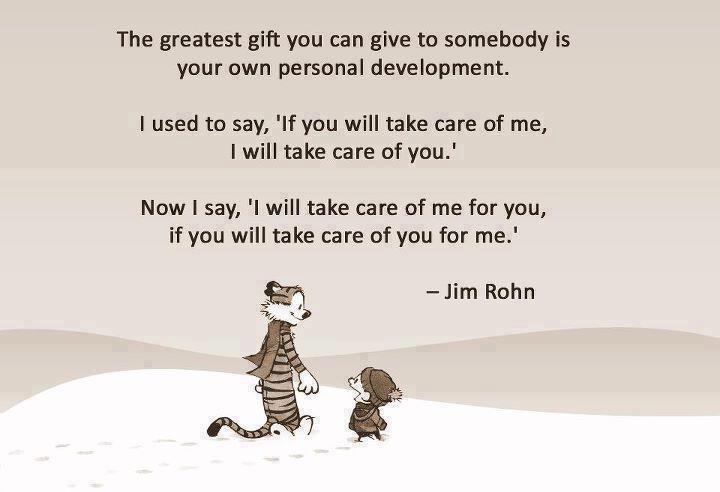
A great deal of my work is in premarital counseling, mostly with people who have never been married before. The main work I do in premarital counseling is help couples understand the usually unreasonable expectations they have of each other, and of what marriage will be. They naively think the most important thing they’ll do in marriage is take care of each other. My work is to get each partner to understand that a healthy relationship, by definition, consists of two healthy individuals. This means the single most important gift spouses can give each other is for each of them to get their own act together, to deal honestly with their own issues.

Five Reasons Why Getting Your Act Together Is An Awesome Gift To Give Someone Else:

1. The more deeply and honestly you deal with your own issues, the less inclined your spouse will be to bring them up.
Let’s face it, most arguments between couples consist of each of them telling the other what is wrong with them. The faults of others are easy to see. “You’re so stubborn.” “Yeah, well you’re so critical.” If stubborn lady works on her stubbornness, and critical guy works on being less critical, and they are open with one another about it, they will each be less likely to use those things as ammo in an argument. The best thing you can do is admit them and work on them.

2. The more you get your act together, the easier it will be for others (not just your spouse) to love you.
Conversely, the more broken you are, the harder it will be to love you. If you are needy and insecure, you will suffocate your partner. If you are demanding, you will exhaust them. If you hate yourself, you will always be miserable. If you take everything personally, almost everything your spouse says, no matter how well-intended, will hurt your feelings. People who love themselves have faced their issues squarely, and people who have faced their issues are easier to love because they are not constantly spewing their unresolved goo all over others.

3. Getting your act together is a way to keep investing in the relationship.
In too many relationships couples think (or worse yet, say!) “We’re married now. You have to love me, warts and all.” This is when she starts greeting him after work in an old bathrobe and a mud mask. He returns the favor by farting under the covers. They eventually end up in my office for counseling and can’t figure out how the magic leaked out of the relationship. Answer: The magic leaks out when you stop trying. Since no one ever fully gets their act together, working on yourself is a way to keep trying, all through your life.

4. You’re the only person you can change
Too many couples want each other to change, and to be completely accepted by the other. When you commit to a life of getting your act together, you turn it around. You determine to accept your partner completely and change yourself — the only one of the two of you that you can change.

5. It gives your spouse what they want
Your spouse married you because they love you. Assuming your spouse is a basically good person, they want you to be happy, healthy, and whole. The more you improve yourself, the happier you become and the happier you are, the happier your spouse will be with you.

I have directed this post toward married couples but unmarried couples can apply it, and parents can apply it to relationships with their children. Parents are always asking me, “What is the best method of discipline” or “How long should I keep my child in time-out.” I always say, “Parents — get your act together personally. When you are secure, when you feel good about yourself, when you know you are loved and valuable, you will naturally raise your child with this same assurance.”

Getting your act together, then, is a gift to the world!

Question: How have you seen important relationships improve as you have continued to get your act together? What relationships do you now realize suffered because of your unresolved issues?

Five Ways Your Brain Is Tricking You Into Being Miserable

from cracked.com:


Brain scanning technology is quickly approachi...


Your brain contains more than 100 billion neurons that flawlessly work together to create consciousness and thought. It is an astonishing marvel of evolution and adaptation, and it is also a huge dick.


What do we mean by that? Well, everyone wants to be happy, but the biggest obstacle to that is the mushy thing inside your skull that you think with. Evolution has left your brain with all sorts of mechanisms that are heavily biased toward misery. We can’t guarantee that reading this article will help, for your brain is as crafty as it is sadistic. But at least you’ll understand it better.


#5. Your Brain Latches onto the Bad Stuff by Design


At some point in the last year you’ve spoken to a woman with supermodel looks who would not stop talking about how horrible it was that she had gained half a pound or had a faint pimple on her forehead. You realized that this was a person who somehow could look at her fashion-magazine face in the mirror and only see the pimple. It’s so annoying — why can’t she just focus on the positive?


But of course, we all do it to varying degrees — you might pass 5,000 cars on your morning commute, and 4,999 of them might be perfect, polite drivers. But then you pass that one guy in the SUV who literally stuck his buttocks out of his side window and took a flying shit on your hood. When you get to work, are you going to talk about the 4,999 good drivers or the flying hood shitter? You’re going to focus on the negative, because your brain is hardwired to devote more attention to the misery in life.


Researchers have found this in a laboratory setting: They can show participants pictures of angry and happy faces, and the participants will identify the angry faces much faster than the happy ones. How much faster, you ask? So fast, we answer, that the participants had no conscious recollection of ever seeing the faces. That’s right — your brain already identified the shit parts of your day before you even knew it. You have a sixth sense for misery.


And that was a great ability to have back when evolution was deciding which of us would reproduce and which would get eaten — we needed a brain tuned to spot threats. Giggling at the butterflies instead of running from the tiger puts you in the express lane through the tiger’s intestinal tract. We focus on the negative because it’s the negative stuff that gets us killed — there was no evolutionary advantage to stopping to smell the roses. But this has left us with a brain that not only devotes our attention to the bad stuff, but also makes us remember it a lot better. Think about the implications in your everyday life — you can wind up walking away from a pretty good job or relationship because you only remember the bad times.


If there’s a good side to it, the effect does seem to reverse as we get older, when nostalgia starts to set in and we focus more on the good memories. Unfortunately, for many of us the only effect of that seems to be that we can’t stop talking about how freaking great things were back in our day.


#4. Killing Negative Thoughts Only Makes Them Stronger


All right, you think, if negative thoughts are so powerful and make us so miserable, we’ll just force ourselves to stop focusing on them. After all, we’re conscious animals; we have control over our own brains. Now that we’re aware of the problem, we just won’t do it — we’ll look in the mirror and force ourselves to not think about the pimple.


Sure. First, let’s try a really simple brain exercise:


Imagine a white bear humping another bear. Try to get a really clear picture of them in your mind. All right, now stop thinking of the humping bears. Use all of your powers of concentration to eliminate all traces of them from your mind. You shouldn’t be seeing the white bears at all now, or their frantic thrusting, even when we repeat the words “humping white bears.”


Did it work? Hell, no! In fact, the more you tried to not think about bear sex, the more you thought about it. This, unfortunately, is the same thing that happens when you try to force yourself to not think about the pimple in the mirror: Suppressing negative thoughts actually makes them stronger. You read that right. Negative thoughts are like the Sand People: If you chase them away, they’ll come back in greater numbers.


It’s actually insane when you think about it — we’re constantly trying to banish bad thoughts from our mind, but the human brain simply doesn’t have a mechanism for doing it. After all, the only way to know for sure that you are not thinking about horny white bears is by monitoring your thoughts and “scanning” them for any traces of them. So the process basically goes like this:


“Am I thinking about humping white bears?”


“Well, I wasn’t, but now I am …”


Psychologists call these ironic thought processes. They are the reason why you only want the stuff that you can’t have, why trying to suppress laughter only makes you laugh more, why you fail at stuff when somebody is watching, and so on. Telling yourself not to be afraid of failure puts failure right at the center of your thoughts. It’s the difference between overweight people who are always counting calories and rail-thin people who have to be reminded to eat at meal time because otherwise they just “forget to eat.” The overweight dieters are constantly failing because staying under the calorie count requires them to do the one thing they should be avoiding: thinking about food.


This is the cruel irony of people who are chronic worriers. Brain scans show that people who are constantly worrying about every little thing have much more active brains than other people … but the extra energy is wasted. When worriers try to complete a task they worried about, they end up doing worse than non-worriers doing the same task. So much of their brain power is being used to try to foresee all the bad outcomes that they almost guarantee that one of those bad outcomes will occur.


Meanwhile, people who aren’t concerned about what will happen can dedicate all their concentration to solving whatever problem is in front of them, meaning their chances of success are higher. That’s right — you could say that some people succeed purely because they’re too dumb to know why they should fail.


#3. Grief Is Addictive


Think about how much of our entertainment is based around negative emotions. Why do we like scary movies? Or sad songs? Why do we watch movies about disasters or obsessively follow morbid news stories about sensational murder trials? If something horrible happens to us, why do we find ourselves constantly thinking and talking about it?


If you were trying to come up with some kind of logical explanation, you could maybe say that it’s because focusing on terrible things reminds us of how good we have it. But the science says that we actually take pleasure in the negative emotion itself. We willingly dive back into misery again and again for the same reason we willingly board a roller coaster or go bungee jumping: We get a rush from it. That is, the pleasure/reward centers of your brain light up and release dopamine. And you can get addicted to whatever causes your brain to release dopamine, whether it’s chocolate or fistfights.


And just as with any addiction, there are some people who can handle it better than others — we all respond differently. And what researchers are finding is that some people get addicted to grief.


They think this may be why some people can just pick up and move on after a trauma, while others never do. They just keep reliving it, refreshing that feeling over and over. Because of the jacked-up way your brain is wired, even the most horrible thing that’s ever happened to you gave you a rush. Don’t get us wrong — that chronically grieving person you know isn’t enjoying it, any more than the junkie “enjoys” being an addict. They just get trapped in a feedback loop because they’re subconsciously afraid to let go of the one strong emotion that makes them feel alive.


And when it comes time to try to break us out of that cycle, something else comes into play, which is the fact that …


#2. You’d Rather Be Unhappy Than Uncertain


To all the teenagers reading this: You are lovely people. Thank you for reading Cracked. But holy frijoles, you do some completely idiotic things. Don’t worry — it’s completely normal. Thanks to evolution, the teenage brain is all about taking risks, like attacking a woolly mammoth with flimsy spears and having lots of sex with multiple partners, all for the continuation of the species.


For that decade of life, young people don’t have a “NO” switch in their brains, and while it meant that a lot of them fell off cliffs while chasing the woolly mammoths, overall it has been beneficial to the species. In fact, you could argue that the people who are successful later in life are the ones who never gave up their lust for taking stupid risks.


But for the most part, as you get older, your brain wants you to stop taking those risks. You already did all your kid-having, now you need to settle down and stay alive so you can raise those children. Forget mammoth hunting; you’re picking berries. You are less likely to quit your job and start a garage band at 50 than you were at 17, and that’s a good thing.


The problem is that most people grow so scared of risk that they are more likely to stay in situations that make them miserable than take a chance at happiness. Sure, you only drew a three of hearts out of the deck of life, but if you ask for a new card, you might wind up with a deuce. You stick with the misery you know.


And even worse, it actually gets to the point where a change that works out for the better can be scary because it’s better. In other words, even if you take the risk and the risk pays off, if you’re not used to happiness, then it just feels weird, or phony. Studies have found that taking depressed, self-critical people and trying to make them think positively about themselves just confuses the shit out of them. Make them stand in front of a mirror and shout compliments at themselves and they just think it’s weird and pointless. “What is this? Are you making fun of me? This is stupid.” It actually takes a whole different type of therapy for those people, because they see warmth and happiness and can only think, “What the hell is this shit?”


Some of you think that’s absolutely bizarre, and some of you know that as your everyday life. Ask yourself: When you’re sitting in a bar or coffee shop and there’s a group of friends next to you just laughing and having the time of their lives, how do you react? Do you find yourself annoyed by that? Do you hate them just a little? There you go.


#1. Being Happy Takes Effort


Imagine a happy person in your mind. Maybe you’re picturing a kid diving into a swimming pool, or an athlete hoisting a trophy, or Richard Branson parasailing with a naked supermodel on his back.


Now imagine a depressed person. You picture him sitting on the sofa in the dark, maybe drinking alone, staring at infomercials at three in the morning. Maybe he just never got out of bed.


The primary difference there is that the former person is actually doing something. It’s ridiculous to imagine the roles reversed — there aren’t any sad ballads about people snowboarding.


So despite how much cocaine Sigmund Freud did, it appears he was right when he said that unhappiness was the default position of our brains — meaning that happiness takes effort. As one study put it, having the right genes and being surrounded by the right people are a part of the equation, but the rest is doing things that make you feel good.


And if reading this made you roll your eyes and say, “Well, duh,” then you have to stop and realize how many people never do this. How many people do you know who say their ideal vacation would be to just kick back and do nothing at all? All of the “doing” in their lives comes at the job or at school — all the stuff that they’re forced to do by other people. So they think that relaxing means doing nothing at all, rather than doing the stuff they like.


They fall into the trap of thinking that happiness is simply the absence of doing unpleasant tasks instead of actively doing pleasant ones … and the human brain just doesn’t work that way. And this isn’t going to get any better as time goes on; among seniors, their satisfaction with life didn’t correlate with the state of their health or anything else — it was based on whether or not they had friends and hobbies.


Of course, it’s never harder to go out and make friends or start a new hobby than when you’re in the throes of depression, and at that point, all of the above cycles that keep you in that valley start coming into play. Hey, when we said your brain was a dick, we weren’t kidding.


 

You Have Herpes

Reality can be cruel. Sometime ago I was handed the inglorious task of telling a beautiful young woman that she had herpes. She was sure it was a bladder infection, but ultimately the science didn’t lie. There is a stigma that comes with something that is sexually transmitted, especially if you have a partner that does not have an STI.

The thing is, you can deny the reality all you wish, it will not change the facts. It’s like being pregnant, there is no “sort of”. Such it is with life. There are certain realities that come screaming your way no matter if you are willing or not, ready or not, believe it or not. Immanuel Kant believed that there were essentially two different worlds – the noumenal and the phenomenal. The phenomenal world is the world as we perceive it. The noumenal world is the world as it really is. They are rarely the same thing. For those of us raised on The Matrix it is the difference between the blue and the red pill. The real world is seldom as we perceive it.

We put on our sunglasses and filter everything to fit our view on the world. We have been raised to believe certain things, use certain coping mechanisms, employ certain cognitive interpretations and distortions. There is something in all of us that wants to believe we are the exception to the rule. Other people cheat on their partner and get caught but I am too smart, too slick, the exception. I can cheat on my taxes and get away with it. I can cut corners, take shortcuts, skim relationally, and do whatever the hell I want because, although other people get caught, I am not going to be held accountable. Sometimes we are even right.

Sometimes we can get away with enough that it actually reaffirms our excuses and entrenches this belief in our psyche. I see this often in counseling. People want to have their cake and eat it too. On a regular basis an individual will seek me out in order to get permission to do something cheap or immoral, or just a bad idea. They are looking for a professional to condone their desires. Often they leave disappointed.

Although it is not my job to judge others, I do recognize a bad idea when I see one. And I see many. Day after day people walk through my life and describe how they are trying to take a shortcut, convinced that they will not be held accountable. After doing this job for years I am often tempted to stop them mid-sentence and tell them how things are going to turn out in six months or a year. To quote Agent Smith from The Matrix, “That is the sound of inevitability.” 

I am guilty of occasionally telling my clients who are vulnerable, in recovery, or in the midst of crisis, “If it feels good, don’t do it”. If you are still with me at this point you undoubtedly understand what I am trying to teach them. Of course it is good to do good things. The problem is, however, that many things that are instantly gratifying are in fact horrible options. Snorting cocaine is instantly gratifying, so is cheating on my wife. The surge of chemicals in my brain overwhelms me with yummy goodness. It seems like a good idea at the time. That’s my phenomenal world talking, and it’s lying to me. Wisdom rarely whispers to easiest route to success.

Real growth has little to do with taking shortcuts. You can get your black belt in martial arts online if you mail ten dollars to some spurious Do Jang but that doesn’t mean you know how to fight. There are no shortcuts to a real black belt, or a real degree, or actual wisdom… or healing. One of the screensavers that pops up on my computer at the office says, “I’m not telling you it’s going to be easy, I’m telling you it’s going to be worth it.” That’s reality. – If it seems to good to be true, it is. – If anyone tells you that you can be whole in eight sessions of anything, they’re wrong. – You can’t change anyone else, just yourself. – Guilt/feeling bad is not the same as doing anything – No one else is to blame for your life – Trauma doesn’t usually just go away – Prayer doesn’t fix everything.

Sometimes you have to get off your ass and do something – No one cares as much about your problems as you do – The real world is boring, make friends with that – Everyone is as screwed up as you are… trust me on that … and to repeat – If you aren’t enough without it, you’ll never be enough with it (Cool Runnings)