Self-Medicating

Chocolates

I have radically changed the way I think about addictions.

I work part-time in addictions and see it’s effects literally dozens of times each week. It’s easy to believe that the problem is the addiction – if we can just help people stop drinking than their life will work itself out. Unfortunately this is not even remotely true and people who understand people are realizing that the addiction is simply another symptom of something much deeper.

When I was young and drugs came calling they were just another solution to the problem called “My Life”. Chocolate made me happy right now. So did cocaine and boobies and volleyball. Basketball sorted me out, so did pot. My only crime was that I grabbed too hard at one of my solutions to stress. Why couldn’t I have developed an addiction to body-building instead? Chocolate is nice, why couldn’t it have been to chocolate?

Dealing with your maladjusted life by stopping only one of the symptoms does not make sense. Somewhere along the line in many lives drugs became medication, not recreation. Cocaine helped you not have to think about your crumbling life. Drinking and sex helped you believe you were important. Being high kept you from thinking about your struggle to hope that things could change.

In counseling I encourage clients to look beyond their need for medication and address the actual disease they have been medicating. We need to learn to put our lives in perspective and change dysfunctional thinking patterns. Taking responsibility for your own heart and happiness truly is the best thing you can do to improve your life.


Shooting Their Wounded

Pastor Ted

I was intrigued by a friend’s Facebook recommendation so late last night found myself on a Documentary website watching a very personal biography on Ted Haggard, disgraced evangelical super pastor. Twenty minutes into the documentary I realized I was feeling sorry for the guy. Let me explain.

I have very little pity for self-made rich hypocrites. Like most of you I get a sick delight when I hear that Donald Trump or Conrad Black has gotten themselves into something dicey. I love listening to religious bigots like Mark Driscoll make an ass of themselves. So why do I feel sorry for Mr. Clean, Ted Haggard?

Haggard didn’t even say he was “100% heterosexual” but was held accountable for it anyway. He couldn’t find a regular job after he got canned and when he did start selling insurance door-to-door he still could not escape his notoriety. As part of his separation package he wasn’t even allowed to live in Colorado in the family home for over a year and a half. Christians lined up to lambast him. He had no savings and was actually becoming poor. Watching this man have the pride kicked out of him was actually sad to watch. Worse still was the complete and utter free fall his life spun into.

It’s no wonder he started another small church. He only has one skill set and not many people want to hire someone with a religious degree and nothing else on the resume except “mega church superstar”. Even Ted Haggard has to eat.

Don’t misunderstand me, Ted was responsible to live a life in keeping with his elevated viewpoints and standing. He was, after all, the mouthpiece of evangelicalism for many and had the ear of the president. He hid his lifestyle choice and paid the price. The question we need to ask is, however, why did he have to hide? I fully understand that he could not “come out” to his congregation without staggering financial and spiritual ramifications. I get that. What is disturbing is that Haggard had NO ONE he could be honest with, no one he could tell without being prematurely outed and shamed. There was no mechanism in place for him to be honest without some dire consequence. I love what someone has written under the Youtube of “The Trials Of Ted Haggard” –

The message of the documentary is also a concise indictment of the distinct lack of care for the “unrighteous” demonstrated by Ted’s brand of Christianity and should be broadcast in fundamentalist evangelical churches as a moral lesson their bible apparently fails to teach them.

The point I guess is not necessarily the failure of fundamentalist Christians to walk their walk…it is that the walk itself is fundamentally flawed – the literal acceptance of implausible and unnatural moral standards fill otherwise rational minds with a twisted legacy of ancient prejudice and conceit, the only consolation being the relativists dream of escaping such an “objective morality” via grace. The situation is ludicrous. Of course you require grace to be saved ( from something??) because if the standards you set for yourself were not broken everyone would be absolutely miserable, which also explains why they are so frequently broken.

To not put too fine a point on it the problem with Ted Haggard is not simply Ted Haggard. The system propagates the notions that pastors cannot, must not, be honest about their own fallibility. I have known hundreds of pastors and I can tell you straight up, they are a fallible lot. The pressure to be “everything to everyone” is overpowering and it is no wonder than that so many clergy have “secret sins” that they are afraid to be honest with anyone about.

I spent some time, recently, talking to a man who had been a volunteer youth pastor in a church and went on to be convicted of child molestation. We talked about his journey and it became immediately evident that this person felt that there was no one, not even me, that he could talk to about his heinous problem. He was so incredibly shamed by his own religious rigidity that he could not even admit to himself, let alone others, that he liked young males. There was no mechanism in place to help him battle his urges or make good decisions. His shame and his guilt, combined with his aberrant behaviour actually served to prolong his crimes. I spoke to one associate minister who told me that after telling his senior pastor he was struggling with his sexuality (and hadn’t done anything “wrong”) he was told to get out of the office while that senior pastor called the board to tell them. The associate was soon unemployed.

speaking at CPAC in Washington D.C. on Februar...

It’s just another job. Expecting your clergy to be any better than you is unrealistic and profoundly erroneous. The real tragedy with the Ted Haggard story, the Jimmy Swaggart story, Jim Bakker, etc is that we are still surprised at all. Throw millions of dollars at a guy who has little accountability and buckets of power and influence and then freak out when he makes poor decisions. It’s akin to being surprised with Justin Bieber does something stupid. He’s a dumb kid with millions of dollars and cars of “yes” men and women. Why are we shocked?

The only difference between Haggard and so many others is that he got caught.

Who can clergy be honest with? They have copious evidence to support the assumption that their parishioners believe they are more understanding than they in fact appear to be.

Leadership is lonely. Trying to live up to impossible standards while trying to make a difference must be tough. Doing all that with a good sense of self-esteem and balance seems almost impossible. As I have often heard, “it’s the easiest job in the world that will totally break your heart.”

Have fun with that.

Does It Really Matter What You’re Addicted To?

English: ChapStick lip balm Español: Bálsamo l...

It’s all about dopamine… and Chapstick.

The need to flee “ordinary” motivates many of us to indulge in the things that others will someday call our “addiction”. Professionals, including myself, have long delighted in shutting down those who believe they had an “addictive personality”. But what if there is more to this than I first supposed?

People working in the addictions field can give you copious examples of clients who were “poly” drug users, addicted to whatever was available. These same addicts would, while in recovery, be the first to sell out to the program, find Jesus, and plan to become an addictions counselor. People who are impulsive, struggle with impulse control, and prone to show a willingness to try anything for a good time are prime candidates for poly-drug use and “all-or-nothing” thinking. Whether it’s Chapstick or heroin, sunflower seeds or cocaine, exercise or meth, addictions all serve the same basic primary function – distraction. As I have heard countless addicts say, when asked what drug they are addicted to, “What you got?”.

Studies have shown that dopamine levels begin to rise long before someone actually snorts cocaine, for example. Just the thought of getting high on Friday is enough to alter the chemicals in our body today. This release of happy goodness serves to focus our energy on satiating our addiction while distracting us from looking at the situation more objectively. The mental build-up to our addiction warps our perception of reality and gives us tunnel-vision. This tunnel-vision is why addicts consistently choose their drug over their family. They truly believe that their family is their top priority but cannot, once the thought has become an intention, stop themselves from making a bad choice over and over again.

I have known people who get this same euphoric energy and satiation from shopping for shoes, or going to garage sales, or running on a treadmill. Addictions experts recognized this before the mainstream medical community and began recommending addictions deflection – moving unhealthy vices into less and less harmful activities through transference, not a “cold turkey” approach.

‘Life’ is usually the reason most people have problems with addiction and impulse control. Helping someone stop drinking, for example, is only a very small part of staying healthy. Learning to deal with their dysfunctional coping skills that have helped them survive their horrible lives, now that’s the real crux of the matter. The journey is not hopeless but it is fraught with work and frustration.

I know what it is like to feel bogged down by the pain of life and struggle to even care if things got better. I do not profess to understand what you are going through and have grown too tired to give you three simple steps to fixing your life.

All I can say is that it was worth it.

In spite of firmly believing that my life would never get better somehow I allowed myself to admit that I was afraid of things getting better. I forced myself to hope again.

I had no idea this article would end up like this…


Somehow I Expected More

Boat of Boredom

Most of us live in a word of stress and bills and commitments and bad sleep. I’m not sure about you but I never imagined as a teen that my life would become so predictable, so normal. I was raised in front of the television and if I learned anything it was that life is a series of coca-cola commercials and adrenaline sports. No one on the eighties sitcoms talked about bills and routine and year after year of working with three weeks of holidays.

I don’t have stats to back this up but I have a suspicion that one of the biggest reasons people who are recovering from addictions go “back out” is boredom. The normie world is a dopamine wasteland. Many of those in recovery are also unemployed or often on disability and so they also combat poverty, boredom, and lack of purpose and often hope. Finding fulfillment and contentment is hard to find in any world these days. It’s not just the recovery community that is having a hard time adjusting to the grind and stress of life. More and more of us are asking the big questions – What is the meaning of life? What do I want to spend my life doing? When will I learn to really like myself? Am I grown up yet? How can I find happiness?

Learning to find contentment in life is just that, something you need to learn. The primal brain is hard-wired to remember negative experiences, memories, and patterns. Once in our history is was important to be able to recognize danger before it ate you. The brain learned to survive by remembering the lessons that negative experiences brought. Happy thoughts didn’t keep you from being lunch.

Experts tell us that negative experiences are velcroed to the brain while positive experiences stick like Teflon. It is no wonder, then, that we tend to become negative when we spend too much time thinking about negative things. By way of example ask yourself this question – Have you ever argued yourself into feeling way better about a negative thing? It isn’t natural. Spend any time thinking about the big stressors in your life and eventually you will end up at the worst-case scenario. Finding contentment is, therefore, something that has to be worked for. Without spending time on a regular basis re-evaluating my life and dreams it will be my natural bias to end up a negative old man. As Valdy sang, “Old and tired and bent and bust, grey and wrinkled and you can’t be trusted just a dirty old man.”

I will tell you it is one of my firmest goals that I will not end up a negative old bastard. If I get that way please just float me out on the ice flow. We are only given one short life and I do not want to end up bitter and mean; I want to end up crazy, flirting with younger women.

I tell patients every day that the only way they will be any good for anyone else is if they spend time working on themselves. Self care cannot be optional. How much time do you spend thinking about psychology and art and music. About God and immortality and your need to stop yelling? About dreams and plans and delicious hopes? How much time do you spend reading and writing?

You are definitely worth it.

Women, Why You Don’t Make Sense

You have told him fifty times that your relationship is in trouble and you need to connect better emotionally. So why isn’t he trying? He doesn’t want you to nag or belittle him, you’ve tried and tried and he can’t get it. How much more obvious can you be? Why should you be the one trying again?

Counsel any woman in a heterosexual relationship long enough and these kinds of complaints will emerge. What is it about some spouses that they seem to care so little for emotional and relational intimacy? How did this relationship get so stale so fast?

Unfortunately the problem cannot not be entirely laid at his door step. What seems ridiculously obvious to you may not register the same way on his radar. He isn’t a woman and therefore cannot think like a woman. Only someone who has been living alone under a rock still believes that male and female brains are exactly alike. We understand on a cognitive level that we must speak in such a way as to be heard but this does not mean we know how to do this. He does not know what you mean by relational intimacy, for example. He has tried to “connect” a million times but you don’t seem to notice.

You aren’t talking Man-glish.

You want to connect more on an emotional level. You want to “talk”. I thought we have been talking. You haven’t shut up in twenty minutes. What the hell were you even talking about? I took you to dinner and a movie. How come you are still mad?

What many women fail to understand is that, for many men who have not grown up in a metrosexual environment, that ‘dinner and a movie’ thing was a sincere, even stretching expression of his emotionally availability, whatever that means. Many men have difficulty connecting on anything beyond the most shallow pool unless beer is involved. Dinner was his attempt to connect. Sad huh?

Sometimes that lousy attempt to connect was in fact the top of his game. He was playing his best card but you are still upset. What can he possibly say at this point to appease you/impress you? He’s already shot his best load and now he has to come up with a response that will diffuse your anger and convince you he knows what you are trying to yell at him. But he doesn’t.

Learning to think like someone else is an extremely important, albeit difficult skill to learn. Chances are your perfect plan to gradually win him over to your side hasn’t worked by now and you realize that relationships that aren’t working just get worse and worse. It is almost impossible, once a couple has grown apart and there is misunderstanding involved, for reconciliation to happen. We simply lose our will to keep fighting and it’s extremely difficult to get back.

Take a relationship course. Send for my free session on “Speaking Chick and Talking Dude. Read a book or listen to an mp3. Learning to understand your partner is like taking any foreign language, there are few shortcuts to literacy.

You Don’t Know How Intimidating You Are

Anger Management

The first time someone told me I didn’t believe them. It was not possible, I wasn’t even angry.  I have heard it since a few times, less the older I grow. Apparently I can be fairly intense and even intimidating when I am fully engaged in an argument or discussion. I throw out a great deal of energy. Someone who once was in a creativity brainstorming session with me described me as a “fire hydrant”. I have had to spend time working on myself.

Recently I watched a couple argue in my office. It was fascinating to watch. One of the characters was incredibly intense – wagging his finger, raising his voice, swearing. His entire posture was set to attack. Now zoom across to the other person in the room.

She is not set to attack. You can watch her slowly close her posture. Her feet come up to her chest, she wraps her arms around herself. Her chin lowers and within a few minutes you can see clearly how she is rolling into the fetal position. The situation screams out for attention but neither of them can see what is happening in the room.

They have been told, more than once, that they have communication problems.

Anger is a very powerful emotion, perhaps the most powerful. It transforms a conversation into a fight. It gives birth to abuse and slander and arrogance and belittling. There are courses in every city on Anger Management. While these courses adequately address the symptom of anger few get to the “why” questions. Why can’t I control my emotions? What is going on in my life that has formed this angry person? Dealing with anger can appear so daunting that many people believe they cannot control their anger and have basically given up trying.

Anger person, you are scary. You come across as very authoritative and very very intense about things others apparently don’t care as much about. You are talking much louder than you think but God help us if we mention this. Your eyes tell me that you are enraged. It is very difficult to match your energy so most people opt to shut down. This generally makes the angry person even more frustrated, but what can the other person do? You sound prepared to do anything, wreck anything, hurt anyone to win this argument. It’s just not worth the fight and the pain.

This does not need to be a terminal illness. Once I began to understand how other people perceived me I was eventually able to recognize this in myself and control it. I shot video of myself and analyzed my posture. I learned STOPP Therapy to control my need to fight back as well as learned to put things in perspective so as not to become wounded. I haven’t arrived by any standard but I am able to exercise WAY more control over my emotions and responses than I used to.

Anger is powerful.

In Dating Game, Narcissists Get The Girl

via WebMD:

THURSDAY, May 30 (HealthDay News) — Men with high levels of narcissism — an unrealistically positive self-image coupled with feelings of entitlement — have an easier time than others attracting a potential mate, new German research says.

“Narcissism is linked to mate appeal in a real-life situation,” said Michael Dufner, a researcher at Humboldt University of Berlin, who led the study.

The research is published in the July issue of the journal Personality and Social Psychology Bulletin.

Dufner and his team first measured narcissism levels in 61 men with an average age of 25, who were invited to join a courtship study in Germany. “We focused on narcissism as a personality trait, not the personality disorder,” he said. “This means that everybody has a certain narcissism level — for some it is higher, for others lower.”

Next, the researchers asked the men to approach women they did not know on the street and get contact information. It could be a phone number, email or Facebook contact.

Research assistants followed the men (which the men were aware of), observing the interactions. Dufner decided to focus on men in this study because men traditionally court a potential mate in this way, compared to women’s typically more subtle approaches, such as flirting, he said.

“We tested if individuals with higher narcissism scores are more appealing,” he said.

On average, the men approached about 23 women. To rule out the possibility that the more narcissistic men were more selective in who they approached, the researchers analyzed each woman who was approached on her physical attractiveness and manner of dress. The narcissists weren’t more selective.

The narcissistic guys did get the girl more often. The higher the level of narcissism, the more likely they were to get more contacts.

“The effect was not due to high self-esteem, but indeed the narcissism,” Dufner said. The physical attractiveness and social boldness of the narcissists were the two likely reasons for their appeal to women, he said.

Dufner offered some caveats about the research, though. “We were not able to directly test the causality underlying the association between narcissism and physical attractiveness,” he said.

One possibility, he said, is that physical attractiveness may be a partial cause of narcissism, as other researchers have suggested.

For narcissists — and the women they seek — the news is not all good, Dufner said. “Narcissists are charming and appealing at first sight, but they are not long-term romantic partners,” he said.

The study findings confirm what many experts have long suspected, said Jean Twenge, a professor of psychology at San Diego State University who has written about narcissism. “Narcissists are very good at initiating relationships,” she said. “On first impression, they come across as confident and charming. The problems arise later on, when you realize that he doesn’t actually care about you — it’s all about him.”

Twenge was not involved in the study, but reviewed the findings.

Caution is the byword for those attracted to narcissists, both experts agreed. “In the long run, narcissists made bad relationship partners,” Twenge said. “They lack empathy and have a difficult time taking someone else’s perspective.”

Twenge said she does understand why women fall for narcissists. “The initial appeal of narcissists comes from their assertiveness and confidence,” she said. “These are stereotypically masculine traits that many women find appealing.”

 For more on this check out my article “Dating The Bad Boy”

Do I Like It Sick?

Many spouses will stay in a relationship that is sick and twisted, but why?

It is a truly terrifying story – a young girl grows up in a sick home and is repeatedly sexually abused by a relative or family friend. This person then becomes sexually active at twelve of thirteen with a boyfriend who in his mid-twenties or beyond. Often this is followed by a period of extreme promiscuity. They are sexually intimate with every boyfriend and come to believe that this is expected of them if they want to stay in that relationship. She starts to associate sex with being loved or loving someone else appropriately. They often engage in sexual acts which they do not enjoy, most of which are degrading in some way. They have an overwhelming compulsion to “perform” in order to be loved. For some strange reason, however, after they have settled in with someone they discover they are not truly happy and still have trauma and self-esteem problems. They struggle to find the intimacy and completeness in romance that they so desperately yearn for.

In counseling it often becomes apparent that this person is actually attracted to the sickness they have come to associate with love. They go after the “bad boy” or they seem to hook up with men who are always emotionally unavailable, their romantic interests usually are selfish, misogynistic or emotionally unhealthy.

If you can relate to what I am writing about then it’s time to ask yourself a question, “Am I attracted to this person because of their sickness or their health? Is this person irritating me right now because they are desiring something healthy (emotional connection, vulnerability, working on the relationship, planning for the future, stability, etc)?

Is it sick or is it healthy? I often send my patients home with this homework. For the next two weeks ask yourself, whenever you feel emotional in your romantic relationship, is this sick or is this healthy?

When he ignores me I pursue him. Is this sick or is this healthy?
I feel repelled by his attentions. Is this sick or is this healthy?
I am overly critical or easily angered by this person. Why? Is it sick or is it healthy?
He/she never seems to live up to expectations. Is this sick or is this healthy?

You get the idea, a good exercise for whenever we are struggling with our loved ones. Ask yourself, “Is what I am experiencing a result of a healthy and legitimate concern, or is this an unhealthy response to a sick situation?”

That may not be a bad idea for any of us.

Every Time We Split He Would Have An Epiphany!

From ladywithatruck: I was in an abusive relationship as you know. I went back to him many times. Why? Because every time we split he would have an epiphany and realize and admit to and apologize for everything he did wrong. I would feel validated, heard, valued, loved and willing to look at my part in things and do my part to save the relationship. We would get back together, I would be putting 110% into “us” and he would recant or “forget” ever admitting fault.

His article is dedicated to her insight.

When I read these words, comments on a recent post, I had a bit of an epiphany myself. I realized, maybe for the first time, that in virtually every relationship I have worked with, if the woman is the one to leave, the man will have an epiphany a day or a week later. I myself was full of epiphanies, that breakup those many years ago that shaped my life. As a guy I knew beyond doubt that if I could just do something, I could salvage this thing. I needed to do a bunch of sentimental things, placating things, say the right words and this situation would be fixed. This was what I would set my mind to until things were back to normal.

The worst part was that I knew better, was a proponent of better. I was a professional, but I was still a guy.

That was the day my journey really began. But I digress.

English: Patrick Warburton in January 2007.

I know full well that there is something in men that ignores a situation if it seems too daunting or unwinnable. I cannot tell you how many times wives tell me that their husband no longer communicates, no longer wants to date, no longer spends hours in conversation (or minutes). It is very difficult for women to understand that this is a very natural and learned response for many of us, and just because it seems unbelievable to you doesn’t mean it isn’t happening. As I have written many times men, especially men over thirty, do not grow up in a culture that encourages or teaches emotional connection. Our social connections were and remain mostly shallow. Patrick Warburton in Rules of Engagement is not as much a caricature as we would like to believe. Few men spend hours a week trying to connect emotionally with anything, it’s a lot of work.

Years later, when the relationship breaks up it usually comes as quite a shock to the guy who is left. Things were going along swimmingly, everything seemed “ok” even if she wasn’t interested in sex anymore, at least with him. She was always sort of frigid. What does she want, anyway?

As bizarre as it seems to the leaver, your choice to go really was a shock. Sorry but it’s true. We have an amazing capacity to compartmentalize our lives and ignore issues which are going to cost too much emotionally. It comes as no surprise then, that when men are confronted with the immanent demise of their relationship they tend to do the wrong thing – they do things. ‘Doing’ is an area where I am comfortable and I understand the rules. Women are incredibly difficult to understand (believe it) and there will be so much anger, so many long conversations, so many hours spent talking about stuff that I don’t care about. Even if I did care half as much as you I still would not understand what to do and you refuse to tell me. I need to figure out a way to placate you.

Women who leave understand that they have gotten their hopes up and expected more than he was willing or able to give. Men like projects, and projects end. Understanding that emotional investment in a relationship is a lifelong project is a lot for a man to get his head around. Becoming that guy is a huge commitment (to fundamentally change your personality) and takes a hell of a lot of work with little or no initial rewards. You won’t suddenly enjoy those long talks about things that don’t seem to matter. There is no instant payoff for giving unselfishly and relentlessly to a woman who is suspicious of your motives and prone to become overly critical. And nothing wounds me deeper than a condescending spouse.

Is it worth it? I cannot answer that for you. I only know that for me, the work has occasionally become part of the pleasure. The more I learn about my wife, the better I see her motivations and personality, the easier and more fun it gets. For some reason it isn’t as hard as it used to be.

She certainly seems to be thinking more like me lately…

What’s A Guy To Do?

Romance in Manhattan

Some men hate my writing, and with good reason. I have a propensity to tell men that they are not meeting their partner’s needs – without offering enough positive and practical advice. It’s almost as if I am saying, “Here’s the problem but you need to figure it out yourself.” That sounds suspiciously female to their ears, their partner (if they have a female partner) has been saying that to them for years. What am I, one of them? Where is the step-by-step guide to winning her heart? Where are the slick tactics that you see on other websites (which appear far more helpful because they offer quick and easy solutions)?

Part of being a man, I am convinced, is often needing clear instructions when it comes to emotional issues. Emotional intelligence is something we never worked on much growing up. We spent far too many hours shooting things and talking about farting (or was that just my family?). We need to fix things and it would be very helpful if women came with an owner’s manual (such a sexist comment…). They aren’t rational, we think. They don’t process things like we do, don’t seem to have the ability to communicate like we communicate; they think about too much stuff (and apparently they think all the time!). How many times do I have to watch “Say Yes To The Dress” (Atlanta not New York, Randy’s a poser) before she warms to my form?

Men ask me all the time, “What can I do?”

The answer is simple. All you should do is learn how to communicate with women, learn to understand how women think, become a student of the female psyche, spend hours and hours listening without offering solutions until you are sure she is looking for one, activate the emotive side of your personality, learn to give while feeling misunderstood, talk, talk, talk, talk, get counseling and marriage counseling, take some psychology and feminism classes…

Or just do this…

Although I am only a man I am immersed in female culture and constantly hear that female spouses don’t feel safe in their relationship, struggle with trust, and don’t feel important or valued. Many have spoken of feeling emotionally abandoned after a few years of commitment. Time and time again my female clients tell me that their issues with their man wouldn’t matter nearly so much if only they felt special, felt important, believed that they were completely loved.

This sounds really naive, but what if there is something to it? What if I didn’t need to try to fix a thousand past slights but only had to try, try really hard, try every day to win this girl back? What would happen if I decided to make this person whom I love more than anyone the absolute first priority in my life for the next three months? Spoil her.
Listen to her.
honour and cherish her.
become a student of her.
engage with her as much as she wants.
Treat her like a goddess.
Do the things you did to win her heart in the first place.

Even as I write this, after all this training and all this experience, there is still a minuscule guy part of me that thinks this is so lame. So unmanly. So hard.

This may be completely off, especially in cases of abuse, but what if it was a game changer? What have I to lose?

Loyalty Is Hard

Most of us can count on one hand the number of authentic, lifelong friendships we have. We would like to believe our friends at work and play are deep and meaningful but we know, because it has happened before, that after we leave we will gradually lose contact with people we have cared about. This is a natural, even healthy part of life. Friends come and go, the circle of life.

We have all been hurt by someone who said they would always be there for us. Perhaps we were more invested than they were, we made assumptions and believed that the other person cared as much as we did, but we were wrong. I too have been blindsided, more than once, by someone I loved with abandon only to find out that they had completely different feelings and assumptions.

Every day I counsel people who have been damaged by someone they loved. It helps, perhaps, that I have experienced a little bit of that pain and know at least something of what it is to ‘endure’. People disappoint and rare is the friend who you cannot shake, cannot offend enough to leave. I aspire to be someone like that, as many of us do.

In his book, You Can Make A Difference, Tony Campolo tells the true story of two men who were traveling together on a train out of Victoria Station in London. Twenty minutes into their journey, one of the men had an epileptic seizure and if you’ve ever seen this happen they you know how frightening such an attack can be. The man stiffened and fell heavily out of his seat onto the floor of the train. When this happened his friend immediately took off his own jacket, rolled it up, and put it behind the stricken man’s head. Then he blotted the beads of perspiration from his brow with his handkerchief and talked to him in a quiet manner to calm him down. A few minutes later when the seizure was over, he helped lift his friend gently back into his seat. Then he turned to the man sitting across from them and said, “Mister, please forgive us. Sometimes this happens two or three times a day”. And then, in the conversation that ensued, the friend of the epileptic explained. “My buddy and I here were in Vietnam together, and we were both wounded in the same battle. I had bullets in both my legs and he caught one in his shoulder. For some reason the helicopter that was supposed to come for us never came to pick us up. My friend here picked me up and he carried me for three and a half days out of that jungle. The Viet Cong were sniping at us the whole way.

Understand, he was in more agony than I was. Repeatedly I begged him to drop me and save himself, but he wouldn’t let me go. He got me out of that jungle, mister. He saved my life. I don’t know HOW he did it and I don’t know WHY he did it…but he did. Well, four years ago, I found out that he had this epileptic condition, so I sold my house in New York, took what money I had, and came over here to take care of him”.
Then he looked at his friend and said,
“You see, mister, after what he did for me, there isn’t anything I wouldn’t do for him.”

Loyalty

Real love is like that. When you truly love someone, not just think you do, but love them with every part of yourself there is nothing they can do to drive you away. I love my family like that. There is nothing my children could do, no crime or indignity they would commit, that would make me love them less. I’m reasonably sure you can understand what I am saying. Friendship, however, is not held together with blood. There is no legal contract, no external pressure forcing you to care. Friendship is about loyalty.

Loyalty.

I do not hear much about loyalty, outside of movies and documentaries about the mafia.

Trust, faithfulness, sacrificial love, unselfishness, commitment –  character traits that are not automatic or easy to assimilate. Loyalty is inconvenient, it is costly. It walks in, as they say, when everyone else is walking out. It’s easy to talk the talk, make promises, spew platitudes; but it is another thing altogether to walk the walk. Loyalty shows up at three in the morning and holds your head when you throw up. Loyalty doesn’t keep track of slights or demand tit-for-tat.

Loyalty is hard.

Catastophizing

Man thinking on a train journey.

from dictionary.reference.com:
verb –
to view or talk about (an event or situation) as worse than it actually is, or as if it were a catastrophe:
Stop catastrophizing and get on with your life! She tends to catastrophize her symptoms.

It’s something many of us do every day.

Some months ago I got a call from the unemployment office. Years ago I had been unemployed, had collected EI, had started a restaurant, and there was some negotiation over when my EI claim should end. Now years later a supervisor was calling for what felt like an urgent meeting.

I freaked out. I didn’t sleep well for the days leading up to the meeting. I had all my paperwork in order, I was confident I had done nothing wrong. I knew intellectually that it should be no big deal.

Catastrophizing. Making a mountain out of a molehill. Jumping to the wrong conclusions. Expecting the worse. Ever happened to you?

Catastrophizing is one of the classical cognitive distortions. Cognitive distortions are those emotional coping mechanisms we employ in order to cope with stress and issues in our life. They are things like emotional reasoning – letting our heart make decisions that should be made with our head; or “should” statements – I should be a better person, I should be over anxiety by now, I should not eat that bagel (ok that one may be the right thing to think…). Cognitive distortions keep us sick. We develop these ways of thinking because they work, or at least they used to. It’s tempting to “filter” out positives and believe the worst. Anyone over thirty knows that life will hand you enough manure to convince you that the worst-case scenario is often the right one to believe. Thinking all men are pigs can keep you from ending up in pig crap. Catastrophizing prepares you for the worst, and the worst sometimes happens.

Letting go of our own distorted ways of thinking takes a bucket of work. Being willing to set aside feelings and beliefs that have served us, sometimes for generations, is no simple task. Letting yourself forgive, or trust again, let someone love you, or work through your abuse can be the most daunting thing you ever do. Most of us are tempted to change our actions and hope we will eventually fake our mind into someday playing along. While this can bring limited success, growth happens when we change the way we think, not just the way we act.

Religious people may recall the Bible verse which says that “as a person thinks, so are they”. In therapy we say it this way, “Change your mind and your butt will follow”.

Are You Still A Christian?

Image of the human head with the brain. The ar...

from my friend Lori:

I’ve been reading an awesome book lately by Rick Hanson called Buddha’s Brain – The Practical Neuroscience of Happiness. Hanson is neuropsychologist, author, speaker and meditation teacher. His book isn’t about Buddhism as much as the intersection of psychology, brain science and contemplative practices. I discovered him on my friend Scott’s blog in the article I referred to above.

I’m massively interested in brain science, because it gives concrete evidence and  thus strategies for dealing with the nebulous emotional things of life. This has added to the foundation of CBT techniques I’ve been learning and practicing. Coming to understand the science of the brain and the inner universe has had as large an impact on my thinking as coming to understand the science of the physical world and the larger universe. Bill Bryson has a great book called, ‘A Short History of Nearly Everything’, if that’s something you’re interested in exploring.

I’ve spent over half of my life exploring christianity. I ’found god’ at 24, married in to it, and it continues to impact me, though not always in positive ways. Although there are parts of it I love, there are also other parts that have stripped me of my ability to appreciate it overall.

These past years, I’ve deconstructed my belief system and in doing so, have become a dissenter within the circle I once belonged.  Sadly, in such circles, alternate views have little place. If you’ve ever stepped outside or challenged the belief system or code of conduct of a religious community, you’ll know what I mean. It usually involves at least a questioning of your character and faith, and often far more.

As I’ve dissembled the thinking I once accepted, some big issues have come up. This is my philosophical shortlist, ignoring the other practical and relational impacts.

– If there’s a benevolent god,  interested and acting on my behalf in the minutiae of my daily life – why then is that god seemingly absent in the daily lives of people in far more extreme circumstance?

– Would an all-knowing benevolent god insist we belong to an exclusive ’club’ of understanding or  would that god take in consideration our differing cultural and religious upbringings and sexual preferences?

–  Is truth really a narrow path or is it an encompassing one with room for the many positive contributions from other avenues of thought?

– How, given the vast scientific evidence for the evolution of the world and it’s species, can religion blind itself to such findings?

But perhaps most notably for me, is the question of how religion can claim to understand the complexities and mysteries of eternal life, when we can’t even comprehend the complexities and mysteries of this physical life. At least not yet.

A few years ago, I was taken with the book, ‘Eat, Pray, Love’ which was later made into a movie. The movie was dismissed as a chick flick, a romantic comedy. At the best of times, I can barely endure chick flicks, but Elizabeth Gilbert’s story is more than that. It’s a memoir, a personal recount of her journey in, an awakening of sorts.

Gilbert  traveled a path of personal healing. faith and self discovery that began in Italy, progressed to India and concluded in Bali.  Each of those parts of her life contributed to her evolving, broadening spiritual mosaic. I imagine her journey in continues still.

The idea of a spiritual mosaic is new to me and in some ways makes me a little uneasy. It’s not the well-traveled road I’m familiar with, but I’m liking what I’m learning. I’m incorporating into my daily routine meditation, mindfulness and visualization – because they literally change the physiology and landscape of the brain toward peace, love and self-mastery.  Whether they answer the existential question of what lies beyond, is still, well, a question.

I have no idea what lies beyond this life.  Is it jeweled streets?  Is it the music of string theory? Is it one-ness with the universe?  Is it nothing ? I don’t know.  And neither does anyone else, no matter what authority they claim it upon.  But I do know it’s within my power to live and love well.

My youngest son asked me anxiously the other day, ‘Mom are you still a Christian?’ And honestly, I’m not sure I am, except by my own definition.   Just as I’m an art student, a student of  philosophy, religious studies,  psychology, literature and science – by my own definition.

Is that enough?  Is a rose by any other name still as sweet?

I’m beginning to think so.

He Probably Had It Coming

“When I went into the community looking for some support services, I couldn’t find any. There were a lot for women, and the only programs for men were for anger management,” Mr. Silverman told the Post shortly before his death. “As a victim, I was re-victimized by having these services telling me that I wasn’t a victim, but I was a perpetrator.”

The man who ran Canada’s only shelter for male victims of domestic abuse has apparently killed himself. A sad ending to what was, allegedly, a difficult and frustrating attempt to draw attention and provide safe haven for men who have been damaged by their spouses. It’s a dilemma that I have run into for years, often misunderstood and actually mocked and derided by society. Apparently men should not complain if their spouse hits them, they should be above such abuse while at the same time never lifting a finger to strike back or even protect themselves. I have heard the story many times, and on one occasion a husband was charged (and convicted) for restraining his wife who was in the process of hitting him with a cast iron frying pan for the third time.

Let’s face it – for many men just admitting that they are victims of sexual, emotional, or physical abuse (yes I said sexual) is tantamount to admitting that you aren’t really a man. This only exacerbates the problem. Not only is it embarrassing and painful to tell others but you can be fairly certain that others with probably accept your story with a hint of sarcasm or non-belief. I cannot tell you how many times I have heard people say of men who have been hit or abused, “He probably had it coming.”

Violence is wrong no matter who the victim is. No one should be allowed to attack another, no matter what their gender is. It’s also pathetic that there is no funding available for these victims. Maddening.

Tips for Talking To Men And Attracting Them Like Crazy

English: Romance icon

from here: Most women dream of the day they will attract the man of their dreams. Many describe a man who is “tall, dark, handsome, (preferably) rich, sensitive, loves kids, has an advanced degree and loves his mom.” I’ve described this same man, listened to my friends describe men of similar ilk and pondered, plotted and schemed about how to meet this mystery man. Here, after watching (and experiencing) numerous disappointments on the dating scene, are my top tips for attracting the man of your dreams…” 

Kind of makes you want to puke, doesn’t it?

I hate these things. As a clinical counselor I spend months with patients helping them to become more self-aware, more authentic, and more secure in their own beauty and individuality. But forget all that. Just be a bimbo and say the right words and men will love you forever. Be mysterious, be aloof, laugh at our jokes, compliment us, you will drive us crazy.

That’s it, lie.

After all, dating is a big con anyway.

Recently I was speaking with a client about dating sites on the web she admitted that she felt insecure because she had chronic pain and all the guys out there were into zip-lining and rock climbing, white water canoeing and hang gliding. She felt that she wouldn’t measure up to such rugged men. I turned to her and said, “I’ll let you in on a little secret – they are lying.” It’s true, we lie to impress you. I can tell in a few minutes the kind of guy you are interested in and become that person – you want a guy who is a good listener? I’m all about you. I’ll talk to you for hours, laugh at your jokes, even shed a tear at your story about your puppy or uncle Bart. This is because of one simple reason, I’M TRYING TO PICK YOU UP. It’s a game.

We put our best foot forward in order to snare a mate. Is that honest? Is that actually a good strategy? It really doesn’t matter, he lying to you as well. You are coming to intimately know a person who doesn’t actually exist. Throw in a few tricks and traps from the internet and you are good to go. Years later, when you realize this person doesn’t really understand you, you can rest confidently in the knowledge that you “got him/her” under false pretenses anyway.

I don’t mean to sound condescending (just a wee sarcastic perhaps) but I have come to realize that so much of what passes for romantic communication is dysfunctional and actually harmful. I was a single parent for years and realized early that I could not engage in a mating ritual that was designed to encourage short-term, shallow, and dishonest relationships. This is further compounded by the propensity for new couples to immediately move in together before they truly know and appreciate the other person for who they really are. No one talks about this but couples who move in together early are WAY more likely to split up. This makes perfect sense when you think about it. A couple begins a full-time with another person they do not really know. They have been conning each other since they met and now they are about to meet the real person – that farting, burping, smelly, angry, stressed, emotional or emotionally repressed real you. You simply have not had the time to develop your relationship to any mature level. Love at first sight is a wonderful Disneyland dream but it is really a cognitive distortion on the highest level. Real love takes time and knowledge. Infatuation is instant.

I can just hear someone blurt out, “But if you love someone you will make it work”. This is again a very hopeful, though absolutely naive sentiment. Lasting relationships are not based on romance, a feeling which every divorce lawyer in the country can tell you will come and go. Relationships that work are based on commitment, loyalty, perseverance, selflessness and a ridiculous amount of humility. You hear these words about what real love looks like at every wedding for a reason:

Love never gives up.
Love cares more for others than for self.
Love doesn’t want what it doesn’t have.
Love doesn’t strut,
Doesn’t have a swelled head,
Doesn’t force itself on others,
Isn’t always “me first,”
Doesn’t fly off the handle,
Doesn’t keep score of the sins of others,
Doesn’t revel when others grovel,
Takes pleasure in the flowering of truth,
Puts up with anything,
Trusts always,
Always looks for the best,
Never looks back,
But keeps going to the end.

You won’t find those words on any dating site because they are not sexy, only the truth.

If you really want a tip for attracting men like crazy than here it is – Be who you are and learn to be happy without a romantic relationship. It took me years to do but learning to love yourself and be happy in spite of your situation, not because of it, is the best advice I can ever give you. No dude can fill that hole in your heart, we’re selfish and childish pigs. Never date until you don’t need to. Think about that for a minute.

No woman can fill that hole either.

No one else should.

Guest Blogger – Your Gift To The World

fixmeforyouDavid Flowers is a counselor and doesn’t suck. He sent me a head shot to include in his bio but I never post a picture of someone better looking than I am so you’ll have to go to his blog to check him out at davidkflowers.com.

This is from David:

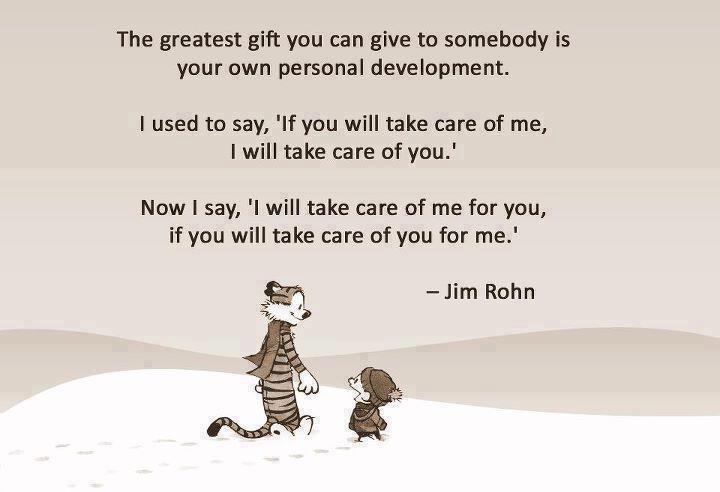
I came across a meme on Facebook this week that blew me away. Perhaps you’ve already seen it.

A great deal of my work is in premarital counseling, mostly with people who have never been married before. The main work I do in premarital counseling is help couples understand the usually unreasonable expectations they have of each other, and of what marriage will be. They naively think the most important thing they’ll do in marriage is take care of each other. My work is to get each partner to understand that a healthy relationship, by definition, consists of two healthy individuals. This means the single most important gift spouses can give each other is for each of them to get their own act together, to deal honestly with their own issues.

Five Reasons Why Getting Your Act Together Is An Awesome Gift To Give Someone Else:

1. The more deeply and honestly you deal with your own issues, the less inclined your spouse will be to bring them up.
Let’s face it, most arguments between couples consist of each of them telling the other what is wrong with them. The faults of others are easy to see. “You’re so stubborn.” “Yeah, well you’re so critical.” If stubborn lady works on her stubbornness, and critical guy works on being less critical, and they are open with one another about it, they will each be less likely to use those things as ammo in an argument. The best thing you can do is admit them and work on them.

2. The more you get your act together, the easier it will be for others (not just your spouse) to love you.
Conversely, the more broken you are, the harder it will be to love you. If you are needy and insecure, you will suffocate your partner. If you are demanding, you will exhaust them. If you hate yourself, you will always be miserable. If you take everything personally, almost everything your spouse says, no matter how well-intended, will hurt your feelings. People who love themselves have faced their issues squarely, and people who have faced their issues are easier to love because they are not constantly spewing their unresolved goo all over others.

3. Getting your act together is a way to keep investing in the relationship.
In too many relationships couples think (or worse yet, say!) “We’re married now. You have to love me, warts and all.” This is when she starts greeting him after work in an old bathrobe and a mud mask. He returns the favor by farting under the covers. They eventually end up in my office for counseling and can’t figure out how the magic leaked out of the relationship. Answer: The magic leaks out when you stop trying. Since no one ever fully gets their act together, working on yourself is a way to keep trying, all through your life.

4. You’re the only person you can change
Too many couples want each other to change, and to be completely accepted by the other. When you commit to a life of getting your act together, you turn it around. You determine to accept your partner completely and change yourself — the only one of the two of you that you can change.

5. It gives your spouse what they want
Your spouse married you because they love you. Assuming your spouse is a basically good person, they want you to be happy, healthy, and whole. The more you improve yourself, the happier you become and the happier you are, the happier your spouse will be with you.

I have directed this post toward married couples but unmarried couples can apply it, and parents can apply it to relationships with their children. Parents are always asking me, “What is the best method of discipline” or “How long should I keep my child in time-out.” I always say, “Parents — get your act together personally. When you are secure, when you feel good about yourself, when you know you are loved and valuable, you will naturally raise your child with this same assurance.”

Getting your act together, then, is a gift to the world!

Question: How have you seen important relationships improve as you have continued to get your act together? What relationships do you now realize suffered because of your unresolved issues?